
Tour review · VENICE ART & MUSEUM TOURS
The Murano Glass Museum in Venice
Venice glass has a clear storyline. Your admission to the Museo del Vetro on Murano includes secure entry to one of Venice’s top glass stops, and you’ll get the museum’s big-picture take on how Murano glass evolved over centuries.
I especially like the chronological layout that starts with Roman-era pieces and then moves into the major periods of Murano glass making. One thing to consider: the museum is not interactive, so younger kids may lose interest faster than adults and older kids who enjoy design and art history.
Key things to know before you go
- Secure museum entry so you can avoid the hassle of potential ticket lines
- Chronological galleries that map Murano glass history from early finds to later masterpieces
- Audio guide in multiple languages that helps you follow along at your own pace
- Garden time that’s calm, though not a long or sprawling escape
- Small museum shop plus plenty of other Murano shopping nearby if you want more
Museo del Vetro: why this Murano stop makes sense
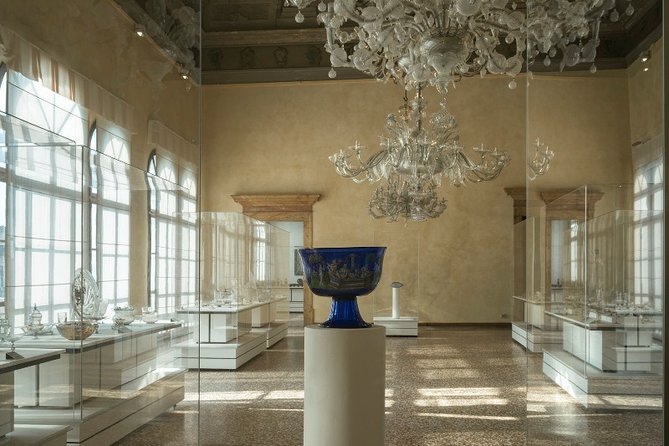
If you want Murano glass beyond souvenirs, this is one of the most direct ways to do it. The Museo del Vetro is built to show you development over time, not just a room full of pretty objects. That makes your visit feel focused, and it helps you understand why certain styles look the way they do.
I like that the museum doesn’t try to overwhelm you with random displays. The story is organized, and the museum’s layout lets you move through periods in a logical order. Even if you only have a short window, you can still leave with a clear sense of what changed, when it changed, and how Venetian glass gained a reputation that spread well beyond Italy.
You can also read our reviews of more museum experiences in Venice



Price and logistics: what your $26.43 ticket really buys
This ticket costs $26.43 per person and is designed for a smooth museum visit rather than a guided “experience” with lots of stops. The experience is entry-only, meaning the main value is access to the collection without the time drain of figuring out lines on the day.
That “bypass possible ticket lines” point matters in Venice, where even simple tasks can become a slow game of catch-up. If you’re building a half-day on Murano, getting in without delays helps you protect your schedule.
Duration is listed as 1 to 3 hours, which is a wide range on purpose. If you read slowly and stop often, you’ll lean toward the upper end. If you’re skimming the key rooms and using the audio guide lightly, you can comfortably do it in closer to an hour.
The galleries that matter: Roman archaeology to 15th to 20th century masterpieces
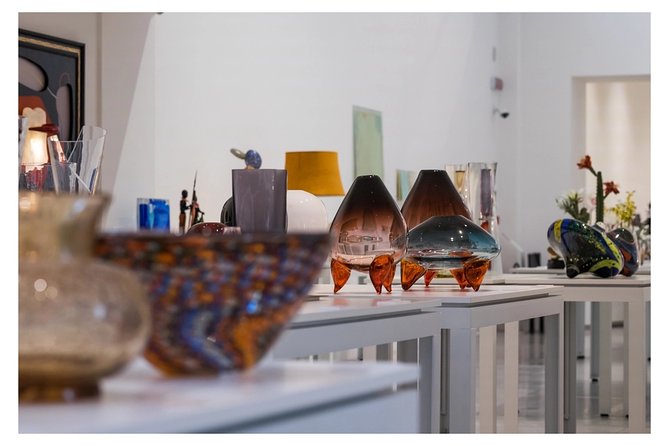
The museum’s arrangement gives you an interesting “before and after” feeling. It starts with an archaeological section on the ground floor, which includes noteworthy Roman works dated from the 1st to the 3rd century A.D. That early section gives context, showing that glass culture did not begin with Murano’s famous later fame.
Then, on the first floor, the collection becomes the big story: the largest historical collection of Murano glass in the world, with pieces dating from the 15th to the 20th century. This is where the museum’s emphasis on design evolution pays off. Instead of treating glass as one uniform style, you see how shapes, techniques, and decorative trends shift through time.
A key benefit for art and design lovers is how the rooms are set up to follow a timeline. If you enjoy spotting differences, you’ll likely find it easier to connect the dots. You can look at a piece, then look at the period that came before or after it, and get a stronger sense of progression.
Ground floor Roman finds: context you might not expect
The Roman archaeology section is not the star of most people’s mental map of Murano glass, so it’s a smart surprise. The dates alone, 1st to 3rd century A.D., broaden your perspective quickly.
For me, that kind of start works because it prevents the visit from becoming only a parade of objects. It frames glass as part of a longer craft tradition, and it helps you understand that later Venetian glass making didn’t appear from nowhere. Even if you only spend a short time there, it sets the tone for the rest of the museum.
Practical tip: if you like structure, aim to move through the Roman section with at least one short listen from the audio guide, then shift fully into the first-floor timeline afterward. That keeps the visit from feeling like two separate things.
First floor timeline: the heart of Murano glass
Once you’re on the first floor, the museum becomes more emotionally satisfying, in a craft-nerd way. The collection is presented chronologically, and each area tends to correspond to a different era.
One review you might relate to is that each room focuses on a different time period. That’s exactly why the timeline method works. You’re not just collecting facts, you’re watching a craft change. If you’re the kind of person who likes to see how a technique evolves, this setup gives you that.
Also, many pieces are described as world-famous masterpieces, which is a clue that you should slow down here. Don’t rush through everything just because you’ve seen a few “wow” objects. Let yourself linger long enough to notice patterns in design and form.






Audio guide strategy: how to pace your visit without getting bored
English is offered, and there’s also an audio guide available in different languages. This is a big deal for a museum like this because the material can be visual but also technical. The audio guide helps you connect what you’re seeing with the story behind it.
For adults, I think the audio guide is what turns a “nice museum” into a “real understanding.” For families, it’s still useful, but if you’re bringing younger kids, the museum may feel like a lot of looking with few hands-on moments.
Here’s my practical pacing suggestion. Give yourself:
- 10 to 15 minutes to orient in the first-floor timeline
- 30 to 45 minutes to slow down in the key periods
- 10 minutes to reset in the garden area, if you want air and quiet
- optional time for the museum shop at the end
You can adjust based on your pace, but having a shape to your visit helps you avoid the “I’m standing in room after room” feeling.
Garden area and the museum shop: small stops that matter if you plan for them
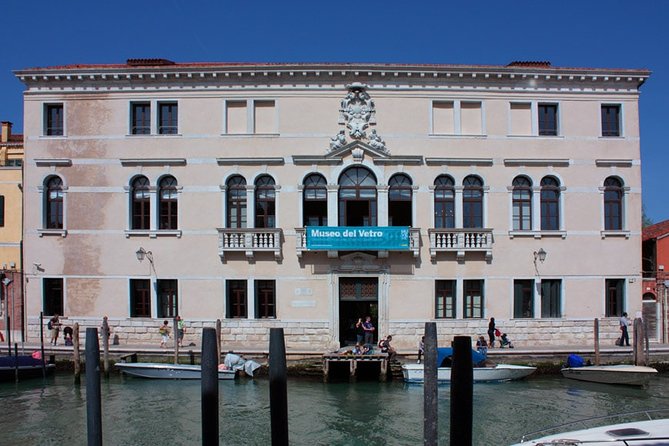
The museum includes a garden area that’s described as tranquil. It’s not presented as a massive outdoor break, but it can be a nice decompression zone after indoor galleries.
If you’re the kind of visitor who tends to rush, the garden is where you can slow down intentionally. Even a short pause outside helps you re-enter the Murano day with better energy.
As for the shop, it’s described as small. That’s not a dealbreaker because Murano itself is packed with glass boutiques. If you’re shopping, treat this museum shop as a bonus, not your main destination.
How to fit this into a Murano day without wasting time
Murano is ideal for visitors who like to browse at human speed. The museum gives you the “why” behind Murano glass. The streets and shops give you the “what it looks like” in everyday life.
A smart pairing is to think of the museum as your grounding stop, then spend your remaining time doing lighter browsing outside. If you do it the other way around, you can still enjoy the museum, but you might miss some of the “now I get it” connections that happen when you learn first and shop second.
If your time is tight, aim to enter the museum early in your Murano visit. That way, even if the galleries take longer than you expect, you still have time to wander glass shops afterward.
Who this visit suits best, and who might want to adjust expectations
This ticket is best for people who enjoy art, design, and craft details, especially when they come with a clear timeline. If you’re the kind of person who likes explanations and period context, you’ll likely feel satisfied even if you only do one or two focused rooms deeply.
For families, it can work, but plan with your kids in mind. Since the museum is not interactive, younger kids may tire of the visual-only format. Older kids who enjoy museums and adults who like objects with background are usually a better match.
If your goal is purely entertainment and photos, you might find this more “museum study” than “walk-and-gawk.” In that case, you could still go, but you should expect a calmer pace.
Value check: is a $26.43 ticket a good deal?
For a single museum admission, $26.43 is a straightforward price point. I think it becomes a value buy when you care about glass history and want the museum’s biggest strength, the timeline, to land for you.
The ticket includes the one thing that’s hardest to replicate on your own: secure entry to a must-see Murano collection. If you were standing around trying to arrange entry day-of, that time risk can be costly in Venice terms.
If you’re only casually interested in Murano glass, you might feel like it’s an optional stop rather than a must. The museum is widely enjoyable, but it is still a museum, so the real payoff depends on your interest level in history, technique, and design periods.
Practical gotchas: the €5 access fee on some dates
There is one extra detail you should check before you plan your day. On certain dates, people staying outside of Venice who are visiting for the day may be required to pay a €5 access fee. The official guidance and exemptions are published here: https://cda.ve.it
If you’re a day-tripper, treat this like a small but real planning item. It can change your final budget, even though it is not part of the museum ticket price listed here.
Also, note the general schedule timing: confirmation is sent within 48 hours, subject to availability. And this experience is listed as non-refundable and cannot be changed. If your travel plans might shift, that matters.
Booking note: make sure your ticket is valid at entry
One thing I take seriously when booking entry tickets in Italy is the paper trail. There have been problems with ticket delivery through at least one third-party booking route, where access depended on resolving the ticket issue at the gate.
My advice is simple: before you leave for Murano, confirm you have the correct admission proof ready for entry. If anything looks unclear in your email or booking confirmation, sort it early rather than hoping it works out at the museum.
Should you book this Murano Glass Museum ticket?
Book it if you want a structured look at Murano glass, especially if you love art history, design, or craft details. The museum’s timeline format, the strong collection spanning 15th to 20th centuries, and the Roman-era context create a visit that makes sense as one connected story.
Skip or swap it if your priority is hands-on activities or if you’re traveling with very young kids who get restless in quiet galleries. Also reconsider if you are only mildly curious about glass history, because this is an admission ticket built for museum time, not a quick photo stop.
If you do decide to go, plan your Murano day around it. Enter early, use the audio guide to stay oriented, and then spend the rest of your time exploring Murano shops with better context. You’ll get more out of your hours, and you’ll enjoy the glass browsing more.
FAQ
How long does the Murano Glass Museum visit take?
The visit is listed as about 1 to 3 hours.
Is the experience offered in English?
Yes. It is offered in English.
What is included in the $26.43 ticket?
Your ticket includes entrance to the Museo del Vetro.
What does the ticket help you with at the museum?
It provides secure entry and is described as helping you save time by bypassing potential ticket lines.
Are there any extra fees for some visitors?
On certain dates, day-trippers staying outside Venice may need to pay a €5 access fee. Check details and exemptions here: https://cda.ve.it
How and where do you get to the museum?
The museum is listed as being near public transportation.
When will I receive confirmation after booking?
Confirmation is sent within 48 hours of booking, subject to availability.
Is the experience refundable or changeable?
No. It is non-refundable and cannot be changed.
Is this suitable for most travelers?
The experience is listed as one where most travelers can participate.
More Museum Experiences in Venice



More Tour Reviews in Venice



Not for you? Here's more nearby things to do in Venice we have reviewed











Venice Art & Museum Tours, compared.
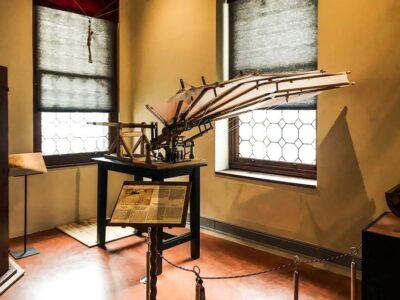 ★ 4.5Leonardo Da Vinci Museum Entrance TicketFrom $103,560 reviews
 ★ 4.8Vivaldi’s Four Seasons Concert & Music Museum VisitFrom $462,065 reviews
 ★ 3.9Venice Museum Pass & Doge’s Palace Entrance TicketFrom $41769 reviews
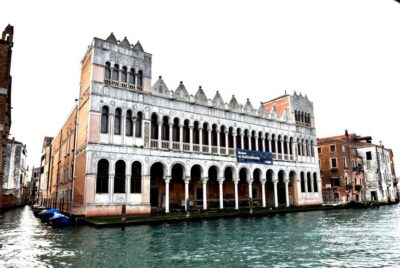 ★ 4.7Natural History Museum Entry TicketFrom $11312 reviews
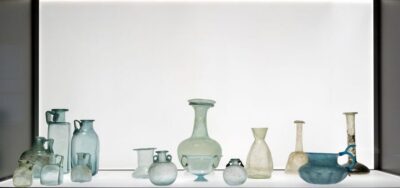 ★ 4.4Murano: Glass Museum Entry TicketFrom $11247 reviews
 ★ 4.0Da Vinci Interactive Museum Venice Scuola di San RoccoFrom $10168 reviews
 ★ 4.6Ca’ Pesaro Modern and Oriental Art Museum TicketFrom $11154 reviews
 ★ 4.8Venice, Submarine Enrico Dandolo and Naval History MuseumFrom $30109 reviews
Browse the lists this tour appears in