
Tour review · HISTORICAL TOURS
Venice: Natural History Museum Entry Ticket
Venice has a strangely soothing dinosaur break. I love the Grand Canal palazzo setting and the big, memorable fossil rooms, especially the Ouranosaurus skeleton. One thing to consider is that English support may be limited, so if you care about details, plan on using translation or an audio option.
This ticket is a smart value when you want a family-friendly activity that still feels serious. For about $11, you’re walking through a 13th-century building and getting a look at plants, animals, fossils, and ethnographic collections, plus a library space with over 40,000 books.
Because there’s no guide included, your experience is mostly what you make of it, at your own pace. Also, the museum is closed on Monday, and on certain high-demand dates you may face Venice Access Fee requirements, so a quick check of timing saves stress.
Key highlights at a glance
- Ouranosaurus nigeriensis: a dinosaur skeleton you can spot for its sheer scale
- Sarchosuchus imperator skull: a standout prehistoric-crocodile moment tied to Africa
- 2 million objects: far more than a small collection, with specimens and artifacts across eras
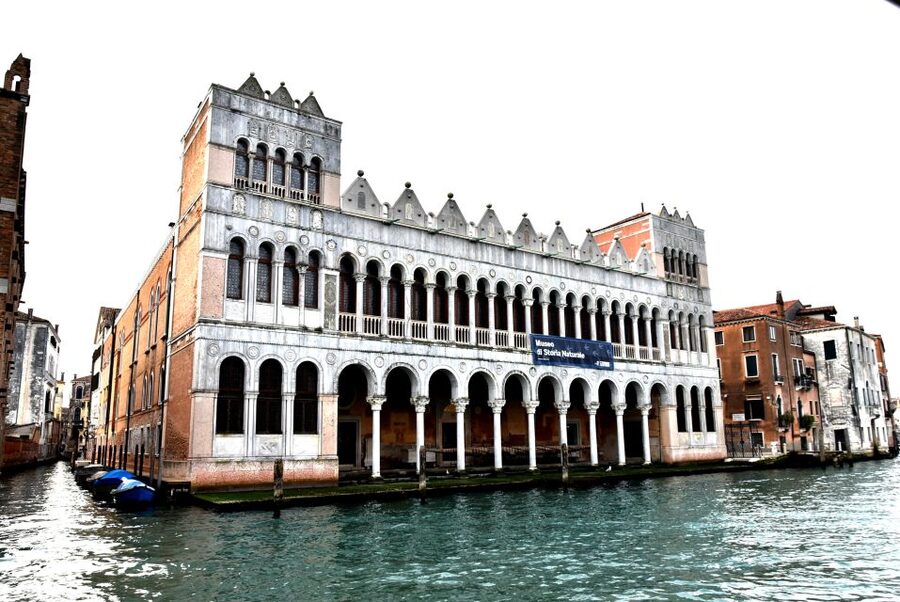
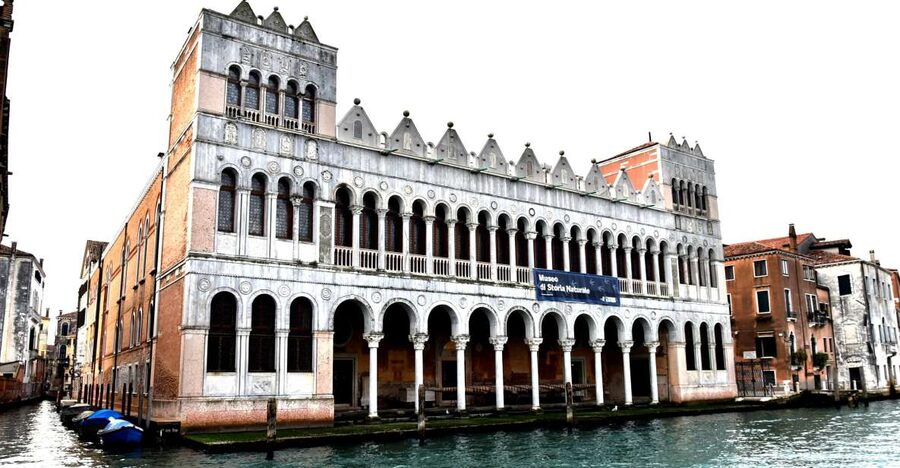
- 13th-century palazzo on the Grand Canal: architecture you’ll want to photograph before you even enter
- Library with 40,000+ books: a calm, bookish counterpoint to the fossil rooms
The Natural History Museum’s Venice advantage: quiet, not chaotic
Venice is great at crowds. This museum works as a pressure-release valve. It sits right on the Grand Canal edge, so you still get that Venice feel, but inside you can slow down and actually look.
I like how the museum mixes “serious collections” with a layout that reads well for families. You get dinosaurs and prehistoric animals where kids instantly lock on, then you move into broader natural history and ethnographic displays that keep adults from getting bored.
The building helps. Even before you reach the exhibits, the architecture gives you that sense of stepping into something old and important. And when the weather turns rainy, it’s the kind of indoor plan that keeps the day fun instead of forcing you into another café line.
A few more Venice tours and experiences worth a look



Entering the 13th-century palazzo on the Grand Canal
The first wow moment is the setting. The Natural History Museum is housed in a beautiful historic building, and it feels extra “Venice” because it’s right by the water. You’ll likely want photos early, since the outside views are part of the charm.
Inside, the museum keeps the experience moving, with floors that guide you from standout highlights toward deeper collections. You’ll also find that the building atmosphere matters, because the exhibits are placed in themed rooms rather than just stacked behind plain labels.
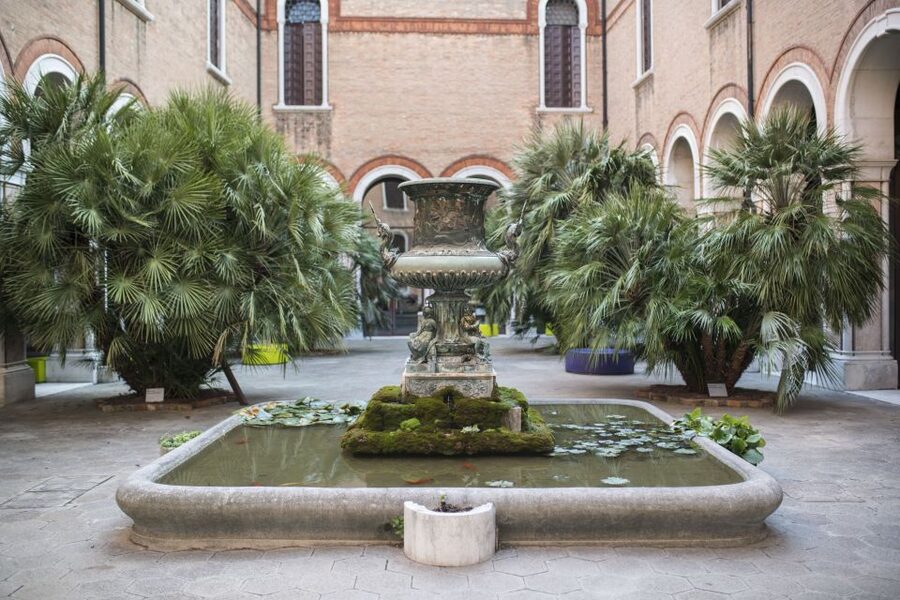
There’s also space to reset. One visitor noted a calm garden and internal courtyard feel, and another mentioned a terrace/garden moment that breaks up the day. If you’re traveling with kids, those calmer spots help everyone recharge without needing to leave the museum.
The dinosaur rooms: Ouranosaurus and prehistoric crocodiles upstairs
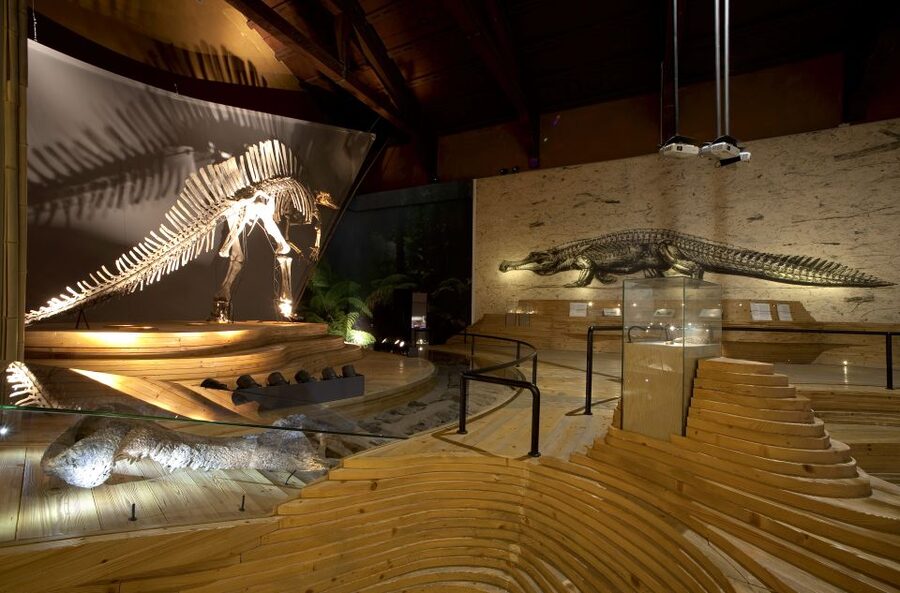
If you’re coming for one thing, come for the dinosaurs. The museum’s most popular attraction is upstairs, where you’ll find large fossil displays including Ouranosaurus nigeriensis, noted as more than 7 m long. Even from a distance, the scale does the heavy lifting.
The best part is how the displays support curiosity. Dinosaur rooms in good museums don’t just show bones, they help you see time and change. Here, the fossil galleries are presented in a way that makes it easier to connect the idea of evolution with what you’re actually looking at.
There’s also a prehistoric-crocodile element mixed into the dinosaur storyline, so it’s not all one species and done. If you want a “kid magnet” zone with strong visual impact, this is your target section.
One practical note: depending on the day, some areas may be limited. I wouldn’t assume every floor will be fully open, so if dinosaurs are your main mission, check the latest information before you go.
Sarchosuchus imperator: one skull with an Africa backstory
The Sarchosuchus imperator skull is one of those objects that stops people cold. It’s a famous prehistoric crocodile-related specimen, and this museum highlights the skull discovered in Africa, which gives it extra context beyond the bone itself.
The skull is also a great “second highlight” if you already know the dinosaur name game. Many people come in expecting only dinosaurs, then get pulled into the idea that ancient life had more variety than the movies suggest.
If you like fossils but need a reason to care beyond appearance, this is the kind of exhibit that helps. It anchors the animal in a location story, so you leave thinking less like a tourist and more like a curious student.
The 2 million object collection: where natural history expands your view
After the top attractions, the museum widens the lens. You’ll find zoological specimens, fossil displays beyond dinosaurs, and ethnographic collections. That mix is valuable because it shows natural history as part biology, part Earth science, and part human curiosity.
The museum is also described as having around 2 million historical objects. That number is huge, and even if you don’t see everything, it changes how the museum feels. You get the sense you’re visiting a real institution, not just a few star items and then out the door.
One review specifically praised the palaeontology presentation as modern and very well displayed, especially in the fossil-related areas. That matters for families, because the exhibits stay visually clear while still offering real information.
Not every room will be your favorite. The same museum experience that thrills fossil fans can feel more old-school to others, especially where taxidermy appears. If you’re traveling with very sensitive kids, consider that taxidermy can be startling for some people.
You can also read our reviews of more historical tours in Venice






The library with 40,000+ books and the calm pauses that prevent museum fatigue
Not every Venice museum gives you a mental break. Here, the library space and book collection with over 40,000 books adds a quieter dimension. It’s a reminder that museums are also about research and learning, not just spectacle.
Those quieter moments help you stay engaged. If you hit the dinosaur rooms first, you can feel a little “over-stimulated” afterward, and the shift into calmer spaces makes the rest of the exhibits easier to absorb.
I also like that the museum experience doesn’t force you to rush. Reviews describe it as well laid out and atmospheric, and people praise it as a good rainy-day option and even a calmer area compared with busier parts of Venice. For many travelers, that’s the real luxury: time to look without the crowd pressure.
Timing your visit: Monday closure, seasonal hours, and last admission
The museum follows a clear weekly rhythm: it is closed on Monday. If you’re planning a Venice itinerary, build your museum visit around that, not around what’s easiest for your hotel neighborhood.
Hours also change by season. Until May 31, the museum is open 9:00 AM to 5:00 PM, with last admission at 4:00 PM. From June 1, it’s open 10:00 AM to 6:00 PM, with last admission at 5:00 PM.
My advice is simple: don’t aim for a late arrival if you want to see both dinosaur highlights and natural world displays. A self-paced museum can be stretched or shortened, but the last admission time is non-negotiable.
And one more Venice reality check: between 18 April 2025 and 27 July 2025, you may need to pay a City of Venice Access Fee for many visitors, with exemptions in limited cases. The rules and methods change, so check cda.ve.it before you lock your dates.
Price and value: what $11 buys, and where extra costs may appear
The entry ticket is listed at $11 per person, and admission is the main included item. For a museum stop in Venice, that’s a practical price point, especially if you’re mixing it with other low-cost wandering days.
This is also a good value because you get depth, not just one room. You’re looking at multiple themed areas: fossils, natural world specimens, ethnographic displays, and a library setting. The promise of seeing big-name fossils like Ouranosaurus and Sarchosuchus helps justify the time, even if you only want a highlights route.
Where you might spend extra depends on what you choose. One visitor said an English voice guide is available for about $10, and that can be worth it if you want exhibit details without relying on your phone for every label. Another noted a free download exists, but it may focus more on an explorer story than on deep object-by-object explanation, so don’t assume it replaces an audio option.
If you go expecting a quick peek only, you might feel rushed. If you go expecting a thoughtful pause in the middle of Venice, the price feels more like a bargain.
What to expect inside: pacing, touch points, and practical facilities
This museum is a self-guided experience, since a guide is not included. That’s good news if you like control over pacing, but it means you should decide in advance how you’ll handle information.
Some exhibits include interactive elements. One review noted that there were some exponents you could touch, which can be a nice boost for kids who learn better by doing than by reading.
For comfort, it helps that the museum has lockers for backpacks, plus toilets and a small shop. Those small conveniences matter more than they sound, because they keep you from turning your museum visit into a logistics puzzle.
Also, the museum setting helps you enjoy breaks without leaving. Reviews mention the garden and internal courtyard feel, and that matters when you’re trying to keep a family’s energy steady in heat or rain.
Who should book this ticket, and who should adjust expectations
This ticket fits best if you want a family-friendly Venice activity with real science and not just a quick stop. It’s also a solid choice for travelers who like museums that can handle different interests: dinosaurs for kids, fossils and natural history for adults.
If you care most about dinosaur display impact, plan your day around the upstairs fossil rooms. If you care more about the overall story of Earth and life, give yourself time to move past the star specimens into the broader collections.
Be aware of two expectation filters:
- Taxidermy: some exhibits include it, and one review warned it can scare small kids.
- Language support: English information might be inconsistent on signs, so you may want a translation app or the optional voice guide.
If you’re the type who gets value from galleries that encourage reflection, the whale display described as poignant and supported by a whale skeleton is the kind of exhibit that can stick with you. It’s also the kind of moment that makes a museum visit feel meaningful, not just educational.
Should you book the Venice Natural History Museum ticket?
Yes, you should book if you want a worthwhile indoor activity that doesn’t feel like a consolation prize for bad weather. At $11, you get access to big fossil highlights like Ouranosaurus and Sarchosuchus imperator, plus a museum collection that feels serious because of its scale and range.
Book it if your group includes kids or mixed ages. The museum is built around high-attention exhibits, but it still offers enough natural history variety that adults aren’t just waiting around.
I’d think twice if your main goal is a perfectly smooth English-language experience with guided interpretation. Since there’s no guide included, you may need to do a bit of extra work with your phone or an optional audio solution.
If your travel dates land on a high-demand Venice Access Fee period, check the rules early so your day stays easy. Once you do that, this ticket is an excellent way to spend time on your own terms, in a historic palazzo that makes the museum feel like part of Venice, not apart from it.
FAQ
Where is the Venice Natural History Museum located?
It’s on the Grand Canal in Venice. Go to the museum’s main entrance and show your ticket on arrival.
How much does the Venice Natural History Museum entry ticket cost?
The price is listed as $11 per person.
How long is the ticket valid for?
The ticket is valid for 1 day. You can check availability for starting times.
Is the museum closed on any day?
Yes, the museum is closed on Monday.
What are the opening hours and last admission?
Until May 31, it runs 9:00 AM to 5:00 PM with last admission at 4:00 PM. From June 1, it runs 10:00 AM to 6:00 PM with last admission at 5:00 PM.
What’s included with this ticket?
Admission to the Natural History Museum.
Is a guide included?
No. A guide is not included.
Is hotel pickup or drop-off included?
No. Hotel pickup and drop-off are not included.
Is the museum wheelchair accessible?
Yes, the museum is wheelchair accessible.
Are there extra fees on certain Venice dates?
On certain days between 18 April 2025 and 27 July 2025, an Access Fee may be required by the City of Venice, with exemptions. Check cda.ve.it for the specific dates and payment details.
More Historical Tours in Venice
More Tickets in Venice



More Tour Reviews in Venice




Not for you? Here's more nearby things to do in Venice we have reviewed











Historical Tours, compared.
 ★ 3.9St. Mark Basilica Ticket, Audioguide+History GalleryFrom $234,780 reviews
 ★ 4.5Venice’s Best: Basilica, Doge’s Palace, Gondola & History GalleryFrom $1292,478 reviews
 ★ 4.2City Center Historical Guided Walking TourFrom $141,873 reviews
 ★ 4.3Bell Tower & St Mark’s Square History Gallery TicketFrom $44910 reviews
 ★ 5.0Basilica, Doge’s Palace, History Gallery & Bell Tower OptionFrom $116586 reviews
 ★ 3.5St. Mark’s Cathedral Priority Guided Tour & History GalleryFrom $33148 reviews
 ★ 4.8Venice, Submarine Enrico Dandolo and Naval History MuseumFrom $30109 reviews
 ★ 4.0Kingly Venice: Doge Palace Ticket, Guided Tour & History GalleryFrom $6562 reviews
Browse the lists this tour appears in