
Tour review · TICKETS
Venice: Tickets to Negozio Olivetti
Carlo Scarpa fans, this one is special. Negozio Olivetti is a small, design-nerd paradise tucked into St Mark’s Square, where you can study how light, materials, and layout were treated like serious architecture. I love the restored 1957-58 Olivetti showroom setup and how the interior details invite you to slow down. One possible drawback: the room is compact, so if entry groups overlap, the visit can feel crowded.
You’re stepping into 20th-century modernism placed right inside one of Venice’s most historical stages, the Procuratie Vecchie. The visit is self-paced with an Italian or English audioguide, and it focuses on the collaboration between Adriano Olivetti’s vision and Carlo Scarpa’s masterful redesign. Think of it as a short, high-impact stop, not a long museum marathon.
If you want to see design that’s still tactile and human, this is a great use of time. The ticket is also priced in the “worth it without thinking too hard” range, especially since it includes the entrance plus an audioguide.
Key highlights worth prioritizing
- Carlo Scarpa’s redesign turns a showroom into architecture you can study, not just look at
- Original Olivetti showroom (1957-58), carefully restored and presented again to the public
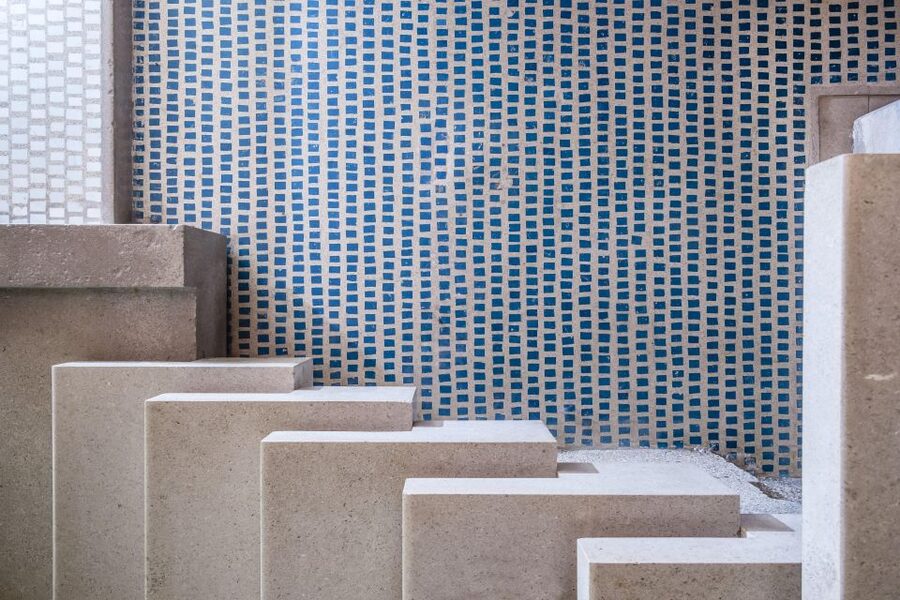
- A light-focused interior that works with luxury materials like Aurisina marble and ebony
- FAI ownership and careful conservation, giving you the feeling this space is taken seriously
- Small-group pacing (up to 10 people), designed for calmer viewing
- Possible temporary exhibitions, which can slightly shift what you see inside
Entering Negozio Olivetti in St Mark’s Square (and why the setting matters)
St Mark’s Square is loud in every sense, full of crowds, churches, and iconic views. That’s exactly why Negozio Olivetti hits so well. The moment you step into this space, the pace changes. You go from postcard Venice to a pocket-sized lesson in how modern design can respect historic surroundings.
The location is also smart. This stop sits in the orbit of the Procuratie Vecchie colonnades, where you can connect the architecture outside with the architecture inside. Before you even reach the showroom area, you’re already in the right mental frame: Venice as a place where new ideas and old structures have been negotiated for centuries.
And the topic makes the space feel approachable. Olivetti was a brand tied to technology and everyday work, yet here it gets treated like culture. You’re not just seeing a shop. You’re seeing a statement about what a company should stand for, delivered through architecture.
A few more Venice tours and experiences worth a look


Carlo Scarpa’s architecture: light, materials, and a design that behaves
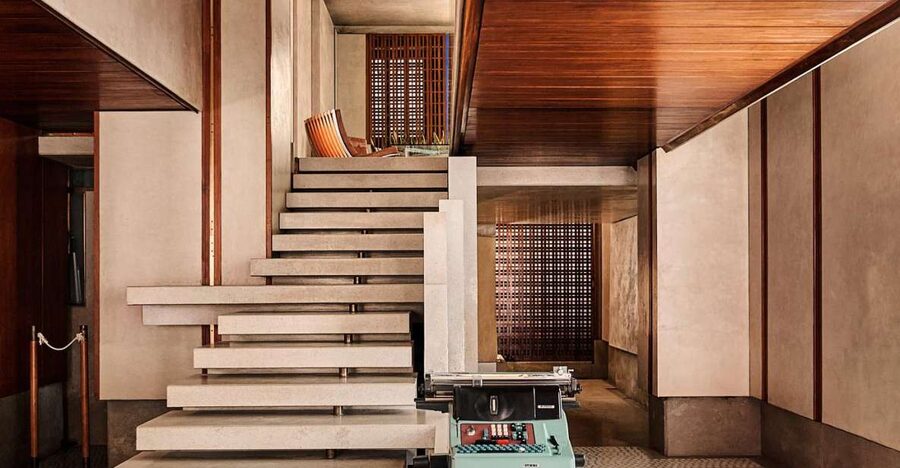
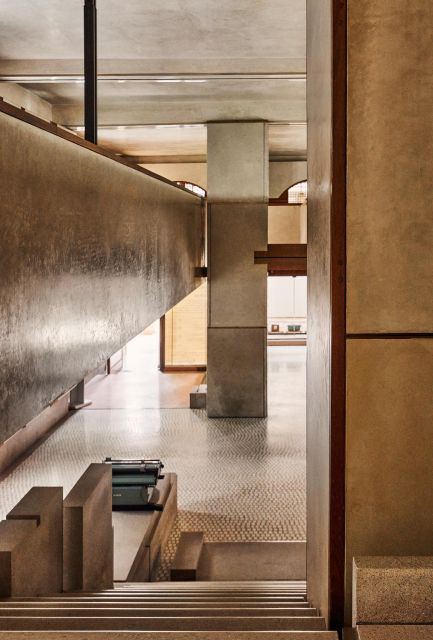
This is the heart of why Negozio Olivetti draws design-minded visitors. Carlo Scarpa was given a challenging commission, and the result is a complete overhaul of the original unit’s arrangement. The focus wasn’t just on looking modern. Scarpa reorganized the spaces so they reshape volumes, work with the light, and create a dialogue with decorative elements already present.
In practical terms, that means the interior doesn’t feel like one flat room. You’ll see the sense of planning in how areas relate to each other. Even without moving fast, you get the feeling of different “moments” inside the space, like the layout is guiding your attention.
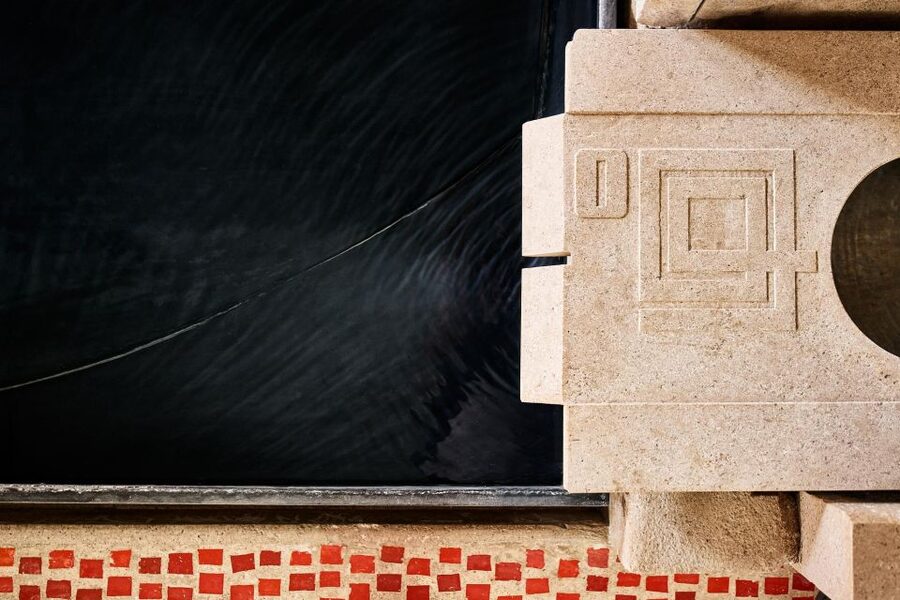
The materials add another layer. Expect an eye-catching mix of luxury surfaces, including Aurisina marble and ebony. Scarpa was careful with how those finishes catch or absorb light. If you’re the type who likes noticing how lighting changes how something looks, this place rewards you.
Conservation also matters here. The showroom presentation you’ll see was restored in 2010 and reopened to the public in 2011. You can feel that care. The space is preserved enough that it doesn’t come off as a staged set. It feels like architecture that’s been protected, not replaced.
The 1957-58 Olivetti showroom layout: what you’re really studying
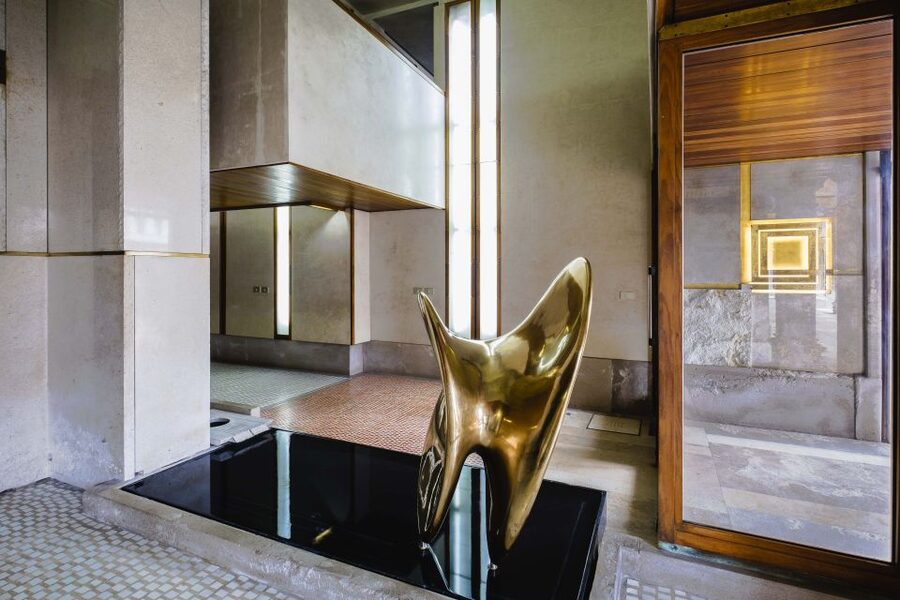
The interior is presented as the original Olivetti showroom from 1957-58, and that date isn’t trivia. It’s the backbone of the experience. This is not a generic museum display about the brand. It’s a specific historic setup, brought back with restoration work.
When you’re inside, you’re essentially studying three things at once:
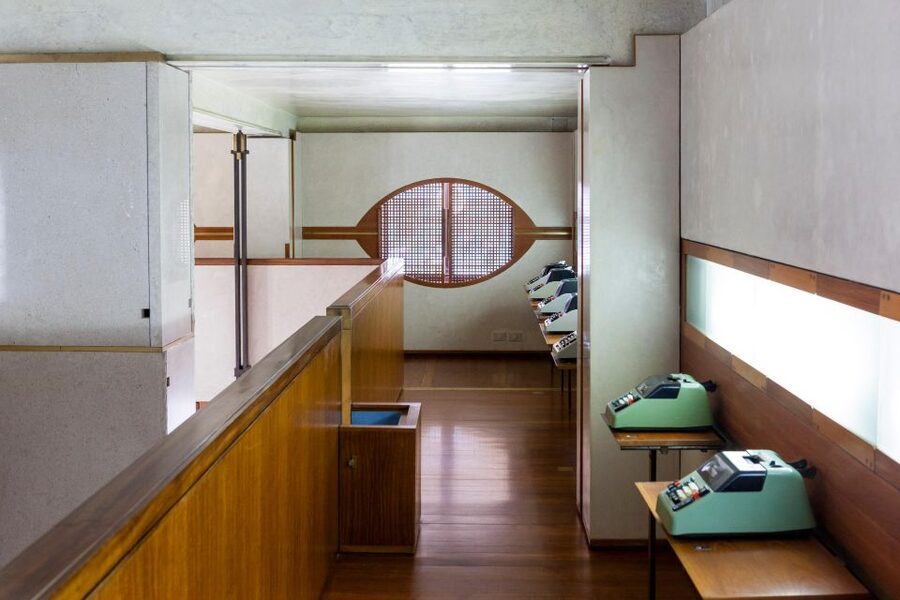
- How the showroom was organized for the life of the brand, when typewriters and calculators were part of daily business culture
- How Scarpa’s redesign changes the experience of viewing and moving through that space
- How the materials and details reinforce the sense of precision and refinement
To get the most out of it, don’t rush your eyes over the obvious. Instead, watch how elements meet corners and edges. Pay attention to transitions, not just objects. Scarpa’s reputation comes from that kind of thinking: the small architectural decisions are where the meaning lives.
One more twist: the space can sometimes host a temporary exhibition, which may slightly modify the organization or number of objects. If you’re the kind of visitor who likes to see everything exactly as it appears online, keep this in mind. The architecture is the constant, but the object display may shift depending on the schedule.
Adriano Olivetti’s values, translated into Venetian architecture
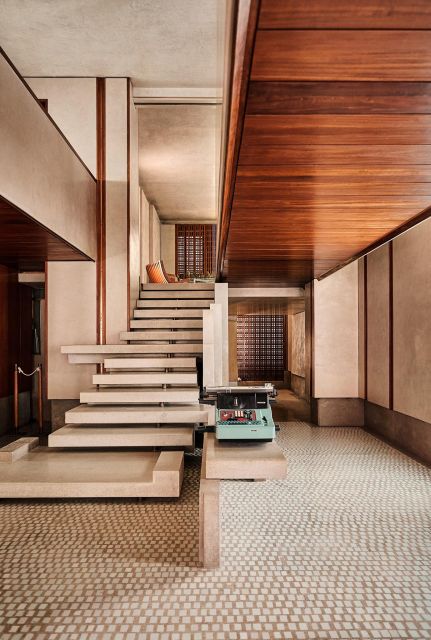
A big part of this experience is the idea that a company’s culture can be built into architecture. You’ll learn about the main protagonists behind the showroom-space: Adriano Olivetti and Carlo Scarpa. The story is tied to a small corner premise in the Procuratie Vecchie area, identified as the ideal building to transmit Olivetti’s company cultural values in a modern, innovative context while still respecting the historic surroundings.
That may sound abstract, but you’ll feel it inside. Olivetti is associated with design and technology, but in this setting it becomes something like a philosophy. The space is not just about selling machines. It’s about how modern industry can look thoughtful and human, even in an environment as old and symbolic as St Mark’s Square.
This is also where you’ll appreciate the conservation and presentation. The showroom is FAI property, entrusted in concession by Assicurazioni Generali. FAI’s involvement matters because it signals stewardship, not quick tourism. The result is a visit that’s focused, controlled, and intended for careful viewing.
How the audioguide makes the visit click (and how to pace it)
You get an audioguide included with your ticket, available in Italian and English. Even if you normally skip audio tours, here it’s worth using. The space is small, so the audio helps you connect what you’re seeing to the architectural thinking behind it.
You’ll be guided through the contemporary architecture approach, including the history of the showroom-space and how Scarpa overhauled the original unit. The guide also helps interpret the interior details that you might otherwise overlook if you only focus on the brand objects.
The good news: this isn’t a scripted performance where you need to stay glued to a guide. It’s designed for self-paced learning. You can stop and look as often as you want.
The also-good news: it’s small-group by design, limited to 10 participants. That matters more than you’d expect in Venice. Even a short visit can feel stressful if the crowd flow is poorly managed. Here, the setup is meant to keep you from getting shoulder-to-shoulder in tight corners.





Rules inside matter more than you think
Negozio Olivetti has clear visitor rules:
- No food or drinks indoors
- No smoking indoors
- No flash photography
- No touching the exhibits
These aren’t just formalities. They protect a space built from delicate conservation choices. When you’re dealing with historic restoration and fine architectural finishes, the limits help keep surfaces and objects safe.
Also, if you’re traveling with a camera habit, set expectations. You can take photos without flash, but the focus should still be on looking carefully, not shooting rapidly.
Price and value: is $11 worth your time?
At $11 per person for an entrance ticket and audioguide, this is strong value, especially because the experience is concentrated. You’re paying for:
- Access to a specific restored historic showroom (not just architecture from the outside)
- A guided interpretation tool in Italian or English
- A design-focused interior that doesn’t require hours of wandering
This is the kind of stop that works even if your Venice day is already packed. One reason it’s worth the money is that you don’t need to plan a huge block of time to enjoy it. It’s built for focused attention.
The main value trade-off is crowd sensitivity. The interior is small, and there can be moments when it feels tight. If you’re easygoing about that and you like thoughtful viewing, the price is more than fair.
The one drawback to plan around: small space, possible crowd overlap
Here’s the practical caution. Even with scheduled entry times, the space is compact. If entry groups overlap, the interior can feel crowded for the duration of the visit.
So what should you do? Go into this stop expecting that you might need to share your viewing space, even if entry is timed. If you prefer quiet, aim for an entry slot when you’ll be less likely to collide with other groups, and keep your expectations realistic. This isn’t a silent monastery. It’s a working architecture experience inside a public conservation space.
Who should book Negozio Olivetti (and who might skip it)
Book this if you:
- Like architecture you can actually study, not just photograph
- Want an Olivetti stop that’s about design culture, not just a brand name
- Enjoy calm, short museum-style visits with an audioguide
- Are interested in how modern designers interact with historic Venice
You might skip it if you:
- Want a long, object-heavy museum experience
- Get impatient with small interiors where foot traffic matters
- Are only interested in big exterior sights and don’t care about interior design
Should you book this Negozio Olivetti ticket?
Yes, if you want a high-signal Venice stop. For $11, you get access to a restored 1957-58 showroom presentation and an audioguide that connects the details to the architecture. The space is small, so it’s best for people who like close-up design viewing and can handle occasional crowding.
If your schedule is flexible, I’d treat this as a planned reset between bigger Venice hits. You’ll come out with a clearer sense of how design, corporate culture, and careful restoration can live inside one of the most famous squares in the world.
FAQ
Where is Negozio Olivetti located?
It’s in Venice, in the Veneto region, specifically in the St Mark’s Square area (within the setting of the Procuratie Vecchie).
How much does a ticket cost?
The price is listed as $11 per person.
How long is the visit?
The activity duration is 1 day (you can select starting times based on availability).
What’s included with my ticket?
Your ticket includes entrance and an audioguide.
What languages are available for the audioguide?
The audioguide is available in Italian and English.
Is the group size limited?
Yes. It’s limited to a small group, capped at 10 participants.
Are food and drinks allowed inside?
No. Food and drinks are not allowed indoors.
Can I take photos with flash?
No. Flash photography is not allowed.
Can I touch the exhibits?
No. Touching the exhibits is not allowed.
Can the interior display change during my visit?
Yes. At times, the space may present a temporary exhibition, and the content or organization of objects can be slightly modified.
More Tickets in Venice

More Tour Reviews in Venice


Not for you? Here's more nearby things to do in Venice we have reviewed










Tickets, compared.
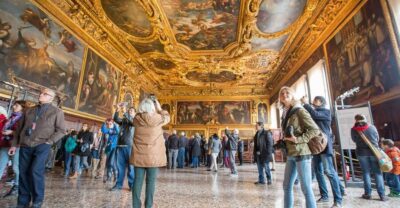 ★ 4.6Doge’s Palace Reserved Entry TicketFrom $4142,716 reviews
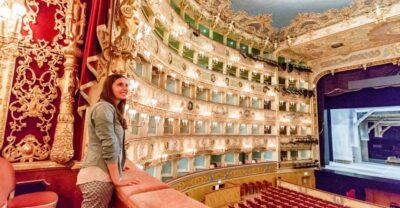 ★ 4.6La Fenice Opera House Entry Ticket with Audio GuideFrom $1411,742 reviews
 ★ 3.9St. Mark Basilica Ticket, Audioguide+History GalleryFrom $234,780 reviews
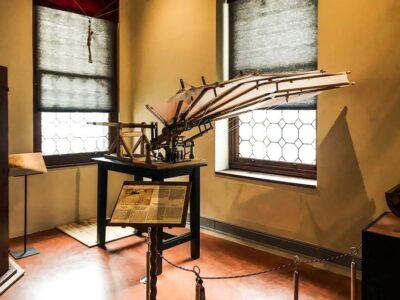 ★ 4.5Leonardo Da Vinci Museum Entrance TicketFrom $103,560 reviews
 ★ 4.7St. Mark’s Basilica & Doge’s Palace Tour with TicketFrom $943,375 reviews
 ★ 4.3Palazzo Contarini del Bovolo Entrance TicketFrom $101,991 reviews
 ★ 4.5Doge’s Palace & St. Mark’s Basilica Tickets + Tour OptionsFrom $811,841 reviews
 ★ 3.4St. Mark’s Basilica Ticket with Audio GuideFrom $361,645 reviews