Tour review · VENICE
Venice: Traveling Opera in a Historic Palace on Grand Canal
Venice is famous for grand opera houses. This is different. You watch Italian opera in a historic palace on the Grand Canal, with the action staged across multiple halls.
What I love most is the closeness. There is no “faraway stage” feeling, and the room-to-room setup helps the story land fast, even if you are not an opera superfan. I also love that you get art and architecture while you wait, with palace rooms that show Tiepolo paintings and decorative stuccoes.
One thing to plan for: there are 30 steps to reach the performance rooms, and there is no elevator. So if stairs are a challenge, this might not be your easiest Venice evening.
Key highlights in plain terms

- Three acts, three palace rooms: you move as the story changes, not just your view.
- No distance between you and the singers: this is close-up opera in a way theaters rarely manage.
- Venetian-Gothic Palazzo Barbarigo Minotto setting: Grand Canal views and ceremonial rooms with Tiepolo artwork.
- A small, high-level ensemble: strings plus piano, tuned for clarity in intimate spaces.
- Italian singing with optional translation: English or French translation is available for purchase.
- Seat selection on arrival: no assigned seats, so arriving early really helps.
Opera in Venice, but the palace is part of the show

This experience takes the idea of opera and flips the usual setup. Instead of a single stage with curtains and far-off singing, you get a performance that uses the palazzo itself as the set. The venue is the point, and the production is designed so you feel like you are living the story rather than watching it from a fixed seat.
The format is also friendly. If you already know opera, you still get strong voices and a real chamber-style orchestra. If you are brand-new, the acting and staging help you follow along, especially because the production is built around movement through the house.
You will see a program of classic Italian opera tradition, with performances dating back to the late 1800s style of lyrical entertainment. The group behind it is a professional ensemble, with singers supported by a small set of strings and piano. In other words, you are not getting background music. You are getting a compact, serious performance.
You can also read our reviews of more tours and experiences in Venice.
Palazzo Barbarigo Minotto, on the Grand Canal, in Venetian-Gothic style

The show takes place in Palazzo Barbarigo Minotto, a Venetian-Gothic palace that gives you atmosphere the minute you arrive. The Grand Canal location is more than postcard scenery. It frames the night with a sense of ceremony, and the windows and rooms make the palace feel like it is breathing with the city.
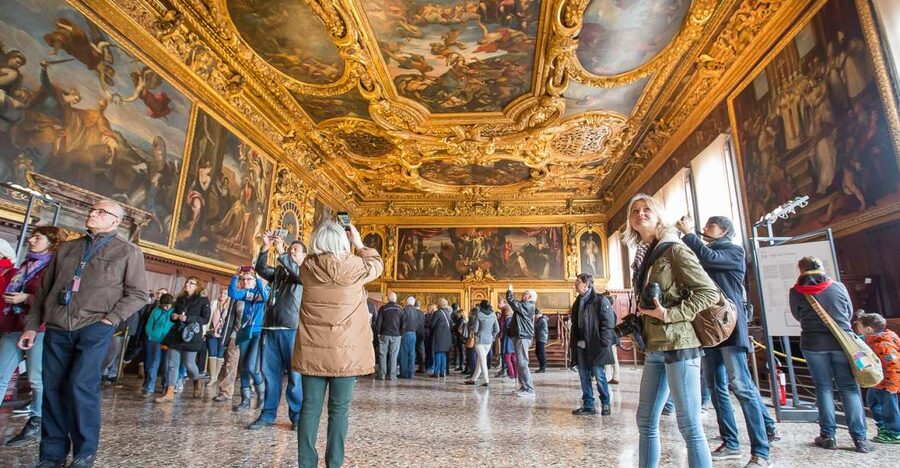
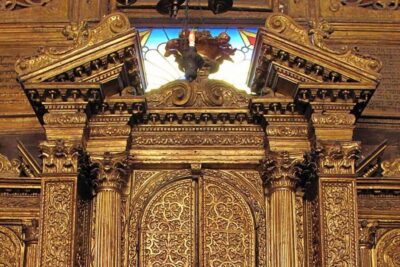
Inside, you are not simply passing through a corridor to reach a theater seat. You enter palace rooms decorated with Tiepolo paintings and ornate stuccoes. That matters because your brain is always doing two things at once on a good trip: watching the main event and absorbing the setting. Here, the setting does not take a back seat.
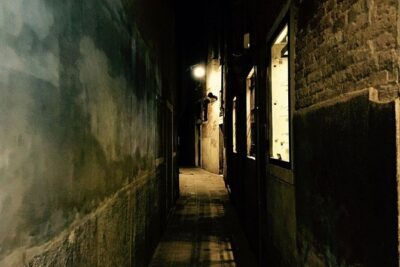
Also, Venice palaces can feel like one long maze at night. This one has a clear structure for the performance. You will still want extra time because the entrance can be a bit tricky to locate, especially in the dark when canals, bridges, and narrow streets start to blur together. Plan to arrive early so you can find the right door, settle in, and not start the evening rushing.
Getting in on time: early doors, stair count, and seat choice

Doors open 30 minutes before the show. That is not a random rule. It gives you time to get settled, choose seats, and be ready for the first act without chaos.
There are 30 steps to climb to reach the halls where the concert happens, with no elevator. If you are traveling with someone who uses a mobility aid, this is a key detail to consider before you book. Even for able walkers, those steps will feel like part of the event. It is worth wearing shoes that grip well on Venetian stone.
Seats are not pre-assigned. You choose where to sit when you arrive. That sounds simple, but it changes your strategy. If you want a better view, you should show up as soon as doors open. Once the curtain has effectively started, admission is not guaranteed after curtain time.
Dress code is not mandatory. Still, this is an opera evening in a palace, so comfortable but suitable clothes make sense. Closed shoes are smart, and long trousers work well for men. You do not need a jacket and tie, but you also do not want to show up in anything too casual or too warm for a historic interior.
Finally, no food is allowed on the premises. The idea is clean and focused: music, palace, and the actors. You might find small interval touches like a drink during the performance gap, since that has been described as a nice part of some showings. But do not plan on bringing your own snacks.
Act I in a palace room: close-up storytelling starts fast
Act I begins in one of the palazzo halls, where the production puts you close to the performers. The show uses a clever 360-degree approach, meaning the staging is designed so the performers are not only projecting in one direction. You feel included, even if you are not sitting in the center.
A big reason this works is the interaction between singers, musicians, and audience. The production is built around that relationship. In practical terms, it makes opera feel less distant. You are hearing and seeing the emotion without needing a giant orchestra pit or a massive stage.
This format often includes moments where characters interact directly or semi-directly with the audience area. Some performances have included scenes that feel like you have stepped into the story world, with the sense of characters working around you. If you are seeing a familiar opera title, you might recognize the mood quickly. If you are not, the acting and pacing do a lot of the teaching for you.
Where you sit matters most in Act I because you will likely settle your attention and get your bearings. If you arrived early, you can often pick a spot with a straightforward sightline to the main action.
Moving for Acts II and III: the room changes, so does the meaning

Then comes the twist, and it is the reason many people love this show so much. Instead of waiting for traditional set changes, you move to new rooms as each act begins.
You will go through three different rooms within the palazzo, one per act. That is more than logistics. It creates a reset in your mind. The setting changes as the story changes, and the performance space becomes part of the storytelling language.
In Act II and Act III, this room change typically improves your view in a different way. Even if you have a slightly off angle for Act I, the seating shuffle across rooms can give you a better perspective later. That is why many people call it a strong choice if you care about seeing faces and hand gestures clearly.
The production also uses the stage space in a way that takes advantage of intimate architecture. In a big opera house, sound can get swallowed or softened by distance. Here, the rooms let voices and string lines stay present. You hear the musical details more easily because you are not far away, and because the production keeps you close to what is happening.
If you are watching with a first-time opera crowd, the movement helps. It breaks up the concentration load. You get small moments of anticipation as you relocate, and that keeps energy up for the full two hours.
The sound of strings and piano in historic rooms

Opera is often associated with huge orchestras. Here, the ensemble is intentionally small: strings plus piano. The idea is clarity. A compact group can be balanced to the room, which helps you hear the text and the phrasing without drowning.
In multiple performances described in feedback, the instrumental setup has been a pianist plus strings such as violin and cello. You should expect a chamber sound that is elegant and direct. In a room like a palace hall, that sound can feel closer than you expect, because the architecture shapes reflections and keeps the music lively.
What I like about this approach is how it supports the actors. In a traditional setting, singers sometimes compete with a bigger wall of sound. With this smaller ensemble, you can hear how the singers shape consonants and vowels, and how they use breath as part of the performance. It makes the acting feel synchronized with the music, which is exactly what an intimate setup needs.
Do note one practical tradeoff: if you are used to the scale of a major opera house, you may feel a difference in orchestral mass. But you get something else in return, a sense of hand-to-ear closeness that big venues rarely provide.
Italian singing and translations you can buy
The singing is in Italian. Translation is available for purchase at the front desk in English or French. That is a helpful safety net, especially if you do not already know the libretto.
If you want the smoothest experience, I recommend grabbing the translation before Act I starts. Then you can glance when needed and still keep your eyes on the performers. You do not want to spend the whole night reading. The best results come from using the translation as guidance, not as a substitute for the performance.
Singing in Italian can be intimidating at first. But in this palace format, the acting and the movement make comprehension easier. Even if you only catch key moments through the translation, you will still understand the emotional arc.
What the chairs and pacing feel like in real life
This is not a long guided tour where you can pace around for hours. It is about a two-hour show. Within that time, you will be seated, then you will move rooms for each act.
Many people love the format, but practical comfort still matters. Some feedback notes that chairs can be a bit firm. That is a common reality in historic venues, and it is not a deal-breaker for most people, but it is worth knowing. If you are sensitive to back pain, consider doing a short stretching routine before you arrive, and bring your patience for a couple of hours.
Pacing is handled well by design. The room change acts like a built-in break, so you are not stuck staring at the same viewpoint forever. That helps attention and keeps the evening feeling like a sequence of scenes rather than one continuous stationary performance.
Practical tips for a smooth Venice opera night

Here are the details that actually help you have a better evening.
- Arrive early, and treat navigation like part of the show. Entrance finding can be tricky, so give yourself extra time before doors open.
- Wear closed shoes. You will be climbing stairs and moving around inside the palace.
- Pick seats strategically for Act I. Since seats are chosen on arrival, early arrival can pay off.
- Buy the translation if you need it. English or French translation is available for purchase at the front desk.
- Plan around no elevator access. The 30 steps are real, so factor them into your route through Venice that day.
One more small note: you receive a Musica a Palazzo membership card. It is a nice extra, and it adds a sense that you are participating in a program, not just buying a one-off ticket.
Is this worth it for first-timers, opera fans, and families?
This kind of experience is especially good for two groups.
First, first-timers. If you have always meant to try opera but worried it would be too complicated or too long, this format helps. The close-up staging, active performances, and room changes make it easier to follow the story. Several people described it as their first opera experience and said it was emotional and easy to follow.
Second, opera fans who want a different vibe. You still get serious singing and a professional ensemble, but the scale is intimate. It is a good choice if you crave the feeling of being part of the performance rather than watching from far away.
For families, it can work depending on the child. Feedback includes younger audience members who stayed engaged for the whole evening. But this is still a performance in historic rooms, with stairs. So keep expectations realistic and choose the day carefully.
If you have limited mobility, this will likely be a harder sell because of the 30 steps. And if you absolutely hate the idea of Italian singing, you will want to plan on using the translation.
Should you book this Venice opera in Palazzo Barbarigo Minotto?
I think you should book it if you want opera that feels close and human, with a palace setting that is not just decoration. The best value is the combination: room-to-room staging, singers and musicians close enough to feel the emotion, and a professional chamber ensemble in a Venetian-Gothic palace on the Grand Canal.
You might skip it if you need step-free access, or if you are expecting a full-scale orchestral opera house sound with guaranteed assigned seating. Also, firm chairs are a recurring practical note, so comfort seekers should take that seriously.
If you have flexibility, aim for an evening that fits your schedule, arrive early, and plan to use the translation if Italian is new to you. Do that, and this becomes one of those Venice nights you remember because you felt part of the story, not just watched it.
FAQ
Where does the Venice opera performance take place?
It takes place at Palazzo Barbarigo Minotto in Venice. The provided coordinates for the meeting area are 45.43186950683594, 12.332376480102539.
How long is the experience?
The show lasts about 2 hours.
Are seats assigned in advance?
No. Seats are chosen by guests upon arrival, and there are no pre-assigned seats.
What language is the opera performed in?
The singing is in Italian. An English or French translation is available for purchase at the front desk.
What time should I arrive?
Doors open 30 minutes before the show starts. Admission is not guaranteed after curtain time, so arriving early is smart.
Is there an elevator to the performance rooms?
No. There are 30 steps to climb to reach the halls where the concert takes place.
Is food allowed during the experience?
No. Food is not allowed on the premises.
Is the dress code formal?
Dress code is not mandatory. You should wear comfortable clothes that are suitable for the occasion, such as long trousers and closed shoes for men.