
Tour review · WALKING TOURS
Walking Tour of Venice from St. Mark’s Square to Rialto
A Venice walk that connects the icons is hard to beat. This St. Mark’s Square to Rialto Bridge route strings together major sights in a way that helps you understand the city, not just photograph it, with a guide doing the talking at the right moments. You start in Piazza San Marco and end back at the meeting point, so the whole experience feels like one clear circuit.
I especially like the guided pacing. You’re not left figuring out what you’re seeing, and the guide helps you connect St. Mark’s area to the quieter stops along the way. I also like that you get a concrete sequence of stops, including Santa Maria Formosa, Campo Santi Giovanni e Paolo, and the exterior of Teatro Malibran, instead of a random wander.
One thing to consider is timing at the meeting point. This is a group tour, and there’s no mention of catching up later if you miss departure, so you’ll want to arrive early and be ready to show your voucher on time.
Key points before you go
- St Mark’s Square to Rialto Bridge, with a guide to connect the dots
- Stops beyond the postcard zones, including Santa Maria Formosa and its square
- Campo Santi Giovanni e Paolo and views around Teatro Malibran
- Mobile ticket means less paper fuss while you’re walking
- Seasonal language support, with bilingual explanations in winter when needed
- No hotel pickup, so build in time to reach the meeting point
Price and pacing: what you’re really paying for
At about $40.14 per person for roughly 1.5 hours of walking (listed as about 2 hours), you’re paying for structure. Venice can feel like one long maze of alleys, canals, and sudden views. A guided route gives you that straight-line advantage, from St. Mark’s area toward Rialto, while someone else handles the “what matters here” part.
Is it worth it? For me, the value lands when you want to see multiple headline sights without turning your day into a scavenger hunt. You get a guided walk that focuses on the main sights, plus smaller stops that make the city feel more lived-in. If you already know Venice well and plan to roam on your own anyway, you might choose a lower-cost option. But if you want a neat spine for your morning, this price feels reasonable for what you cover.
The pacing is also important. This is not an all-day tour, so you’ll still have time to continue exploring afterward. Think of it as your “map with stories,” not your entire Venice day.
You can also read our reviews of more walking tours in Venice

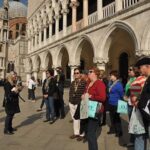
Where you meet and how to avoid a wasted morning
The meeting point is Calle larga de l’Ascension, 30124 Venezia VE, Italy, and the tour starts at 9:00 am. The activity ends back at the meeting point, so you are not dropping somewhere far away.
A quick practical note: this tour is designed as a group experience. You meet a representative at the start, who checks your vouchers and gives instructions for the tour. That means you should arrive at least 10 minutes early so you’re not rushing through paperwork while everyone else is already moving.
Also, hotel pickup and drop-off are not included. In Venice, that’s normal, but it changes how you plan your morning. If you’re staying in Mestre, or on the outer islands, you’ll want extra buffer time getting into the historic center and then to the meeting street.
Finally, you’ll use a mobile ticket. Have it ready on your phone screen so the check is quick.
Piazza San Marco: start where Venice shows off
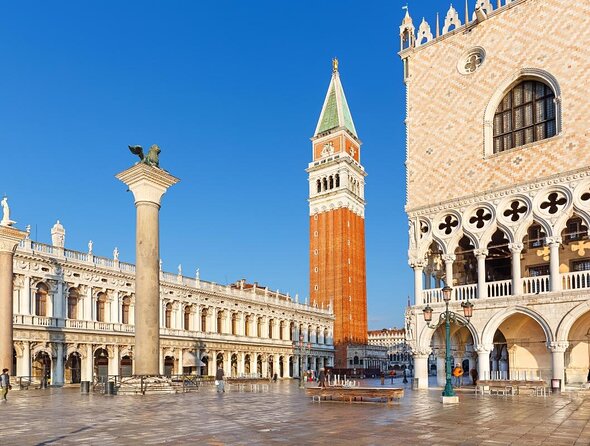
The tour kicks off in Piazza San Marco, Venice’s grand front room. Even if you’ve seen pictures, you’ll feel the scale once you’re there. This is where you can orient yourself quickly, because the rest of your walk makes more sense after you understand where St. Mark’s Square sits within the city.
What I like about starting here is how it sets the tone. Your guide can point out what to watch for, and why these places matter. Instead of only viewing the Basilica and Doge’s Palace as two separate big buildings, you get the sense of how the area functions as a power center around commerce, religion, and governance.
A possible drawback is also predictable: Piazza San Marco gets crowded. On a walking tour, that means you might spend time waiting for the group to shift, especially near the most popular viewpoints. If crowds are stressful for you, go in expecting that part of the experience is simply sharing the space.
St Mark’s Basilica and Doge’s Palace: seeing them with context
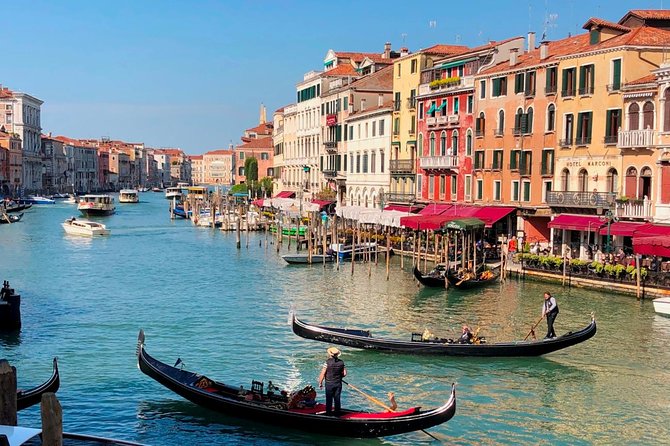
The tour overview promises exploration of St. Mark’s Basilica and the Doge’s Palace, and the route is set up so you can take them in as you move through the St. Mark’s area. Even if you’re not inside every building (the itinerary provided focuses on walking stops), you still get a guided look that helps you interpret what you’re seeing outside.
This is a great moment for a guide-led explanation. St. Mark’s and the Doge’s Palace are famous, but they’re also easy to reduce to “wow, ornate.” With a guide, you can connect details to the city’s story: why this area looks the way it does, and how those institutions shaped Venice.
If you’re the kind of traveler who likes architectural clues, this section is your payoff. Look for how the city’s layout funnels you toward important viewpoints, and notice how the canal-city geography shapes what you experience as you walk.
Santa Maria Formosa: the quieter stop that adds real texture
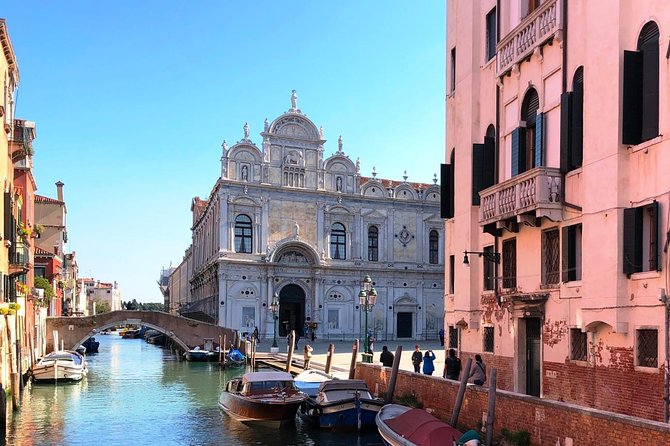
Then you head toward Santa Maria Formosa, where the tour highlights both the church and the square in front of it. This stop is special because it’s not just another busy landmark. The church and surrounding piazza are the kind of place where Venice feels more local and less like a theme park.
The tour includes stories and curious anecdotes about the church and the homonymous square. That kind of detail is more than entertainment. It changes how you look. When you know what to notice, you stop treating the buildings like scenery and start treating them like evidence of how people lived, worshiped, and gathered.
Also, Santa Maria Formosa is a useful contrast to St. Mark’s Square. You get a shift in atmosphere. If your Venice day starts to blur into one big crowd scene, this stop helps reset your senses.



Campo Santi Giovanni e Paolo: the walk becomes a lived-in neighborhood
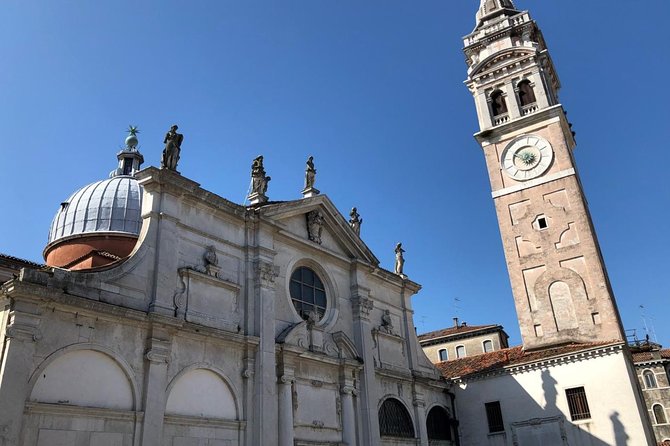
Next up is Campo Santi Giovanni e Paolo. This is one of those Venice squares where you can feel the daily rhythm of the city. It’s the kind of place where you can glance at façades, watch how people move through narrow lanes, and start noticing the smaller textures that make Venice feel real.
From a tour perspective, this stop works because it’s a “bridge” between the massive reputation of the St. Mark’s area and the more specific architectural detail you get later.
Here’s the practical benefit: your guide can help you keep track of the why behind the where. Even without museum-level stops, you’re still building a mental map that makes your own roaming afterward easier.
Teatro Malibran exterior: architecture without the ticket lines
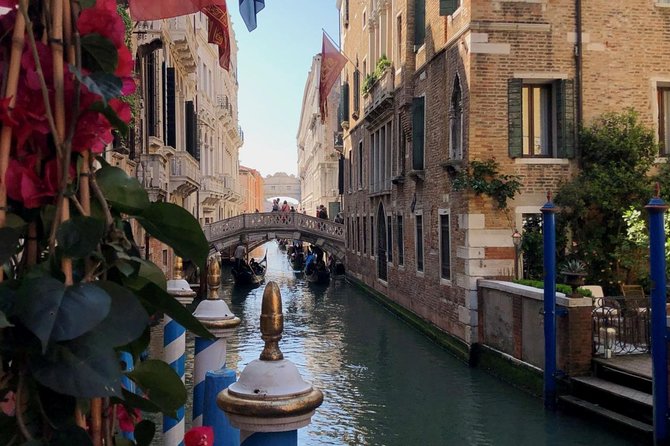
The itinerary includes the exterior of Teatro Malibran. You’re not being asked to spend extra time inside a venue, but you still get a sense of Venice’s cultural side beyond church doors and palace walls.
This is a smart inclusion for a short tour. It gives you a visual anchor that breaks up the religious and civic themes you’ve already seen. And even if you’re not a classical music person, you’ll likely appreciate the way Venice builds beauty into everyday streetscape.
One small consideration: because this tour is collective, you might not linger as long at each exterior as you would on your own. If you want to study façades for a long time, plan to come back later. For a walking tour, the goal is efficient understanding, not slow reverent staring.
The Rialto connection and what to do after the tour
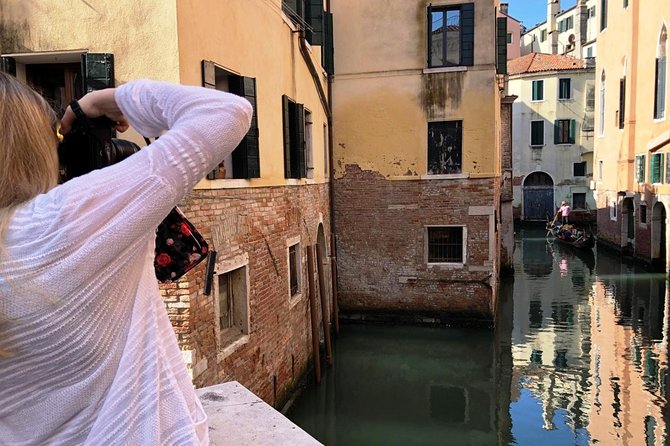
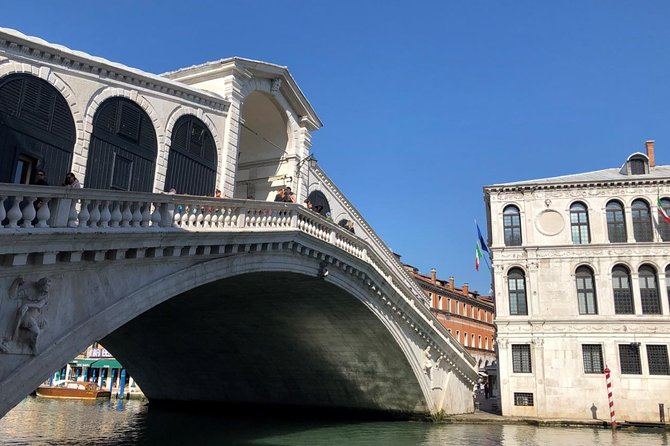
The description frames the experience as going from St. Mark’s Square to the Rialto Bridge, and the route is built around that idea. Even with the listed stops, the bigger picture is that you walk Venice’s central spine, with landmark interruptions that keep your attention from drifting.
Because the tour ends back at the meeting point, you’ll likely return near where you started. That’s useful if you’re planning a meal, a museum visit, or a second walk later. You’ll also leave with a better sense of how Rialto fits into the city’s geography, so your next stop feels less like a random destination and more like the next chapter.
If you like to keep your mornings practical, here’s the strategy: use the tour to learn the route and the key visual cues. Then, when you continue exploring, you can choose your own pace. You’ll know what’s worth pausing for and what to just walk past.
Language help in Venice, and who this tour fits best
Venice attracts mixed groups, and this tour accounts for that. During the winter period (November 1 to March 31), the tour is bilingual when the audience provenance is mixed, with explanations provided in two languages. English is daily, and the other languages follow a set schedule: Spanish on Wednesday, Saturday, and Sunday; French on Tuesday, Thursday, and Saturday; German on Monday and Friday.
During April 1 to October 31, English is daily, and Spanish, French, and German are also daily, with Italian on Saturdays.
If you’re traveling with limited Italian, the language structure matters. You’ll get explanations in a way that helps you follow the route without feeling lost. If you’re a solo traveler, that also helps you connect the dots quickly rather than reading everything yourself.
Who is this best for?
- You want a guided route that hits big sights without committing to a full-day plan.
- You prefer to learn through walking and storytelling at key points.
- You’re okay with being in a group on narrow Venetian streets.
Practical travel notes that make the difference
A few things help this kind of tour go smoothly.
Wear shoes you trust. Venice sidewalks and stone paths can be uneven. You’ll be walking between iconic spots, and you don’t want sore feet to steal your attention from the sights.
Plan for normal Venice crowd flow. Even at 9:00 am, St. Mark’s area is popular. Expect that you’ll sometimes pause while the group funnels through busy zones.
Keep your voucher handy. The representative checks your vouchers at the meeting point. If your phone battery is low, fix that before you head out.
Be realistic about short stops. This is a short tour. You’ll see and learn a lot, but you won’t get the leisurely time you might want at every single photo spot. Use the tour as your guided overview, then slow down on your own afterward.
Should you book this St Mark’s-to-Rialto walking tour?
Book it if you want a simple, guided route that helps you understand Venice’s top sights quickly, with a few smarter stops added to keep it from feeling one-note. The mix of Piazza San Marco, Santa Maria Formosa, Campo Santi Giovanni e Paolo, and the Teatro Malibran exterior is a good balance of headline places and texture.
Skip it or reconsider if your schedule is fragile, because missing departure at the meeting point can mean you’re out of luck. Also, if you already know exactly what you want to see and you dislike crowds, you might prefer a self-guided plan where you control every pause.
One more useful check before you go: on certain dates, Venice day visitors may need to pay a €5 access fee, and exceptions can apply. That’s worth verifying at the official site listed in your tour info, so you don’t get surprised on the ground.
If you’re aiming for your first morning walk in Venice, this is the kind of tour that can get you oriented fast, with just enough story to make your later wandering feel purposeful.
FAQ
How long is the Walking Tour of Venice from St. Mark’s Square to Rialto?
It runs for about 2 hours, described as approximately 1.5 hours of guided walking.
What is included in the tour price?
The tour includes a guided tour. Hotel pickup and drop-off are not included.
Where do I meet the guide for this tour?
You meet at Calle larga de l’Ascension, 30124 Venezia VE, Italy.
What time does the tour start?
The start time is 9:00 am.
Is the tour bilingual?
It depends on the season. From November 1 to March 31, it can be bilingual with two languages provided if the group is mixed. From April 1 to October 31, it is available in English daily, with other languages listed as available daily as well.
Does the tour require a special ticket type?
Yes, you receive a mobile ticket.
Is there any Venice access fee to consider?
On certain dates, day visitors may need to pay a €5 access fee. The tour info points to https://cda.ve.it for details and exemptions.
More Walking Tours in Venice

More Tours in Venice


More Tour Reviews in Venice



Not for you? Here's more nearby things to do in Venice we have reviewed











Walking Tours, compared.
 ★ 3.5Venice Walking Tour and Gondola RideFrom $723,630 reviews
 ★ 4.2Rialto Bridge & Offbeat Unusual Venice Walking TourFrom $283,538 reviews
 ★ 4.0Private 3 hrs Venice Tour: St Mark’s, Walking tour & Boat tourFrom $4803,372 reviews
 ★ 4.2City Center Historical Guided Walking TourFrom $141,873 reviews
 ★ 4.7Walking Guided Tour of the City Must-See SitesFrom $441,095 reviews
 ★ 4.0Private Best of Venice Walking Tour with St Mark’s BasilicaFrom $2421,063 reviews
 ★ 4.5Venice Sightseeing Small Group Walking Tour with a Local GuideFrom $48887 reviews
 ★ 4.5Walking tour, Doge Palace, & St. Mark’s BasilicaFrom $142884 reviews
Browse the lists this tour appears in