
Tour review · VENICE PRIVATE TOURS
Venice Private Walking Tour
A short tour, huge Venice payoff. This private 2-hour walk strings together some of Venice’s most recognizable places, with a local guide who helps you read the city as you go. You get a hotel pickup option in central Venice and you can choose your start time to fit your days.
I especially like the low-pressure pace. You move at your own speed, and the whole point is to let you ask questions as naturally as you would on a neighborhood walk, not as if you’re speed-running facts.
One thing to plan for: several big stops have admission not included. St Mark’s Basilica, Palazzo Ducale, and the Bridge of Sighs can mean extra tickets or line planning, so budget time and money for that part.
Key highlights to know before you go
- Private guide, not a group scramble: your questions and interests drive the conversation
- Hotel pickup in central Venice: less “where do I meet?” stress
- Rialto Bridge to St Mark’s in about two hours: a compact route that still feels complete
- Several landmark exteriors plus optional interior time: bring a plan for what you want to enter
- Guides with real local footing: I’ve seen praise for guides like Rossella, Michele, Emanuele, and Lucrenzia
A smart two-hour plan for first-time Venice orientation
Venice can feel like a maze with beautiful windows. This tour is designed to give you quick orientation without turning the city into homework. In about two hours, you get a guided route that connects the Rialto area to the St Mark’s and Doge’s Palace zone, so you finish with a clearer map in your head.
What makes it work is the structure. You visit several landmark spots, but you also get time to stop, look closely, and ask questions. That matters in Venice because the details are the fun part, not just the postcard views. If you care about everyday culture, street layout, and how locals move through the city, this format is a good fit.
Also, the tour is 100 percent private. That means you are not dealing with a loud group setting the pace. You can linger at a corner, slow down for photos, or ask the guide why something looks the way it does.
You can also read our reviews of more walking tours in Venice

Hotel pickup and choosing your start time
The tour offers pickup from your central Venice hotel, which is a big deal in a city where “meet me here” can turn into an hour-long scavenger hunt. If you’re staying in a central area, this can save your energy for actual sightseeing.
You also get to choose a start time that matches your trip. That flexibility helps more than it sounds. For example, if you want calmer streets and easier photo angles, an earlier start often works better than mid-morning when the crowds thicken. One of the strongest recurring themes in the tour feedback is that guides help you move through the city in a way that avoids the harshest crowd moments, especially when the timing is right.
Another practical plus: it’s offered in English and uses a mobile ticket. That makes the whole thing feel modern and easy to manage.
Rialto Bridge: the classic starting point that sets the tone
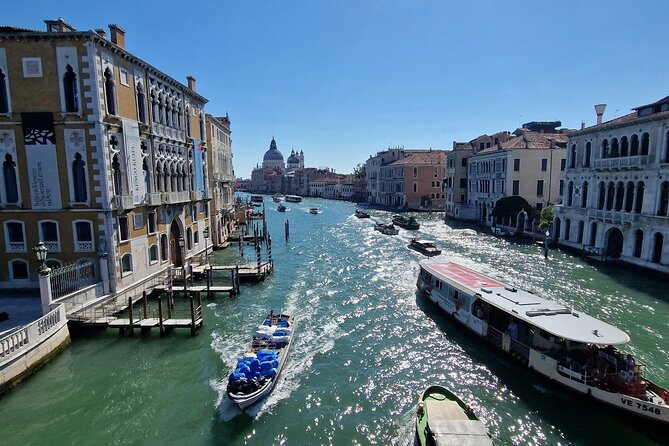
Your walk begins at Ponte di Rialto, the oldest of the four bridges that cross the Grand Canal. Starting here is a clever move because Rialto is one of the places where Venice instantly makes sense. You see the Grand Canal at the heart of the action, and you get a natural landmark to anchor your orientation.
Rialto is also free to enjoy, so there’s no ticket friction right at the start. You can spend your first minutes just looking, taking photos, and letting the guide point out what to notice.
If you’re the type who likes to understand a place before you start snapping away, this start helps. It gives you a base reference for where you are headed next.
Teatro La Fenice: a famous opera house without forcing an inside stop
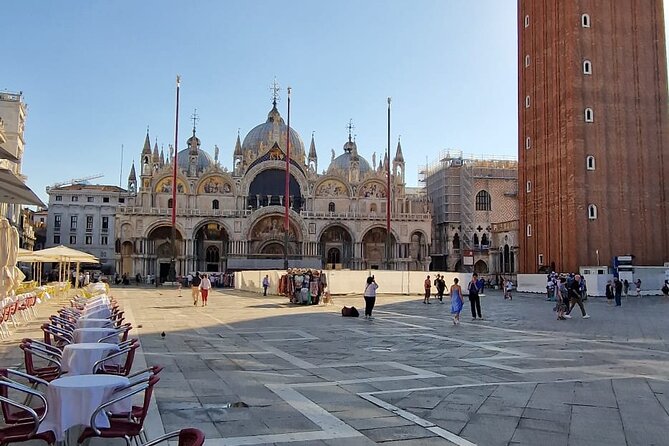
Next up is Teatro La Fenice, Venice’s historic opera house. Even if you don’t go inside, it’s a meaningful stop because it connects architecture and culture to the way the city has entertained itself for generations.
A key detail for your planning: the admission ticket is not included for this stop. That doesn’t mean the tour is incomplete. It means you should decide ahead of time whether you want to use your own ticket to go further inside, or if you’re happy to learn from the exterior and nearby context.
This is also a good moment to ask your guide how opera culture shaped Venice. You may be surprised by how often you see the city’s identity tied to performance, patronage, and social life.
Campo San Zulian: where Venice feels like a neighborhood again
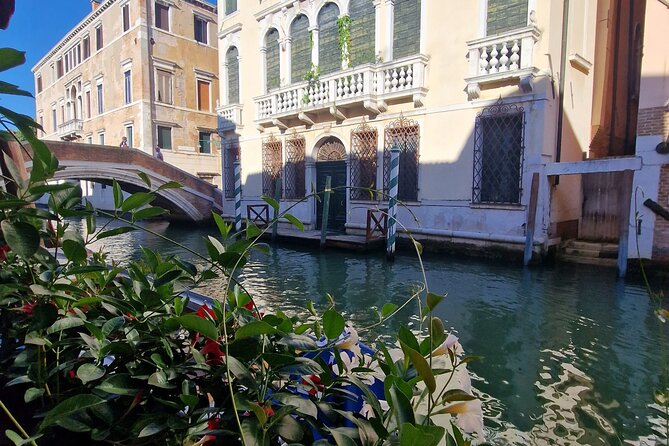
After the big-name landmarks, you head to Campo San Zulian, a medieval square that’s described as a long-running gathering place. This stop is about texture. Squares like this are where Venice stops feeling like a theme park and starts feeling like a lived-in city.
It’s also a smart break in the route. Campo San Zulian is free, so you can breathe for a bit and take in the facades and street rhythm without ticket pressure. You also get an easy “pause point” to regroup, buy a drink if it’s useful, and reset your eyes for the grand stage ahead.
If your goal is to understand how Venice works day to day, this kind of square stop is often the most satisfying part of a short tour, because it teaches you to look past the headline sights.
You can also read our reviews of more private tours in Venice


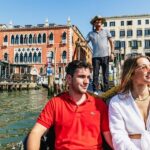


St Mark’s Basilica: the must-see exterior, plus ticket reality
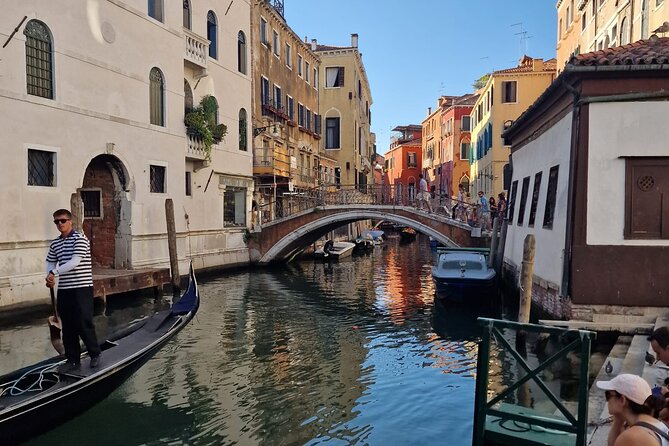
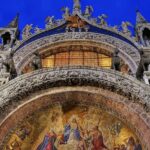
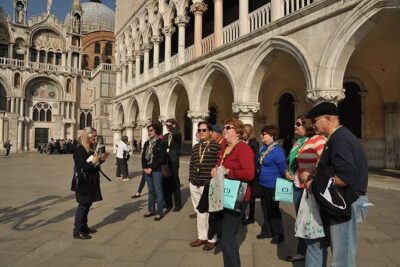
Your route brings you to St Mark’s Basilica in Piazza San Marco, the city’s principal square. This is one of the places where Venice turns up the drama, with an instantly recognizable profile and a lot to notice in stonework, layout, and the way the square frames movement.
But here’s the practical consideration: admission is not included. St Mark’s Basilica can involve ticketing or special entry rules, and you don’t want to get to the front of the line without knowing what you’re planning to do.
What I recommend is simple. If you want to go inside, make sure you’re ready for the extra time or tickets that come with that choice. If you mainly want the big visual impact from the plaza and around the basilica area, you can still enjoy the stop without feeling like you missed something.
Either way, having a guide at this moment helps. Piazza San Marco can be overwhelming, and a good guide helps you spot the details that most people walk right past.
Palazzo Ducale and the Bridge of Sighs: politics, power, and the view
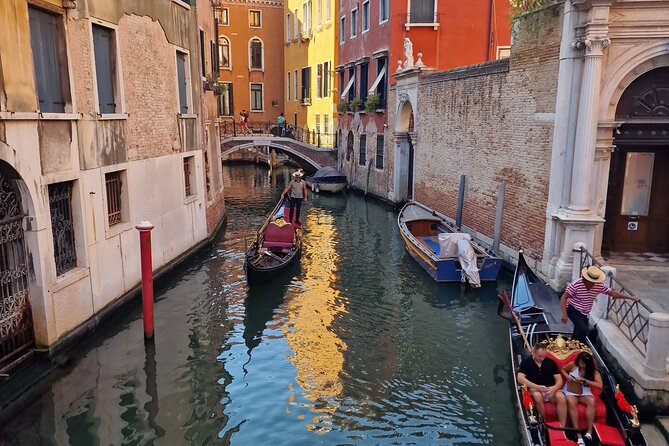
From Piazza San Marco, you continue to Palazzo Ducale, the Doge’s Palace. It’s Venetian Gothic style, and it served as the residence of the Doge, the supreme authority of the former Republic of Venice. The tour gives you historical context, but more importantly, it helps you connect what you see to how the city organized power, law, and civic life.
Admission for this stop is not included, so it’s worth deciding how you want to experience it. If you plan to go into the museum areas, you will need your own ticket. If you prefer to focus on the exterior and immediate surroundings, you can still get a lot out of the visuals and explanation.
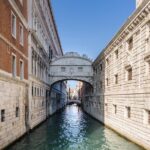
Then you reach Ponte dei Sospiri, the Bridge of Sighs. It’s a bridge with a specific, dramatic purpose, linking the New Prison to interrogation rooms in the Doge’s Palace. You’ll also learn about its enclosed design and stonework details, which is where this stop becomes more than just a photo moment.
Admission is not included for the Bridge of Sighs stop as well. So treat it as a moment to look and absorb the story first, then decide what level of ticketed access you want.
The guides make the difference: local perspective and crowd savvy
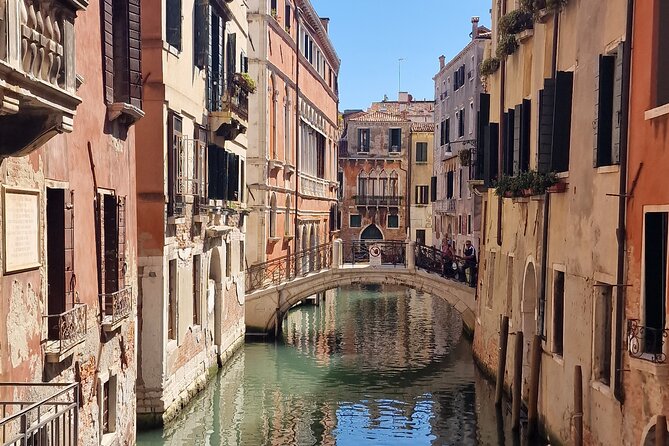
This tour’s strongest praise is about the guide. I’ve seen consistent comments like this: guides make the route feel like real Venice, not just a list of landmarks. People call out guides such as Rossella, Michele, Emanuele, and Lucrenzia for being helpful, informative, and genuinely Venetian in their approach.
One recurring theme is crowd strategy. For example, Michele is described as having taken guests to hidden parts of Venice and helped avoid the heaviest crowd areas, especially on early morning tours. That’s not magic, it’s timing plus local instincts. Even in a compact two-hour loop, you can still reduce the “stand shoulder to shoulder” feeling if you plan the start time and let your guide guide you.
Another recurring theme is practical help. Emanuele, for example, is noted for sharing suggestions of places to eat. That’s the kind of value that sticks with you after the tour ends. A tour that only tells you what you’re looking at is fine. A tour that points you toward where locals go is better.
Walking comfort: light to moderate, paced your way
The walking is described as light to moderate, and the key phrase is at your own pace. That matters because Venice walking can be unpredictable, from uneven stone to sudden crowd flows.
You’re also getting a built-in break schedule. Each landmark area is allotted time (about 20 minutes each), so you’re not constantly on the move without stops. This helps you avoid that end-of-tour fatigue where you can’t enjoy the last sights.
Still, you should wear comfortable shoes. Even a “light” Venice walk is on cobblestones and canal-side paths, where your feet take the hit.
Route pacing: how the order helps you learn Venice
This route has a learning arc. It starts with Rialto, then moves through culture at La Fenice, pauses at a neighborhood square, and then ramps up to the biggest civic-religious center around St Mark’s. You end with the political power center and its iconic prison-adjacent bridge.
That order is helpful because it mirrors how Venice works as a city. You’re not only seeing big monuments. You’re seeing the story of Venice in the city’s geography.
And because it’s private, you can adjust the emphasis. If you care more about civic history, you can ask more about Doge’s Palace and how the Republic functioned. If you care more about local daily life, you can spend a little more time at Campo San Zulian and ask what that square was like in earlier centuries.
Price and value: what $162.40 per person really buys
At $162.40 per person for about two hours, you are paying for several things at once: a licensed local guide, a fully private format, and pickup from central Venice.
Whether that feels like good value depends on you. If you want a guided narrative, especially for first-time orientation, the price can feel justified because you’re not just buying access to a site. You’re buying time and expertise, plus flexibility to ask questions without feeling rushed.
If you prefer to wander on your own and only want a map, you might feel the cost is more than you need. But Venice is one of those cities where a good guide can save you from the usual confusion, especially around the St Mark’s area where it’s easy to get turned around.
So my take is this: the tour is best value when you actually use the private format, ask questions, and decide what you want to see inside versus outside.
Who should book this Venice private walking tour
This tour suits you if you want:
- A compact Venice overview in about two hours
- A guide who can answer questions in plain language, and help you understand daily culture, not just architecture
- A private experience where your pace matters
- Hotel pickup in central Venice to reduce logistics stress
It may be less ideal if you:
- Want a fully ticketed sightseeing day with all major interiors included
- Prefer to spend most of your time inside museums or churches rather than walking and learning from the street
Should you book this tour
Yes, if your priority is getting your bearings fast and seeing the major landmarks with a real local guide next to you. It’s also a smart choice if you like the idea of a short, organized walk but still want freedom to ask questions.
I’d especially consider booking if you can plan your start time early. That’s when guides described as Michele-level crowd-smart planning can help you feel Venice instead of just surviving the crowd flow.
One last thought: because several key sights have admission not included, decide ahead of time which interior experiences are non-negotiable for you. If you’re clear on that, this two-hour route becomes a high-value way to build the rest of your Venice day around what you care about most.
FAQ
How long is the Venice Private Walking Tour?
The tour runs for about 2 hours.
Is the tour private or shared?
It is a private tour. Only your group participates.
What is the price per person?
The price is $162.40 per person.
Do you offer hotel pickup in Venice?
Yes. Pickup is offered from your hotel in Venice City Centre.
Where does the tour start and end?
It starts at Rialto Bridge (Ponte de Rialto, 30100 Venezia VE, Italy) and ends at Arsenale di Venezia, Campo de la Tana (2169, 30122 Venezia VE, Italy).
Is admission included for all the stops?
No. Admission tickets are free for Ponte di Rialto and Campo San Zulian, but not included for Teatro La Fenice, St Mark’s Basilica, Palazzo Ducale, and Ponte dei Sospiri.
Is there a mobile ticket?
Yes. A mobile ticket is included.
What language is the tour offered in?
The tour is offered in English.
What is the cancellation policy?
You can cancel for a full refund up to 24 hours in advance of the experience start time. After that, the amount paid is not refunded.
More Walking Tours in Venice
More Tours in Venice






More Tour Reviews in Venice



Not for you? Here's more nearby things to do in Venice we have reviewed




Venice Private Tours, compared.
 ★ 4.7From Venice: Murano & Burano Guided Tour by Private BoatFrom $614,170 reviews
 ★ 4.0Private 3 hrs Venice Tour: St Mark’s, Walking tour & Boat tourFrom $4803,372 reviews
 ★ 3.7Private Gondola Cruise for up to 5 PassengersFrom $1573,106 reviews
 ★ 3.9Private Gondola Ride along Grand CanalFrom $1682,475 reviews
 ★ 4.0Private Best of Venice Walking Tour with St Mark’s BasilicaFrom $2421,063 reviews
 ★ 5.0Private tour on Murano Island: discover the art of Artisanal GlassblowingFrom $108965 reviews
 ★ 3.6Private Gondola RideFrom $85757 reviews
 ★ 4.6Private Tour with a Local GuideFrom $62718 reviews
Browse the lists this tour appears in