
Tour review · HISTORICAL TOURS
Venice: Historical Walking Tour and Doge’s Palace
Venice turns into a story at street level. I like how the route pairs St. Mark’s Square architecture with a 1.5-hour wander through the Castello maze, then delivers you into Doge’s Palace with skip-the-line entry. I also like that the guide keeps the focus on how power, art, and everyday Venetian life connect. The main drawback to weigh is simple: this is a real walking tour, and it is not wheelchair accessible.
You’ll meet 15 minutes early at Calle larga de l’Ascension, behind the Correr Museum and opposite St. Mark’s Basilica, looking for a TURIVE assistant near the post office of San Marco. The tour runs rain or shine, and in winter (Nov 1 to Mar 31) you should expect that skip-the-line access may not apply to St. Mark’s Basilica itself.
Key highlights you will actually feel
- Skip-the-line entry for the Doge’s Palace saves time in one of Venice’s busiest spots.
- Two distinct Venice “moods”: formal St. Mark’s Square, then twisting Castello lanes and canal-side views.
- Doge’s Palace guided focus on how the duke and council ran the Republic of Venice.
- Bridge of Sighs and the new prison moments that make the building’s purpose click.
- Renaissance art stops, including Tintoretto’s huge oil painting.
- Guide style tends to be clear and structured, with explanations that do not drown you in numbers.
Why this 3-hour Venice mix works so well

This tour is built like a good Venice day plan: start with the grand symbols, then move into the human-scale streets where you can feel the city’s rhythm. The first half stays mostly in the St. Mark’s area, where Venice tells you who it is. The second half sends you into Castello, where Venice shows you how it lived.
Then comes the payoff. Doge’s Palace is not just a pretty building, it’s the place where political decisions were made. A guided hour inside helps you connect the rooms, the art, and the famous passage points into one story. If you want one guided experience that covers multiple “Venice worlds” without crisscrossing the city for hours, this is a strong choice.
The walking time also matters. The itinerary uses about 1.5 hours on foot through Castello, and then about 1 hour guided inside the palace. That pacing is manageable for most visitors with decent shoes, but you should plan your day around it rather than trying to stack a museum sprint afterward.
Getting started at Calle larga de l’Ascension, and what to pack
Before you think about art or alleyways, you need to find the group. Meet 15 minutes early at Calle larga de l’Ascension 30124, behind the Correr Museum, on the opposite side of St. Mark’s Basilica. Look for the TURIVE assistant next to the post office San Marco.
This is one of those tours where arriving a few minutes late can turn into a scavenger hunt. Venice is full of confusing walkways, and meeting points can look identical from different angles.
What to bring is also straightforward:
- A passport or ID card for children (adults should obviously bring ID too, even if not explicitly stated).
- Comfortable walking shoes, because the tour is not wheelchair accessible and you will be on your feet for long stretches.
What not to bring:
- No pets
- No baby strollers
- No smoking
- No luggage or large bags
- No backpacks inside Doge’s Palace
One practical tip: if you usually travel with a small daypack, plan to keep it out of the palace. The rules are clear, and you do not want to be the person reshuffling bags at the entrance.
St. Mark’s Square: where architecture teaches Venice politics
The tour kicks off in Saint Mark’s Square, with the guide focusing on two big visual anchors: St. Mark’s Basilica and the Renaissance-era clock tower. This matters because it helps you read the square instead of just taking photos.
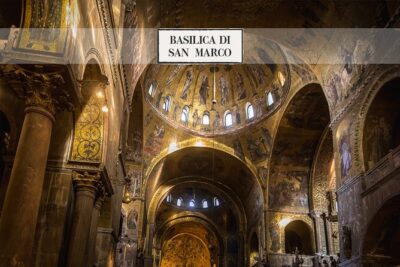
St. Mark’s Basilica is the kind of building that looks like it belongs in a fantasy movie, but the guide’s job is to connect that wow factor to meaning. You’ll learn how Venice used sacred and civic architecture together, projecting power as much as faith. You also get context for why St. Mark’s Square became the city’s stage.
Then there is the clock tower. Even if you have seen towers in other European cities, this one carries a distinct “Venice timing” vibe. Venice historically ran on schedules, trade rhythms, and state signals. A good guide shows you how clock-and-calendar imagery ties to authority, not just accuracy.
Winter note you should care about: from Nov 1 to Mar 31, there is no skip-the-line entrance to St. Mark’s Basilica. That does not kill the tour, but it can change how fast you move at the start. If you are visiting in peak winter, arrive prepared for possible waiting around the basilica area.
Castello on foot: the romantic streets with real landmarks
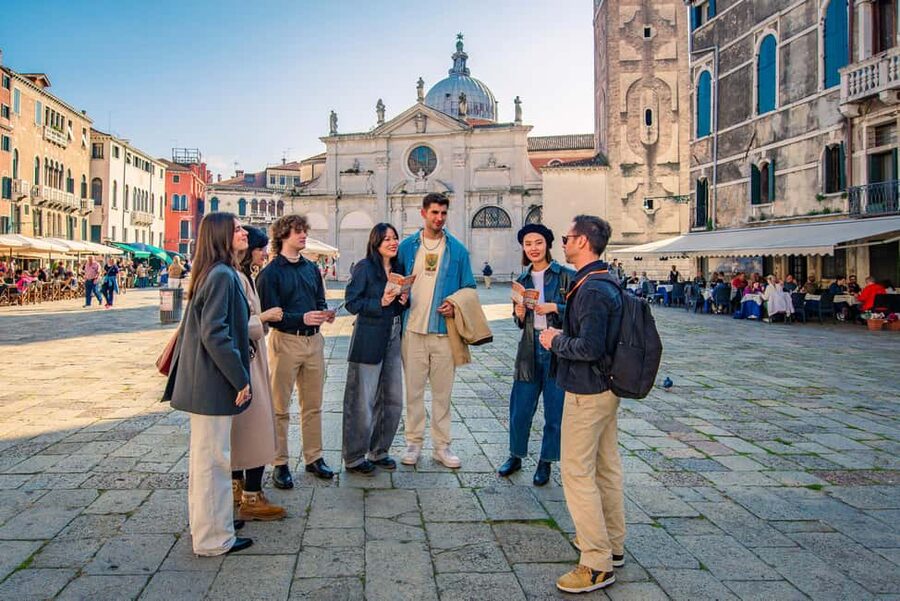
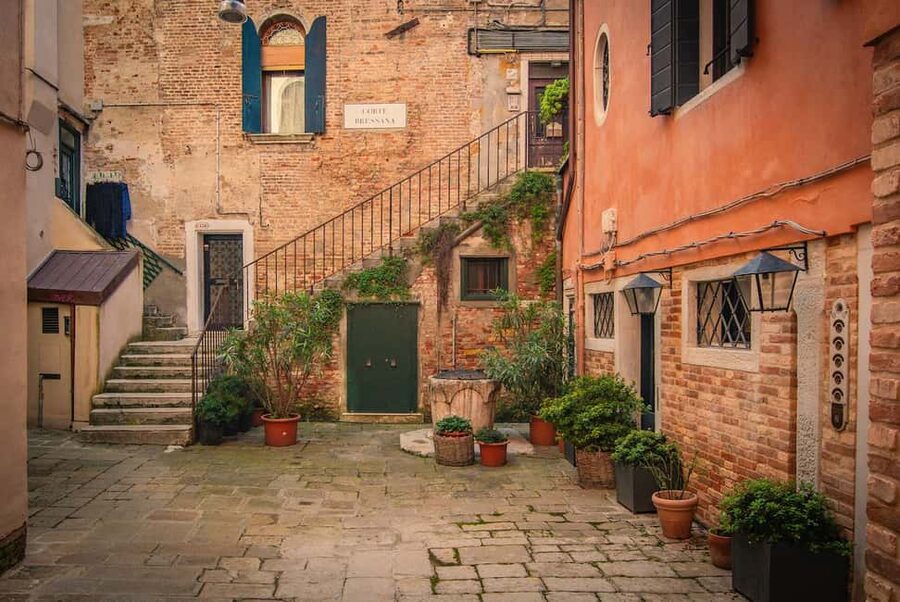
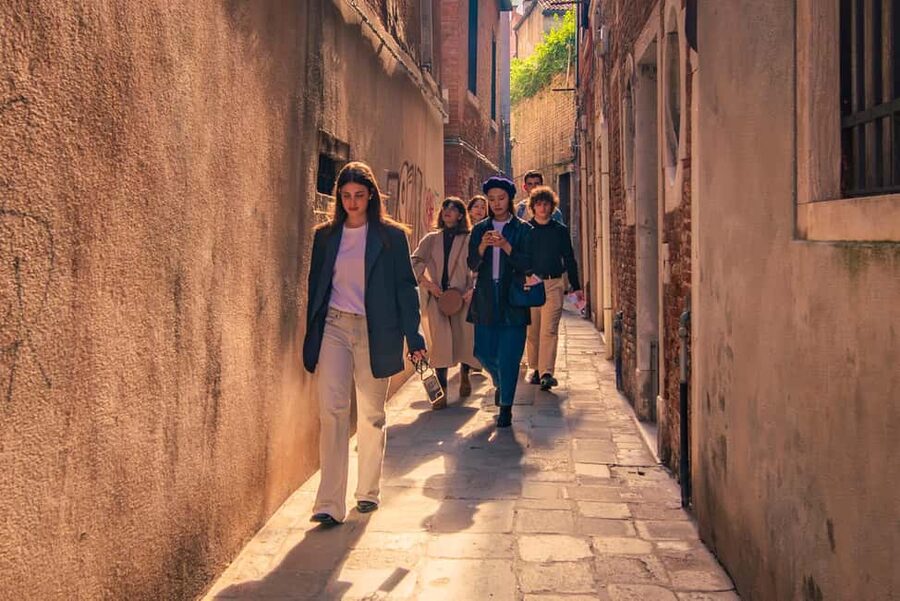
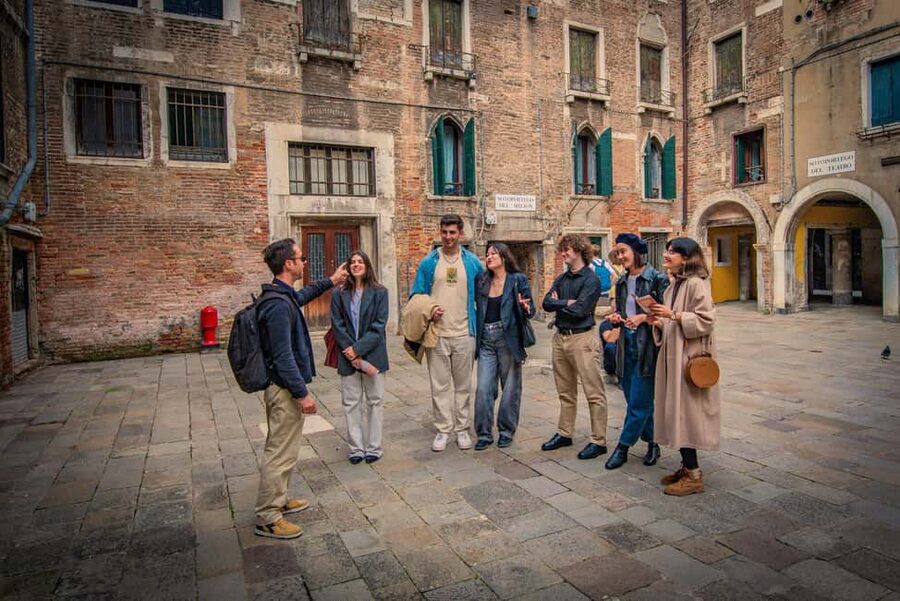
After the St. Mark’s phase, you leave the square and head into Castello, which is where Venice goes narrow. You’ll stroll through a labyrinth of narrow alleys, bridges, winding canals, and little squares. This is the part where Venice feels lived-in, less like a postcard queue.
One of the big wins here is variety. You are not only walking in one direction. You are repeatedly turned by crossings and canal bends, so the route keeps resetting your view.
Here are the standout places you will pass through:
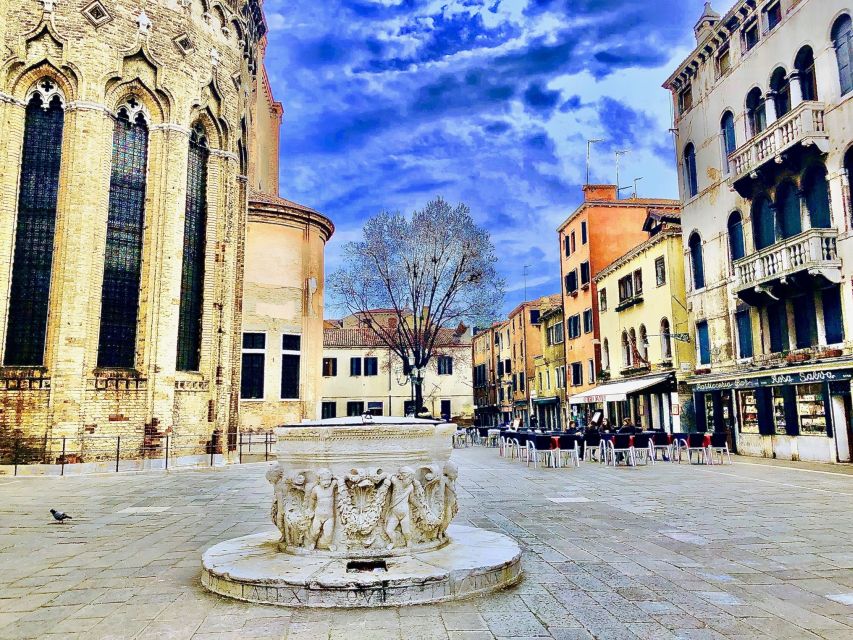
- Santa Maria Formosa Square with its church, named for the visitation of the Holy Virgin. This is a great stop to notice how local churches shape neighborhood identity. The square is one of Venice’s larger public spaces, so it gives you a breather before the next tight lane.
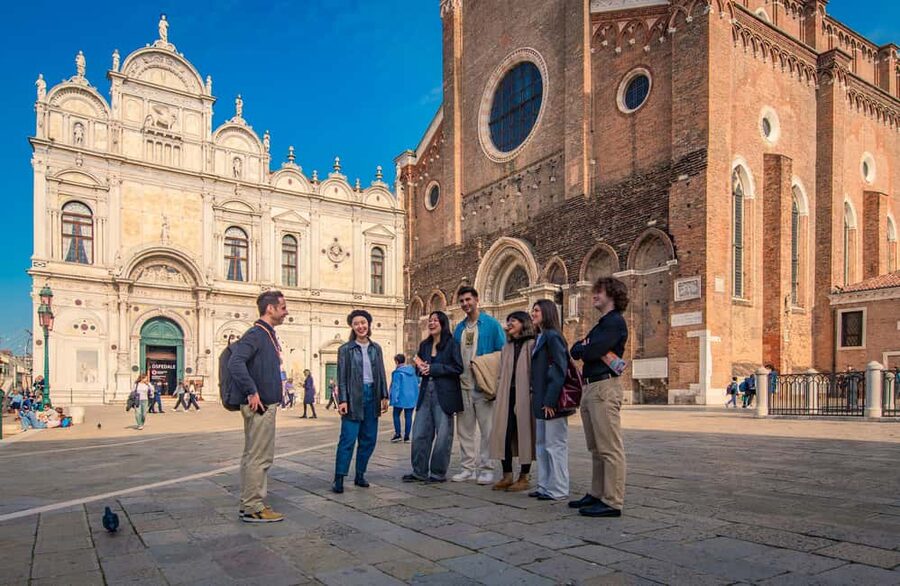
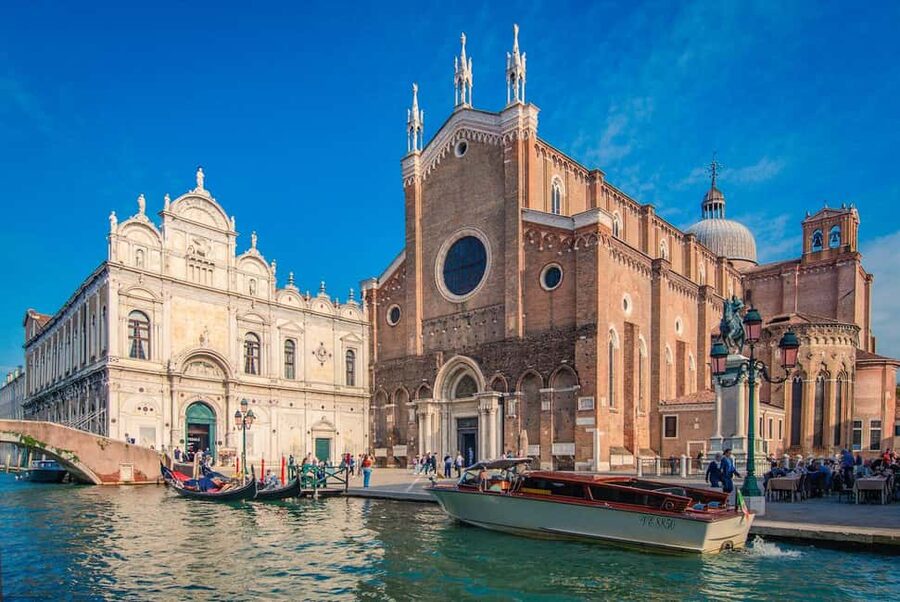
- Saints Giovanni and Paolo Square, where several dukes and doges lie buried in the church. This is Venice’s political afterlife in stone and architecture. It’s not just art, it’s continuity.
- The equestrian monument to Bartolomeo Colleoni, a reminder that Venice relied on more than fleets and treaties. It also leaned on commanders, including mercenary captain figures like Colleoni, to protect and expand influence.
- The former residence of Marco Polo. Even if you know Polo mostly from history books, the point here is location. You get a sense of how a merchant-adventurer fits into the city’s identity, not just a distant story from a different continent.
If you’re the kind of person who gets tired when tours feel like a checklist, Castello is the fix. The streets are the show. The guide’s job is to connect what you see to why it matters, and the route naturally gives you small moments of pause to look around.
Doge’s Palace: skip the line, then get the story in one hour
The second half centers on Doge’s Palace, once the seat of power of the Republic of Venice. The headline benefit is skip-the-line access for the palace. That is not just comfort. It’s value. Venice has lines that can quietly drain half your mood. When you cut that friction, the architecture and art hit harder.
Inside, your guided tour spends about 1 hour walking through the palace’s power spaces. You’ll hear how the duke and his council controlled the fate of the Serene Republic, and you’ll see that idea translated into rooms, symbols, and artworks.
This is where the guide style matters. Several past tour experiences highlight that the explanations tend to be clear and structured, hitting important context without turning the visit into a lecture full of numbers. That approach is exactly what you want in a place like this, where the building is already doing most of the work visually.
Art lovers will also appreciate what’s called out in the tour experience:
- Renaissance masterpieces by major artists, including Tintoretto’s world’s largest oil painting.
That kind of fact helps you look with purpose. You stop viewing canvases as decor and start seeing them as part of state messaging.
You also get to wander through halls where political history is literally displayed in painting and symbolism. Even if you are not a hardcore art person, a guided hour helps you notice the relationships between images and institutions.
Bridge of Sighs and the new prison: why this building feels tense
If St. Mark’s Square is Venice performing, Doge’s Palace is Venice deciding. The famous Bridge of Sighs is one of the key emotional turning points, because it links public power to private confinement.
In the palace tour, you also pass through the connection to the new prison. That detail matters. It gives you a sense that the palace was not only about grand ceremonies. It had consequences. The famous bridge is often discussed because it looks dramatic, but with a guide, you understand what the passage meant within the palace system.
This is also where your expectations should adjust a bit. Doge’s Palace is not a museum where you wander at your own pace forever. It is a guided flow through significant rooms and viewpoints, ending in a courtyard where you can linger if you want.
Practical walking and weather tips for a smoother day
This tour operates rain or shine, so your plan should not depend on perfect skies. Bring shoes that handle wet stone and canal-adjacent puddles. Also, Venice stone can be slick, especially near bridges and narrow shaded lanes.
High tides are another real Venice variable. The tour notes that the schedule may be affected in case of high tides. That does not necessarily mean cancellation, but it can mean small route timing changes. If you’re photographing, build in a little patience.
One more practical thought: because backpacks are not allowed inside Doge’s Palace, you may need to travel light. That’s not just about rules. It also keeps your pace from getting slowed at the entrance.
Who this tour fits best (and who should choose another option)
This experience is great for people who want:
- A guided historical walk that combines streets and major institutions.
- A focused hit of St. Mark’s Square and Castello, followed by a structured palace visit.
- The kind of context that helps you make sense of Venice beyond a single landmark.
It is not a good match for:
- People with mobility impairments or wheelchair users, since it is not wheelchair accessible.
- Anyone planning to bring pets, strollers, luggage, large bags, or a backpack into the palace area.
For families: children up to 5 years old go free with documentation. From age 6, children must pay a full ticket. If you’re traveling with kids, comfortable shoes become even more important because the tour depends on walking between multiple stops.
Is the value worth it? My take on time, access, and what you learn
You are paying for three things: time, access, and guided interpretation.
The time is the obvious part, it’s 3 hours total. You get the St. Mark’s Square introduction, the Castello district walk, and the palace tour all in one package.
The access is the less flashy part. Skip-the-line at Doge’s Palace is a real quality-of-life upgrade. In a city where waiting can feel endless, that alone improves the tour experience.
The interpretation is the final part. Doge’s Palace can be overwhelming if you show up with no context. A good guide connects political purpose to rooms and artwork, including the big Tintoretto callout. And the Castello leg turns streets into clues, giving you a reason to look up at facades and notice squares instead of just passing through them.
Could it feel pricey compared to doing things on your own? It can, because Venice prices add up fast. If you love self-paced wandering, you might feel boxed into a 3-hour schedule. But if you want a clean plan and less guesswork, the guidance is the main payoff.
Should you book this Venice historical walking tour with Doge’s Palace?
Book it if you want a structured Venice day that hits the square, the neighborhoods, and the state power site without turning your visit into a logistics puzzle. It’s especially good if you want the Doge’s Palace visit to make sense, not just look impressive.
Skip it, or choose a different format, if you cannot handle a lot of walking, you need wheelchair access, or you strongly prefer unguided time. Also consider that in winter the basilica skip-the-line detail may change your starting experience, so plan extra patience around St. Mark’s Basilica.
If your goal is to understand why Venice looks the way it does, and what the city’s leaders tried to control, this tour is a very practical way to get there.
FAQ
Where is the meeting point for the tour?
Meet 15 minutes early at Calle larga de l’Ascension 30124, behind the Correr Museum and on the opposite side of St. Mark’s Basilica. Look for the TURIVE assistant next to the post office San Marco.
How long is the tour?
The total duration is 3 hours, with about 1.5 hours walking in the St. Mark’s Square and Castello areas, plus about 1 hour guided inside Doge’s Palace.
Is there skip-the-line access?
The tour includes skip-the ticket line for entry to Doge’s Palace. A note for winter visiting (Nov 1 to Mar 31) says there is no skip-the-line entrance to St. Mark’s Basilica.
What languages is the live guide offered in?
The live tour guide is available in Spanish, French, German, and English.
What should I bring, and what are the restrictions?
Bring passport or ID card for children. The tour does not allow pets, baby strollers, smoking, luggage or large bags, and backpacks inside Doge’s Palace.
Is the tour wheelchair accessible?
No. The tour is not wheelchair accessible and is not suitable for people with mobility impairments.
Historical Tours, compared.
 ★ 3.9St. Mark Basilica Ticket, Audioguide+History GalleryFrom $234,780 reviews
 ★ 4.5Venice’s Best: Basilica, Doge’s Palace, Gondola & History GalleryFrom $1292,478 reviews
 ★ 4.2City Center Historical Guided Walking TourFrom $141,873 reviews
 ★ 4.3Bell Tower & St Mark’s Square History Gallery TicketFrom $44910 reviews
 ★ 5.0Basilica, Doge’s Palace, History Gallery & Bell Tower OptionFrom $116586 reviews
 ★ 4.7Natural History Museum Entry TicketFrom $11312 reviews
 ★ 3.5St. Mark’s Cathedral Priority Guided Tour & History GalleryFrom $33148 reviews
 ★ 4.8Venice, Submarine Enrico Dandolo and Naval History MuseumFrom $30109 reviews
Browse the lists this tour appears in