
Tour review · VENICE PRIVATE TOURS
Venice for First-Timers: Essential Private Tour
Venice can be confusing fast, so start with the story behind it. This private, first-timer-friendly tour connects the lagoon systems to everyday Venice life, including the MOSE flood barriers and how acqua alta works. I love the way the guide turns big ideas into street-level understanding, and I also love the small group size (up to eight), which means you can ask real questions without feeling rushed.
One possible drawback: the tour is tightly timed, with short stops, so if you want museum-style lingering or long photo breaks, you may feel a little “time-boxed.”
Key highlights to look for on this Venice first-timer tour
- Up to eight people, so the pace stays personal and questions get answered
- MOSE flood barrier education, explained in plain language and tied to Venice survival
- Acqua alta mechanics, including why lunar and tide patterns matter more than simple rain talk
- Lagoon connections to the Adriatic, through the port inlets and tidal exchange
- Modern flood memory, linking historic acqua granda to events like 2019
- Local Venice vibe, with practical tips for where to eat and what streets feel like “real” Venice
Why MOSE and Acqua Alta matter to first-timers
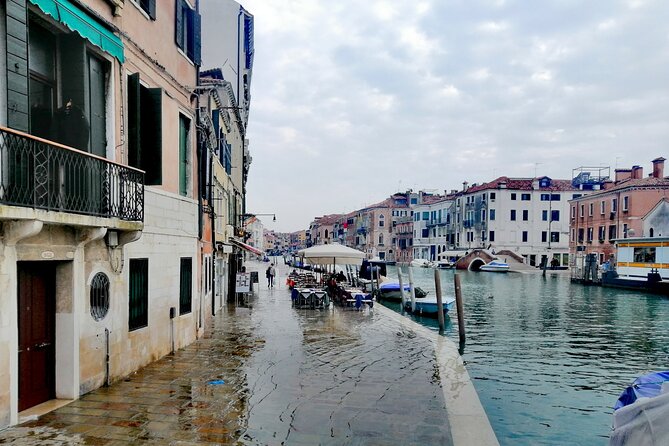
Venice is beautiful, but it is also a water city with rules. Once you understand those rules, the city stops feeling random. This tour gives you that mental framework fast, centered on how the lagoon interacts with the Adriatic and what happens when water levels rise.
I especially like the tour’s focus on cause and effect. You learn about the MOSE floating flood barriers and why they exist, but you also learn what Venice deals with daily, not just dramatic headlines. The big takeaway is simple: acqua alta is about tides and atmospheric conditions, and it only becomes a city crisis above a key threshold.
If you’ve heard Venice floods “all the time,” good. You’ll still learn something new, because the explanation is not just doom and gloom. It’s systems thinking. Venice is managed, but it is also weather-dependent, and that balance shapes what you see on the ground.
You can also read our reviews of more private tours in Venice
What your small-group private tour actually buys you
This is a private tour, meaning it is only your group. That matters in Venice. You do not have to fight for attention in a crowd, and the guide can adjust on the fly based on your interests and questions.
The “up to eight travelers” limit is a real quality upgrade, not marketing fluff. I like tours where I can ask follow-ups, like why a certain area stays drier, or how one event differs from another. With a smaller group, those questions actually land.
You’ll also get a licensed guide (Valerio Coppo is the provider name tied to the experience) and the tour runs in English. From the tone of how the guide teaches, it feels designed for people who want both facts and story, not just a list of monuments.
Practical note: pickup is offered, and the tour is near public transportation. You’ll want to plan where you meet your guide based on your day’s schedule, especially if you’re also trying to squeeze in sights like St. Mark’s or a canal cruise afterward.
Laguna di Venezia: Venice shaped the water, then learned to live with it
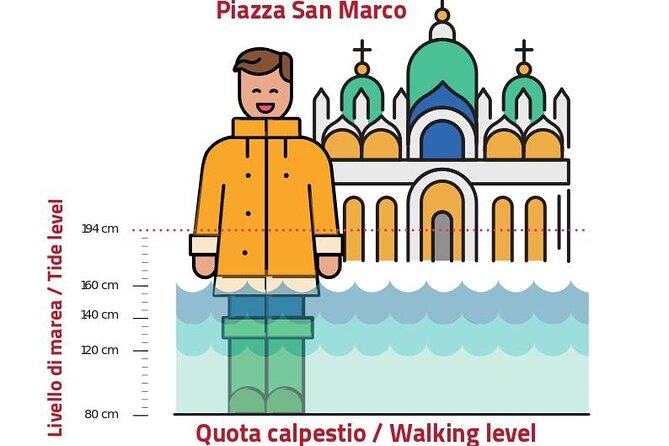
The first stop is Laguna di Venezia, and the focus is on how Venice treated the lagoon like a living partner, not a backdrop. You’ll get a guided explanation of how centuries of human planning tried to shape the lagoon for survival and purpose, from barriers against the sea to the redirection of water and rivers.
This is where you start understanding Venice as an engineered environment. Even if you only see a few lagoon edges and water views, the story connects to what you’ll walk past later. Instead of thinking Venice is a city that sits by water, you start thinking it is a city that was built around water behavior.
A key value here is perspective. The guide doesn’t present MOSE or floods as isolated “events.” You see them as part of an ongoing relationship between the city and the lagoon.
Time check: expect about 15 minutes at this stop. That’s short, but it works best as orientation. If you are the type who wants to stand and stare for half an hour, you may want to add extra time near the lagoon after the tour.
The Adriatic connection and the 80 cm acqua alta threshold
Next comes Venice proper, with an explanation of how the lagoon connects to the Adriatic through three port inlets. That tidal exchange matters because it governs water movement in and out, which affects the lagoon ecosystem and what happens around the city.
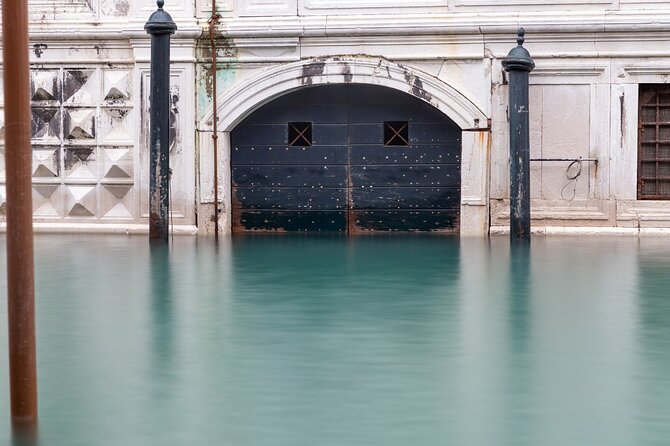
Here’s the practical idea the tour centers on: high tide becomes a problem for Venice only when it crosses a certain level. The tour highlights 80 cm as the threshold where you can talk about acqua alta.
If you’re a first-timer, this is gold. It turns a vague term into a measurable concept. Then, when you later hear people say the water is “bad today” or “not too high,” you’ll know what they are really referring to.
One caution: if you’re planning a full day, keep in mind this tour gives you the science and the story, not a long sightseeing spree. You’ll still want to schedule flexible time after the tour, because Venice weather and tide talk can change how you move through the city.
Why acqua alta is not just rain: lunar phases and low pressure
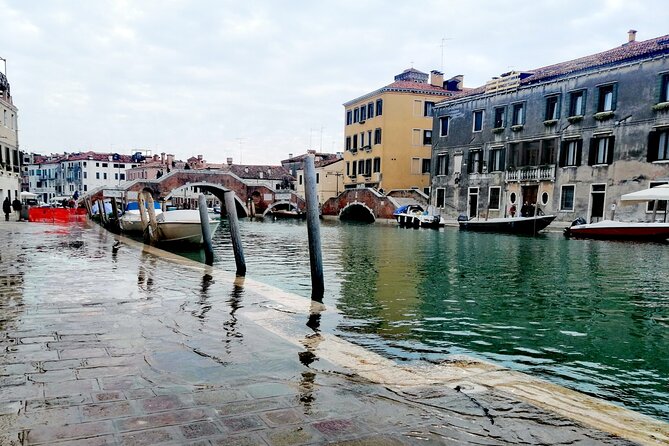
At the city stop, the tour gets into the “why” behind acqua alta. You’ll learn how multiple phenomena combine, and you’ll also hear a key point: rain has nothing to do with it in the straightforward way people assume.
Instead, the guide explains that the timing and severity are linked to lunar phases, astronomical tides, and major atmospheric factors like strong winds and low pressure. This part is one of the most useful for real planning. You stop thinking in simple checklists and start thinking in patterns.
For me, the best teaching style here is how the guide helps you separate what is predictable from what is less predictable. If you’ve ever tried to guess whether you need a plan for flooding by checking the weather forecast alone, this section helps you understand why that approach can fail.
Expect another 15-minute stop here. It’s enough time for the concepts to stick, but not enough for deep meteorology. The tour’s goal is clarity, not a technical lecture.

How Venice stays dry at 80 cm, then suffers at 140 cm
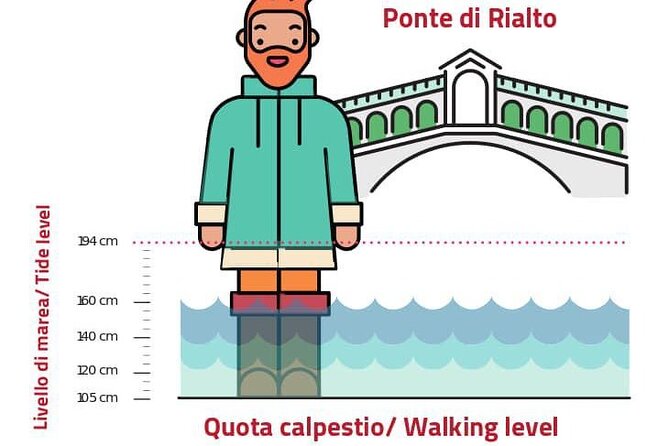
Venetian lagoon water levels can be surprising. The tour explains why with 80 cm tides you might still keep your feet dry, while at around 140 cm the city feels the impact much more strongly.
This is one of those “now I get it” lessons. It reminds you that flood impact is not only about height, it is also about how water spreads through the city’s geography and the lagoon’s conditions at that moment.
For first-timers, this helps you interpret what you’re seeing. You’ll start connecting what people call “flood day” to actual water behavior, rather than assuming it’s a uniform event across Venice.
This stop is also about expectation setting. Venice is a web of spaces, not one flat surface. The tour makes that idea concrete in a short time.
Aqua granda and the 1960s peak: how tragedy shaped city life
Then you move into history, specifically the 1960s tragedy tied to aqua granda. The tour frames it as a day of exceptional bad weather across Italy, when Venice saw the highest peak ever recorded in the tour’s story of the event. You’ll learn how that kind of impact changed how the city developed and how people lived in the decades that followed.
I like this segment because it connects the science to human memory. Flood barriers and management plans are not abstract. They are responses to specific days that changed residents’ lives.
If you’ve ever wondered why so much Venice infrastructure and planning feels intensely water-focused, this is where you understand the motivation. The city has layers of adaptation, and this event becomes a key chapter.
You’ll also see a theme that runs through the whole tour: Venice responds, then conditions shift again, and the city has to adapt again.
Lido di Venezia and Campo Santa Maria Formosa: the 2019 reality check
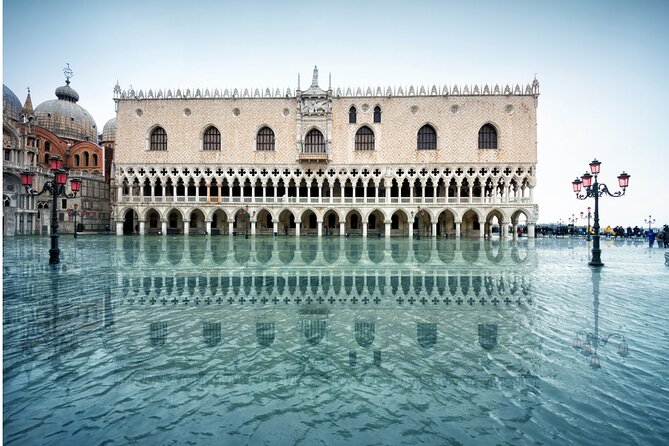
The final stops include Lido di Venezia and Campo Santa Maria Formosa, where the tour connects earlier historical flood memory to more recent events, including the evening situation in 2019.
This is not meant to scare you. It’s meant to show you continuity. Natural events are increasingly linked with climate pressures and with crowding that adds strain to daily life. The guide ties that discussion to specific places that were heavily impacted at the time.
From a first-timer perspective, this is useful because it prevents a common mistake. People come to Venice expecting the past to be the story, and they forget that present conditions shape what the city is becoming. Seeing those connections in real neighborhoods gives you a more honest picture than postcard Venice.
As with earlier stops, time is compact, around 15 minutes each. You can treat this as a set of educational waypoints, then return later on your own for longer wandering with context.
Price and value: what $185.85 gets you in Venice terms
The tour costs $185.85 per person for about two hours and is limited to eight travelers. On paper, it’s not the cheapest way to “do Venice.” But in a city like Venice, private guiding has a real cost-saving effect on your energy and confusion.
You’re paying for:
- a licensed guide who can explain systems (lagoon, tides, flood barriers)
- private group dynamics, so you can ask questions
- a tight orientation that helps you read Venice for the rest of your trip
One strong value signal in the feedback is how often people describe the experience as a perfect start, especially for families and first-timers. The guide’s style comes across as balanced, with lots of small anecdotes and practical recommendations for the rest of the day, including where to eat, plus sweet stops like chocolate shops and gelato spots.
If you’re the type who likes to understand what you’re looking at, this tour pays off quickly. You’ll walk away with a mental map for why water behavior changes across the city and how Venice tries to manage it.
If you want purely “see the sights” sightseeing, you might feel this tour is more about learning than checking off landmarks. But the itinerary still walks you through key Venice water-and-city story locations.
Who this tour suits best (and who might skip it)
This tour fits best if you:
- are visiting Venice for the first time and want the city’s water logic explained early
- want a private feel with a small group size so your questions get answered
- care about understanding acqua alta and the MOSE system, not just hearing that Venice floods
It also seems to work well for families, including kids, based on how the guide engages children and keeps the tone right.
You might consider skipping or pairing it with something else if you:
- only want long scenic time at one or two iconic spots
- dislike walking between short stops and want fewer transitions
Before you go: the one Venice fee detail to know
The tour notes that on certain dates, visitors who are staying outside Venice and coming for the day may need to pay a €5 access fee. That fee depends on the day and exemptions, and you should check the official page for which dates apply. If you’re staying in Venice overnight, you may not face that same issue, but it’s worth confirming.
Should you book this Venice for first-timers private tour?
Yes, if you want a smart start. I’d book it on day one if you can, because the lagoon and acqua alta explanations will change how you notice water levels, street choices, and even how you plan your next canal walks.
It’s also a good pick if you’d rather spend your first hours learning the city’s logic than just chasing photos. The up-to-eight group size makes the tour feel personal, and the guide’s local street perspective plus food recommendations are a practical bonus.
If you prefer freeform exploration only, then you might skip it. But if you want Venice to make sense fast, especially the water part, this is a strong use of your time.
More Private Tours in Venice
More Tours in Venice
More Tour Reviews in Venice


Not for you? Here's more nearby things to do in Venice we have reviewed
Venice Private Tours, compared.
 ★ 4.7From Venice: Murano & Burano Guided Tour by Private BoatFrom $614,170 reviews
 ★ 4.0Private 3 hrs Venice Tour: St Mark’s, Walking tour & Boat tourFrom $4803,372 reviews
 ★ 3.7Private Gondola Cruise for up to 5 PassengersFrom $1573,106 reviews
 ★ 3.9Private Gondola Ride along Grand CanalFrom $1682,475 reviews
 ★ 4.0Private Best of Venice Walking Tour with St Mark’s BasilicaFrom $2421,063 reviews
 ★ 5.0Private tour on Murano Island: discover the art of Artisanal GlassblowingFrom $108965 reviews
 ★ 3.6Private Gondola RideFrom $85757 reviews
 ★ 4.6Private Tour with a Local GuideFrom $62718 reviews
Browse the lists this tour appears in