
Tour review · TOURS
Venice Film Tour: Explore Iconic Movie Locations
Venice feels different when you spot the scene first. This Venice Film Tour strings together classic and modern movie locations across the city, with a guide who talks film craft and local history as you walk. I like that it is not just a scavenger hunt, it is a way to understand why Venice keeps getting picked as a movie set, and how those scenes shape what you notice today.
I also really enjoy the pace. You get quick stops at major landmarks plus quieter corners, and the guide, Valerio Coppo, seems to use the group time well, often sharing extra context and fast clip moments from a tablet. One consideration: this is a good-weather walk, so if rain or bad conditions hit, you may be moved to another date or offered a refund.
Key things to know before you go
- A tight 2-hour route: you cover major movie hotspots without spending your whole day stuck in line.
- Valerio Coppo is the star: expect lively film storytelling and smart ways to move through Venice.
- Free listed access at stops: many of the sights you pause at are marked as admission free for this experience.
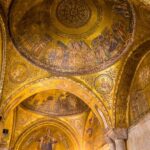
- Real Venice, not just photos: you learn what you are looking at, from domes and campi to canals and palaces.
- Small-scale, private feel: it is only your group, and that often makes questions easier.
A Venice movie walk that makes the city click fast
If Venice is your first time, it can be visually overwhelming. This tour helps you get your bearings fast by giving you clear scene references. Instead of trying to memorize neighborhoods, you follow a simple thread: where a scene was shot, what it is doing in the film, and what that spot looks like in real life.
What I found most useful is the way the tour connects film to place. You are not just told what exists, you get reasons why Venice looks the way it does in cinema. The result is that even when the scene is fictional, the setting often is not. That is the fun part, you learn to read the city like a script.
You can also read our reviews of more tours and experiences in Venice.
Price and what you actually get for $185.43
At $185.43 per person for about 2 hours, this is not a budget tour. But it is also not just a generic sightseeing walk. You are paying for a licensed guide, English commentary, and a route that hits multiple film locations scattered across Venice, in a structured order.
Here is where the value comes in for your day planning:
- Many stops are listed as admission ticket free, so you do not spend your time paying extra to enter basic viewing points.
- The pace is built for a short window. If you only have a morning or afternoon to do something meaningful, this helps you get multiple highlights with less effort than jumping around on your own.
- It is private for your group, which usually makes it easier to ask questions and steer the conversation toward your favorite movies.
Two small cost notes to keep in mind. Tips are not included. Also, on certain dates, day visitors staying outside Venice may need to pay a €5 access fee, depending on which day you go. If that applies to you, it can be the only surprise cost.
Start at the railway station, the movies grab you immediately
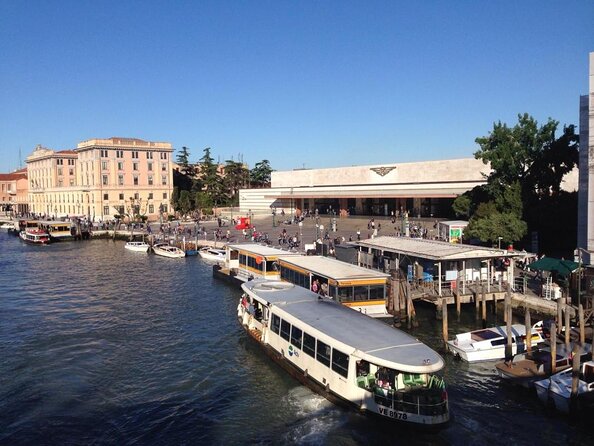
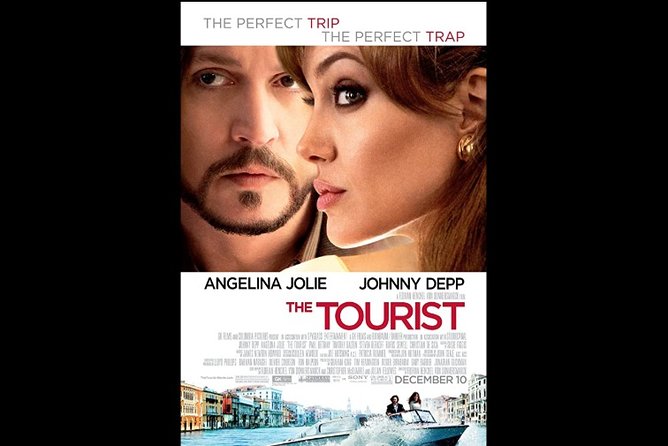
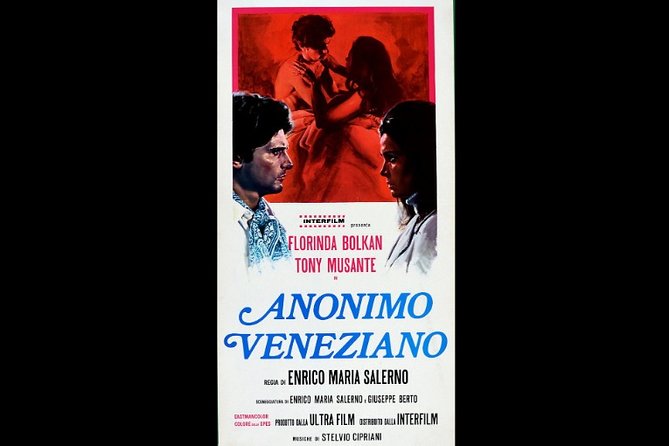
Your tour kicks off at Venice’s main railway station, a frequent starting point for on-screen stories. If you like Italian cinema history, this stop is especially fun. It is tied to L’Anonimo Veneziano (1970), The Tourist (2010), and perhaps most memorably to the Alberto Sordi gondolier moment in Venice, the Moon and You (1958).
Why this works as a first stop: stations are cinematic in a specific way. They instantly signal arrival, expectation, and movement. And in Venice, that feeling matters. Once you start walking from here, you get into the flow of canals and streets that films lean on again and again.
Campo del Ghetto and San Stae: drama close to the water
Next you step into Campo del Ghetto, in the Jewish Ghetto area. Luchino Visconti uses this kind of open space to set up intimacy and tension in Senso (1954), including the opening of the passion between Livia Serpieri (Alida Valli) and Franz Mahler (Farley Granger).
Then you move to Chiesa di San Stae (also known as Eustachio), where the final scenes of Don’t Look Back Now (1973) feature funeral boats moored overlooking the Grand Canal. This stop is short, but it is powerful because it links a church frontage you would usually just pass with a specific moment of cinematic suspense.
Practical takeaway: these are not high-speed photo stops. If you slow down for a minute and look at how the canal frames the architecture, the film references land better. You start noticing sightlines.
Grand Canal and Rialto: where the camera history begins
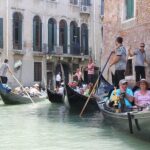
The Grand Canal stop is a highlight for film nerds and casual fans alike. The tour connects it to one of cinema’s early milestones: Alexandre Promio’s 1896 gondola run, described here as the first rundown in cinema, shot with boats and men at work.
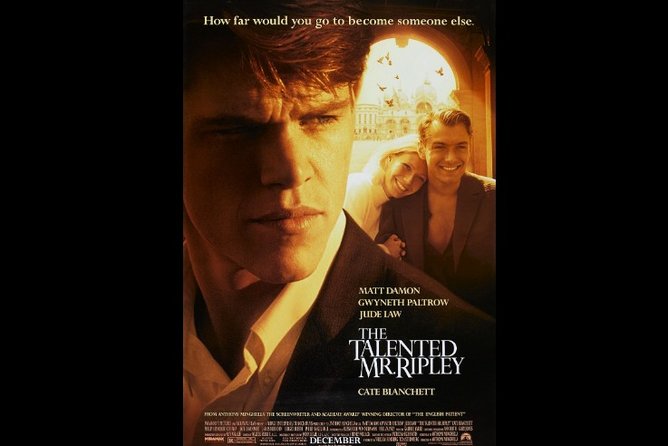
Then it connects the canal to later stories, including how the apartment setting in The Talented Mr. Ripley (1999) was effectively a blend of two buildings overlooking the water. It also ties in The Merchant of Venice (2004), using the canal as a recognizable backdrop for major plot moments.
From there, you hit Mercati di Rialto. This is one of those spots where Venice feels like it has a pulse. In The Tourist (2010), Johnny Depp’s dramatic terrace jump lands at the Rialto fish market. And across the canal, the tour points out a James Bond palace-collapse moment in Casino Royale (2006), clarified as movie fiction, not a real-life disaster.
If you get value out of this tour, it is because you leave with a clearer mental map of where Venice “shows up” on screen. Grand Canal and Rialto are part of that map in a big way.
Santa Maria dei Miracoli and Scuola Grande di San Marco: art that feels staged
Santa Maria dei Miracoli is small, beautiful, and richly decorated, with polychrome marble. You will also connect it to Orson Welles’ Othello (1952), where the church is chosen for the wedding of Otello and Desdemona. Right nearby, the tour mentions a flower shop location tied to Bread and Tulips (1999), with a note that the flower shop itself is part of the fiction.
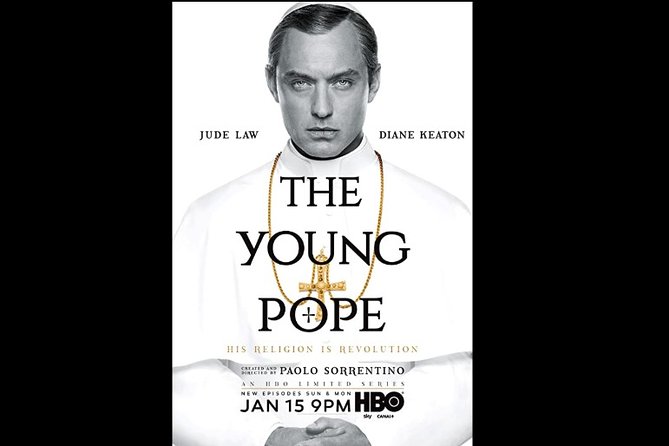
Then comes Scuola Grande di San Marco, used for scenes in The New Pope (2019). This is where your brain starts to do something useful. You begin to see how film production likes strong interior spaces, with controlled lighting and dramatic backdrops that look good on camera.
Ca’ Rezzonico and La Fenice: palaces and theaters with plot gravity
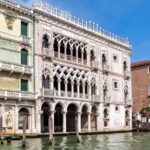
At Ca’ Rezzonico, the tour points out how this palace, now a civic museum, plays a fictional role as Drax’s office in Moonraker (1979). The practical point here is that Venice’s palaces are built with big-scale perspective in mind. That makes them naturally camera-friendly.
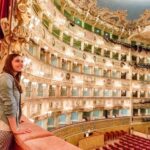
Then you stop at Teatro La Fenice. The tour connects Senso (1954) to a performance moment at La Fenice, where Il Trovatore is staged before a devastating fire in 1996. The theater’s rebuilding and reopening in 2003 is part of the story, and there is even an irony in the name La Fenice, the phoenix, because fires had already hit before.
If you are short on time in Venice, a theater stop like this is smart. You get a sense of grandeur in minutes, and you understand why movie makers keep returning to Venice’s performance spaces.
Scala Contarini del Bovolo and Campo Santa Maria Formosa: Venice plays dress-up
Scala Contarini del Bovolo is famous for its spiral staircase. The tour adds a legend layer: it is described as the house of Desdemona, and Orson Welles picks this palace as Brabanzio’s home in Othello (1952). Even if you do not know the plot, the story explains why this location became popular for storytelling.
Then you visit Campo Santa Maria Formosa, a square that has been altered for filming in Spider-Man: Far From Home (2019). The important note is that the destruction you see in the movie is fictional. In real life, you can enjoy the corners of Venice as they are, not as a set dressing.
How to get more out of these two stops: take a moment at each one and look for angles. Many Venetian streets feel like they were designed for film framing. This is one of those tours where you start spotting camera logic.
San Barnaba, the Gritti Palace, and Venice’s hotel cinematic history
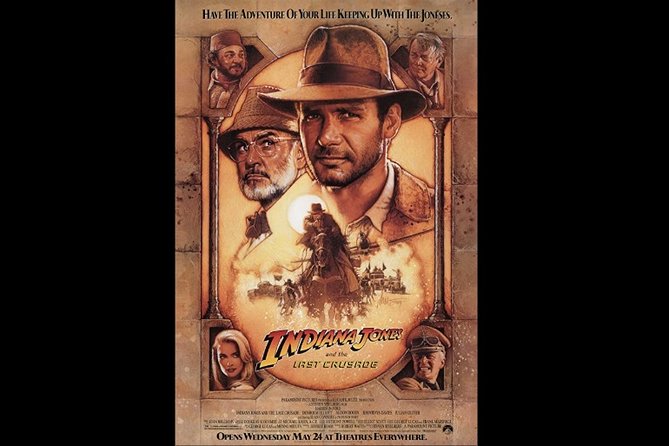
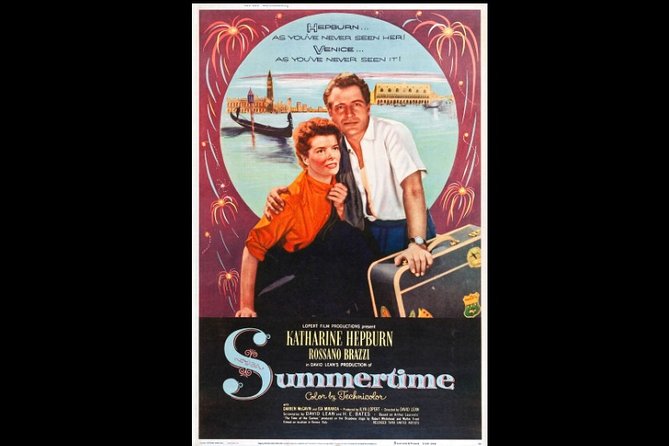
At Campo San Barnaba, the tour connects the basements of the San Barnaba church to the Indiana Jones moment in Indiana Jones and the Last Crusade (1989), with the famous X that never indicates the place to dig. It also ties in Summer Time (1955), where Katharine Hepburn’s American tourist character wanders and accidentally falls into the San Barnaba canal area. The stop even links to the remake of The Italian Job (2003).
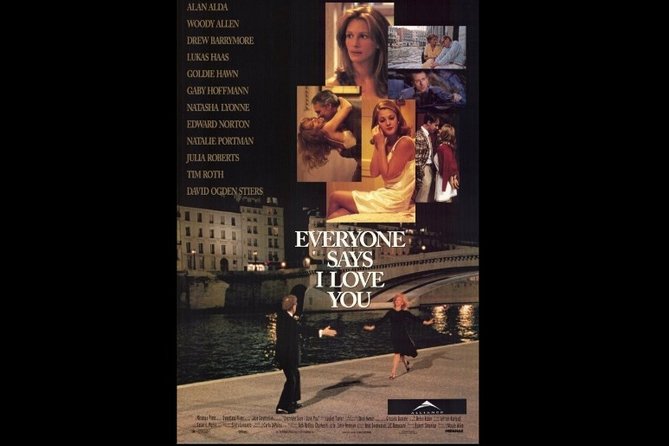
Next you pause at the Gritti Palace, a Luxury Collection Hotel. The tour notes it used to be a doge’s family palace and later hosted Vatican ambassadors. Famous guests named here include John Ruskin, Ernest Hemingway, and Somerset Maugham. More recently, Woody Allen filmed scenes there for Everyone Says I Love You (1996), starring Julia Roberts.
This stretch is fun because it flips your expectations. Venice is not only canals and churches. It is also built around big, theatrical hospitality spaces where stories happen. Even if you never go inside a luxury hotel, seeing how it is used in film helps you read Venice as a living stage.
Santa Maria della Salute and Piscina Sant’Agnese: big-screen references, real details
Santa Maria della Salute is the kind of church you remember once you see it. In Lara Croft: Tomb Raider (2001), the tour mentions an Illuminati sect gathering here, but clarifies that the specific room shown is actually the Painted Hall of the Old Royal Naval College in London. That distinction matters, because it teaches you to separate what was shot on location from what was constructed for the movie.
You also connect Santa Maria della Salute to The Talented Mr. Ripley (1999), where Ripley has a conversation with Dickie’s father. The tour places the dialogue across the canal on a terrace linked to the Hotel Westin Europa and Regina.
Then you step to Piscina Sant’Agnese. This is a smaller, local-feeling stop. It is linked to Julia Roberts jogging in Everyone Says I Love You (1996). It also connects to Katherine Hepburn freshening up during Summer Time (1955).
This is the kind of stop that makes the tour feel grounded. You see how filmmakers borrow not only monumental landmarks but also everyday Venice rhythms.
Hotel Danieli and Doge’s Palace: when Venice becomes James Bond and Shakespeare
At Hotel Danieli, you get a dose of high-profile film and culture. The tour names Wolfgang Goethe, Richard Wagner, and Honoré de Balzac as past connections, plus the historical relationship involving George Sand and Alfred de Musset. In film terms, the tour ties the hotel to Vittorio de Sica’s The Journey (1974) starring Sophia Loren and Richard Burton.
It also links Hotel Danieli to Moonraker (1979) as the hotel of Holly Goodhead. And it connects the hotel to Viaggi di Nozze (1995), describing a first tragicomic wedding night for Raniero Cotti Borroni and Fosca, portrayed by Carlo Verdone and Veronica Pivetti.
Finally, you end at Doge’s Palace. The tour connects this palace to Bond’s unusual vehicle in Moonraker (1979), describing a gondola-hovercraft over San Marco Square. It also ties Doge’s Palace to Casino Royale (2006), where Bond has a hotel view right on San Marco square.
There is also Orson Welles’ Othello (1952) connection, placed at the side facade south of the basilica for a dramatic dialogue moment. And the tour ties San Marco areas to The Talented Mr. Ripley (1999) for the final scene at café tables in the Piazza. It even mentions Paolo Sorrentino’s The Young Pope (2019) scenes in this square.
By the time you reach this end point, you have seen the big Venice postcard sights through a different lens. You do not just see San Marco. You understand why it keeps showing up on screen.
How to fit this into your Venice day (so you do not rush yourself)
Because the tour runs about 2 hours, you want to protect your energy. Venice walking is not only about distance, it is about constant small steps, bridges, and turning your head at the wrong moment.
A good strategy:
- Plan a flexible afternoon or morning window. This tour is built for a weather-dependent walk, so keep your next plans casual.
- Wear shoes you can tolerate for repeated short climbs and cobblestones.
- If you love movies, bring your favorites in your head. The guide’s references will make more sense when you already know the scene vibe.
One extra tip from the way the tour is guided: ask Valerio for restaurant recommendations. This kind of personal local suggestion can be the difference between eating well near your lodging and finding a place that fits your tastes and time.
Should you book the Venice Film Tour with Valerio Coppo?
Book it if you want a short, structured way to see Venice through stories. This tour is especially good for cinephiles, families with movie-loving kids, and anyone who feels overwhelmed by Venice’s scale. You get a strong mix of monumental sights and side-corner Venice, tied to recognizable classics and modern hits, with a guide who makes the connections fun and clear.
Skip it or consider it carefully if you hate walking in tight spaces or if you are only going to Venice for one day and your schedule is ultra rigid. Since it needs good weather and you are outdoors between stops, rain can throw off your momentum.
For most people, the decision is simple. If you are willing to walk for two hours and you like the idea of seeing real places where films were made, this tour is a smart use of time, and the film-location focus gives you something deeper than a standard highlights route.
More Tours in Venice
More Tour Reviews in Venice
Not for you? Here's more nearby things to do in Venice we have reviewed
Tours, compared.
 ★ 4.7Doge’s Palace & St. Mark’s Basilica with Terrace Access TourFrom $12310,697 reviews
 ★ 4.4Burano, Torcello & Murano Boat Tour w/GlassblowingFrom $2810,245 reviews
 ★ 4.2Murano and Burano Boat Tour with Glass Factory VisitFrom $349,527 reviews
 ★ 3.5Murano, Burano and Torcello Half-Day Sightseeing TourFrom $257,928 reviews
 ★ 4.5Murano & Burano Islands Guided Small-Group Tour by Private BoatFrom $367,580 reviews
 ★ 4.4Murano & Burano Panoramic Boat Tour w/ GlassblowingFrom $296,212 reviews
 ★ 4.4Murano, Burano, Torcello, and Glass Factory TourFrom $405,563 reviews
 ★ 4.7From Venice: Murano & Burano Guided Tour by Private BoatFrom $614,170 reviews