Tour review · VENICE
Palladio. A wonderful live tale through time&soul, from Ve/Pd/Vr
Palladio turns architecture into a time story. This private Palladian Routes outing strings together UNESCO-worthy sites in Vicenza and a Venice connection through a director-led tale that makes the ideas feel alive, from ancient Athens to later Washington. I particularly love how the day mixes big visual set pieces like the Basilica Palladiana and Teatro Olimpico with practical context, so you understand what you are seeing. One note to plan for: entry at Villa La Rotonda and Villa Foscari is not included, so your total day cost can rise depending on access.
The pacing is built for real sightseeing, not museum marathon stress. Expect private transportation, a mobile ticket, and multiple short stops that keep you moving while still letting the details land. If you want a day that feels both structured and slightly personal, this is the right vibe, especially since your guide can adapt parts of the program when possible.
Key reasons this Palladio day feels worth it
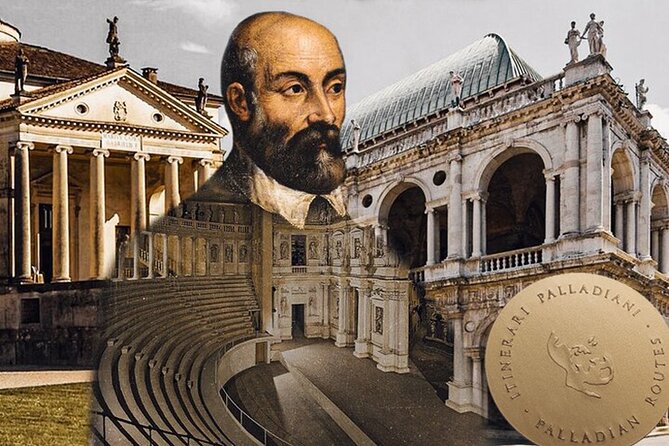
- Director-led storytelling with a time-and-ideas thread, linking Palladio’s influence across centuries
- Teatro Olimpico with a light and sound show, inside an early model for enclosed theaters
- Basilica Palladiana views plus an interior goldsmith stop, so you get architecture and craft in one move
- Palladio Museum wooden models, which make the villas finally make sense
- Palazzo Valmarana Braga reception and private aperitif, including alcoholic drinks in a special setting
A private Palladio day that feels like a guided storybook
This is not the usual, walk-in, walk-out tour where you only collect facts. The format leans hard into narrative, with the itinerary framed as a journey through time and ideas. That matters, because Palladio is not just a style. He is a way of thinking about proportion, power, and how public life should look.
You also get a strong backbone of UNESCO sites in Vicenza, then a Venice mirror. The tour’s angle is simple: you see Palladio’s architecture in its home setting, then you notice how that same world shows up across the water.
The private-transport setup helps. Between stops, you are not stuck managing your own directions, ticket queues, or slow transfers. The day is still full, but it stays manageable because the route is built to connect each location smoothly.
You can also read our reviews of more tours and experiences in Venice.
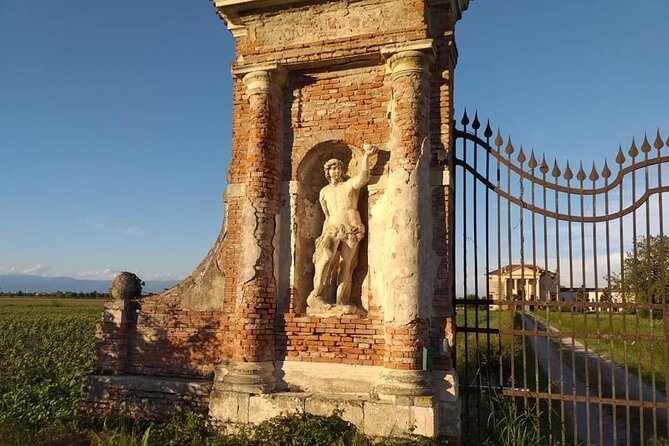
Villa Chiericati Door of Time: the start that sets the mood
The day opens at Villa Chiericati for The Door of Time, even though you are not going inside. It is described as romantic and ruin-like, and that matters because the tour starts with atmosphere, not entry tickets. Think of it as a theatrical “we are starting a story” moment.
This is a short stop, about five minutes. That is useful if you want momentum early, but it also means you will likely want to linger elsewhere later if your group loves lingering on textures and viewpoints.
If your group likes symbolism, this opener is a good fit. If you prefer only places you can enter, just treat this as a quick exterior scene-setter.
Palazzo Valmarana Braga: a private reception with frescoes and power
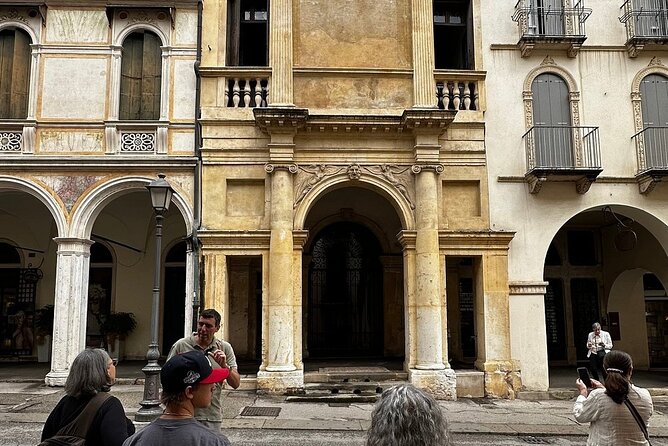
Palazzo Valmarana Braga is where the day gets its first real “wow” interior. You get a welcome reception in one of the most beautiful palaces of UNESCO heritage, and it is tied to the business network of the owners of Palladio villas. That gives the visit a behind-the-scenes flavor that you do not always get on pure sightseeing tours.
You get introduced to the history of the UNESCO heritage context, then you shift into direct art and architecture appreciation. You look at the palace facade, you see the Renaissance fresco with a cosmology theme on the ceiling in the Count’s study, and you get a reconstruction of what the Empress of Austria saw during her visit. The story then moves into how Palladianism spread into the wider fabric of commerce and culture, not just into buildings.
This is one of the stops where the time in the schedule feels earned. About 25 minutes can still sound short, but here it is paired with a clear focus: exterior elegance, then specific interior art details you can actually name afterward.
Piazza dei Signori and Basilica Palladiana: the city’s stage
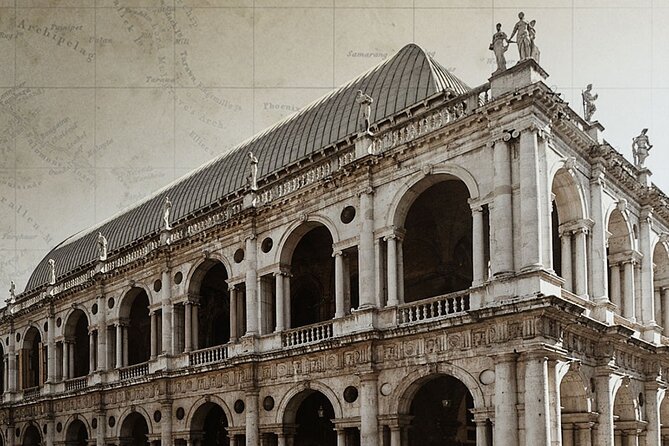
Piazza dei Signori is your “living room” stop, about 20 minutes. The value here is perspective. You get a spectacular view of Vicenza’s patrician salon, and you learn how the square functioned as a social and civic stage. It is the kind of place where you can feel the choreography of daily life and power.
Right after, you step into Basilica Palladiana, with entry included. This is a symbolic building of Vicenza, and you go up to enjoy terraces with views back toward Piazza dei Signori. Then you go down between the arcades to see a goldsmith tradition represented by the Jewelery Museum.
Practical note: this is a good stop to keep an eye on your group’s pace. The basilica’s layout invites both quick looks and slower “wait, look at that” moments. If you like taking photos, you will probably want those terraces.
Venice in the distance, Vicenza up close: Strada Maior and Contrà Porti
Between the classic set-piece sites, the tour slows you just enough to notice city rhythm. Strada Maior is the main street in Vicenza, named for Andrea Palladio, and it connects to the main Palladian works. You also get historic shops and the architecture that acts as a backdrop to normal daily life.
This part is where you understand Palladio as a designer of settings, not only standalone monuments. The tour also frames Vicenza as a kind of little Rome, with a genius loci idea that you are meant to feel through walking and watching.
Then you add Contrà Porti, about 15 minutes. The description is dramatic, but the point is tangible: buildings span different layers of history and different cultures. Vicenza is presented as a northern end of the Renaissance world and a southern end of Reformation influence coming from the continent. The street becomes a physical summary of how ideas can overlap in the same place.
Palazzo Chiericati Museum: portraits that connect people to design
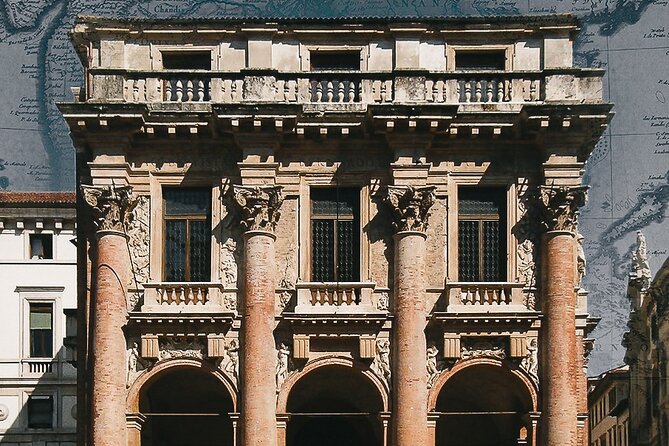
At Museo Civico di Palazzo Chiericati (entry included), you get a civic museum experience in a UNESCO World Heritage setting. The facade is imposing, and the palace also functioned as a river landing place from Venice, which adds a subtle “Venice to Vicenza” bridge to the day.
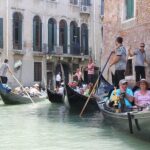
Inside, the museum leans toward Venetian art. You focus on the main floor, where large portraits depict the men who, in more than one way, helped shape the architect. That is a smart angle. It reminds you that buildings do not happen in a vacuum. Patronage, education, and social networks matter.
This stop runs about 30 minutes. It is long enough for the key artworks to land without turning the day into a lecture hall.
Teatro Olimpico: the dream stop with light-and-sound
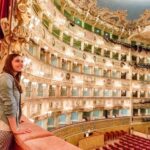
The Teatro Olimpico visit is one of the most distinctive moments of the whole day. Entry is included, and the theater includes an evocative light and sound show. If you are someone who thinks Greek ideals and architecture sound too academic, this show is likely the antidote.
You also learn the basic historical frame: it is described as the first covered theater in history, and it represents the ancient Greek ideal that Palladio and his clients pursued. Architecturally, it is said to be brilliant and surprising in its atmosphere.
The visit is about 35 minutes. That is a sweet spot: long enough for the main show effect, not so long that you start feeling trapped in your seat.
After this, you get a real choice point. The tour notes that you can return to Venice more quickly or take it slower by taking the next train an hour later. That flexibility is a big deal when you have a long day and want control at the end.
Palladio Museum: wooden models that make the villas click
At the Palladio Museum (entry included), the main draw is the way it teaches. You get to discover the legacy of Palladio’s villas by looking closely at wooden models. For many people, that is where Palladio stops being a name and starts becoming a system: you can see how parts relate, how entrances work, and how the plan drives the feel of space.
This stop runs about 40 minutes. It is one of the longer blocks, and for good reason. Model-based learning takes time, but it pays off because it makes the next villa moments easier to understand.
There is also an extra time advantage mentioned: the museum can open even outside standard opening hours to public. That helps keep the tour on schedule and prevents that frustrating, I thought we would be inside by now, feeling.
Villa La Rotonda: the icon stop, with entry windows to watch
Villa La Rotonda is the big headline, and it is handled carefully in the tour. You can reach it by pedaling on a comfortable Palladian e-bike if you want the ride, or you can go by other means as arranged by the group. Entry is excluded, so you are relying on your date’s access rules and your willingness to add that ticket cost.
The itinerary notes specific seasonal and day-of-week access constraints: entry is only until 10 December and starting 11 March, excluding Mondays. It also says that from Tuesday to Thursday entry is exclusive, and that the villa is normally closed to the public on these days.
This is the key planning takeaway. If you want to go inside, your exact travel dates matter more here than with many other stops. Your guide can help you understand what is possible during your window.
One more practical tip based on how the experience is run: it can sometimes include additional areas at La Rotonda that are not part of the standard circuit. That is not something you should assume will happen every time, but it is worth asking your guide if you can access any extra spaces during your visit.
Villa Foscari: the outside stop that still explains Palladio’s start
Villa Foscari is positioned as Towards History, and you stop in front of the villa as part of the program. Entry is excluded, and the stop runs about 20 minutes. That means you get the exterior story and the key architectural change: this is the first Palladio villa described as having a pronaos on the main facade instead of a loggia.
The tour frames the villa as transforming into a princely country palace, dominating the placid Brenta canal. Even without entry, you can understand why it matters: it is described as the beginning of a language that later became known as Palladianism and spread beyond borders.
There is a possible entry option, but it is extra cost and depends on opening days. If entry is available, the program in Vicenza may be proportionally reduced. That tradeoff is worth thinking about based on what you care about more, interiors of villas or extra Vicenza time.
Private aperitif in Palladian loggia: the best way to end on a human note
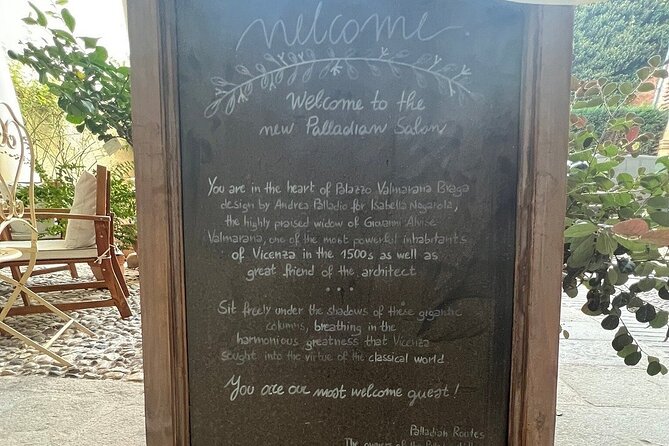
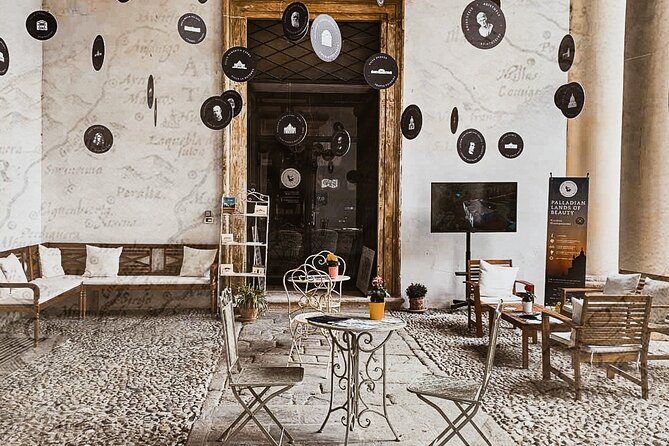
You finish with a private aperitif back at Palazzo Valmarana Braga in the Palladians’ loggia. It is described as a magical setting among quotes of the ancients and giant columns tied to virtues. You get a toast with alcoholic beverages included.
This is about 25 minutes. In a day full of architecture, this break gives your brain a chance to stop analyzing and start enjoying. It is also a nice social reset if you have spent the morning in “heads down, watch the details” mode.
Then there is the final leg of the day. Since the tour ends in a different location, you will want to check your end point instructions at booking. The itinerary also gives that earlier choice about returning to Venice quickly or taking the next train an hour later, letting you time your evening.
Price of $612.81: what you are really paying for
At $612.81 per person for an 8-hour experience, you are paying for a private, logistics-light day with built-in guidance and admissions where included.
Here is the value breakdown based on what the tour includes:
- Private transportation for moving between Vicenza and the key sites
- Entrances to the places where admission is listed as included
- An itinerant tale by the director of the Network of Owners of Palladio’s Villas
- A possible free use of the e-bike for the ride to Villa La Rotonda
- Alcoholic beverages aperitif at the end
- A little final Palladian gift
- Mobile ticket convenience
What is not included:
- Lunch
- Some admissions are explicitly excluded, especially Villa La Rotonda and Villa Foscari
- Villa Chiericati’s Door of Time stop is described as no entry ticket included
So the real math depends on your date and what you want at the villas. If you care most about entering La Rotonda, budget extra for that ticket and double-check that your day-of-week and seasonal access match the notes.
If you want the storytelling, the pacing, and the admissions already taken care of for most of the day, this price can feel fair, especially compared with piecing together tickets, transport, and a guide yourself.
Who should book this Palladio day, and who might not
This is a great match if you:
- Like architecture explanations that connect people, ideas, and art
- Want UNESCO sites in one day without constant planning
- Prefer private transportation and a guide who can adjust details when possible
- Enjoy a show element, Teatro Olimpico with light and sound included
You might want to think twice if you:
- Only want places where entry is included, because Villa La Rotonda and Villa Foscari are not included
- Hate long days that run around 8 hours, especially if your group needs frequent breaks
- Are traveling on a tight schedule where seasonal entry constraints at La Rotonda would complicate your plans
Should you book Palladian Routes Palladio in Venice and Vicenza?
If you want a Palladio day that feels like a guided narrative, with multiple UNESCO stops and a strong finale, I would book it. The combination of Basilica Palladiana, Teatro Olimpico, Palladio Museum models, and the special reception and aperitif at Palazzo Valmarana Braga gives you variety without chaos.
Just be honest about La Rotonda. If inside access is a must, make your booking decisions around the date windows noted for entry and plan for the extra ticket. If your dates line up, this tour is one of the more satisfying ways to connect Vicenza’s Palladian world back to Venice, without turning your day into a DIY puzzle.
FAQ
How long is the tour?
The experience lasts about 8 hours.
Is pickup available from Venice, and are there transfer options?
Pickup is offered. You can also possibly arrange a water taxi transfer from your hotel in Venice for an extra cost, if you contact Palladian Routes at least 3 days before the tour date.
What language is the tour in?
The tour is offered in English.
Are the admissions included, or do I need separate tickets?
Some admissions are included, while others are not. Palazzo Valmarana Braga, Basilica Palladiana, Teatro Olimpico, Palazzo Chiericati, Contrà Porti, and Palladio Museum include admission fees, while Villa La Rotonda and Villa Foscari are listed as entry excluded. Villa Chiericati’s Door of Time stop is also listed as no entry ticket included.
Is lunch included?
Lunch is not included.
Is there an e-bike option for Villa La Rotonda?
Yes. There is a possible free use of an E-Bike to reach Villa La Rotonda.
Is there any extra Venice access fee?
On certain dates, people staying outside of Venice who are planning to visit for the day may need to pay a €5 access fee. You should check which dates apply and whether you qualify for exemptions.
Can I cancel and get a refund?
No. The experience is non-refundable and cannot be changed for any reason. If you cancel, the amount you paid will not be refunded.