
Tour review · WALKING TOURS
Morning Venice Walking Tour plus Doge’s Palace Guided Visit
Venice before the crowds is a smart move. This morning tour strings together iconic sights and lesser-seen corners, then hands you a guided walk through Doge’s Palace so the city makes sense fast. It is a focused, 3-hour-plus route built for seeing a lot without rushing like a theme-park stampede.
I like the timing because the tour starts at 9:00am, when the streets still feel manageable and the heat is less of an issue in summer. I also like that you get admission and a true guide inside Doge’s Palace, including the famous Bridge of Sighs crossing, so you are not just looking at walls, you are understanding what you are seeing. In past groups on this route, guides such as Manuella and Barbara have been singled out for clear, energetic explanations.
One possible drawback: the walking portion can feel like a sightseeing route more than a super-detailed lecture, so if you want every bridge and canal explained at microscopic depth, you might want to budget for extra self-guided time later.
Key highlights to look for
- 9:00am departure helps you beat the midday crush on Venice’s narrow streets
- Doge’s Palace admission is included, not a separate add-on after the walk
- Bridge of Sighs is part of the story, not just a photo stop
- Bigger “palace group” setup uses headsets in larger sessions so commentary stays audible
- Campos beyond St. Mark’s like Santa Maria Formosa add variety to the morning
A smart start: why 9:00am feels like the real luxury in Venice
Venice rewards early mornings. You get softer light, you miss a chunk of the day-tripper wave, and the walk between sites is less stressful when the lanes are not packed shoulder to shoulder. Starting at 9:00am also helps you lock in a “first day” plan, which matters because Venice is easiest to navigate when you have already walked a few turns and recognized a couple of key landmarks.
This tour is designed around that rhythm. It is long enough to give you context, but short enough that you still have time for a proper afternoon stroll on your own. I like that the pace feels practical for real bodies: you walk, you stop, you listen, and then you step into one of Venice’s most important buildings where the guide can do the heavy lifting.
If you care about history, you will feel the payoff quickly, because you are not hearing facts in a vacuum. You are seeing the power center (Doge’s Palace), then moving through the city’s civic and religious spaces, where Venice’s leadership and culture show up in stone.
You can also read our reviews of more walking tours in Venice

Meeting point and finding your group without stress
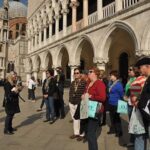
You meet at Calle larga de l’Ascension, 30124 Venezia VE, Italy. The tour ends back at the same meeting point, so you do not have to map a second rendezvous point after Doge’s Palace.
A couple of details matter here. First, arrive at least 10 minutes early. Venice can slow you down: you might need an extra minute to find the exact calle, then another to orient yourself near the crowd. Second, this is a collective tour, so you will join other people, not a private group.
You also get a mobile ticket. That is useful because Venice is not the place to hunt around for a paper voucher when you are standing with strangers and trying to show a QR code before the group moves.
Practical tip: wear shoes you can walk on for several hours. Even if the route feels short on a map, Venice’s surfaces and bridges add up. You will be in and out of narrow calli, and the day feels better when your feet feel fine.
Getting oriented in Venice: how the walk tells the city’s story
Before you even reach Doge’s Palace, you get a guided introduction around Piazza San Marco. That matters even if you plan to spend most of your time elsewhere, because the piazza acts like Venice’s landmark compass. From there, your guide ties what you are seeing to how Venice ran itself, what citizens valued, and why particular buildings became symbols of power.
As the morning moves on, you pass through a mix of spaces that Venice does well: campos (open squares), churches, and the connective tissue of bridges and narrow lanes. This is one of the big strengths of doing a walking tour early. You learn the “geometry” of the city in small doses. Later, when you are wandering on your own, those first connections help you not feel lost.
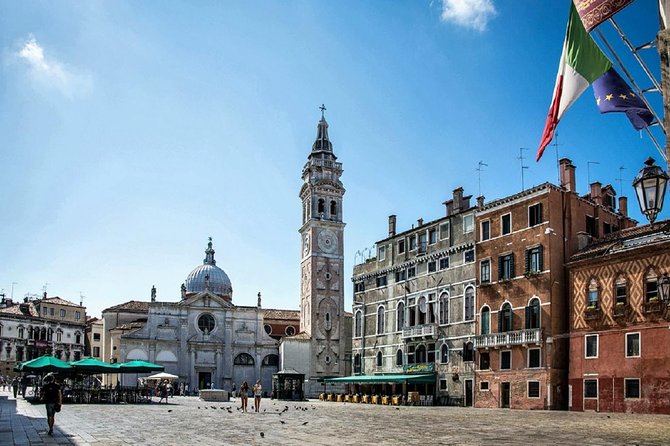
One of the planned stops is Campo Santa Maria Formosa. This is not a giant tourist set piece. It is one of the larger campos and, importantly, it branches into nine calli and eleven bridges. That kind of layout teaches you something real about Venice: getting around is less about straight lines and more about choosing a direction from an open pocket of space. If you like to return to places you understand, this stop gives you a usable mental map.
You also get a short educational thread about Marco Polo. He was an Italian traveler and writer, and his accounts of journeys in the Far East were collected in Il Milione, a kind of geographical encyclopedia compiled in Europe by the end of the 13th century. In a city like Venice, this topic lands well because trade and exploration were not abstract ideas. They shaped jobs, wealth, and political influence.
What to expect from the walk: short segments between stops, enough time to look up and take in architecture, and a guide who keeps you moving. What to watch for: the morning can still feel busy around major landmarks, and since this tour is collective, you might occasionally feel like you are joining a moving crowd rather than strolling in solitude.
Doge’s Palace: the power center, explained inside
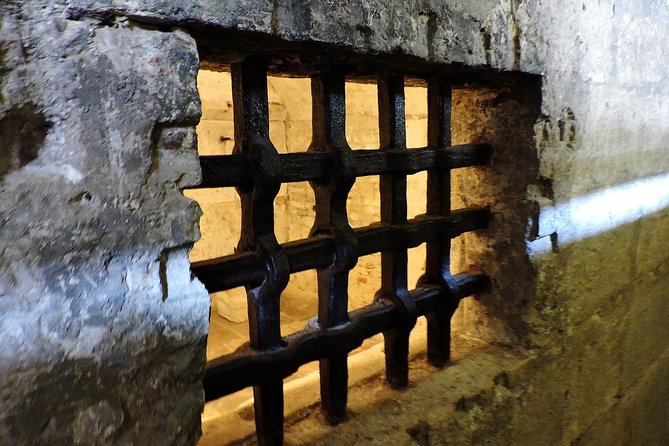
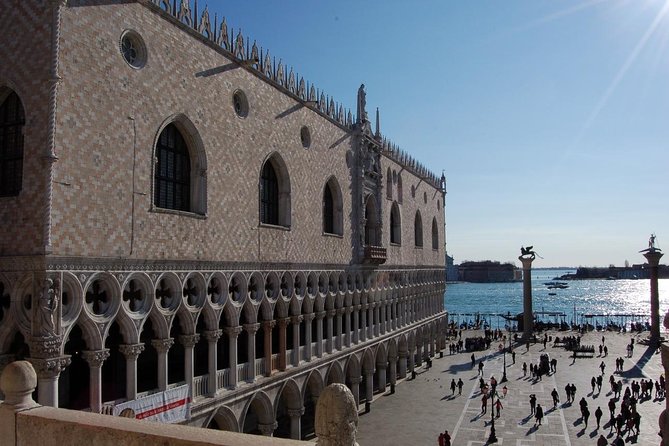
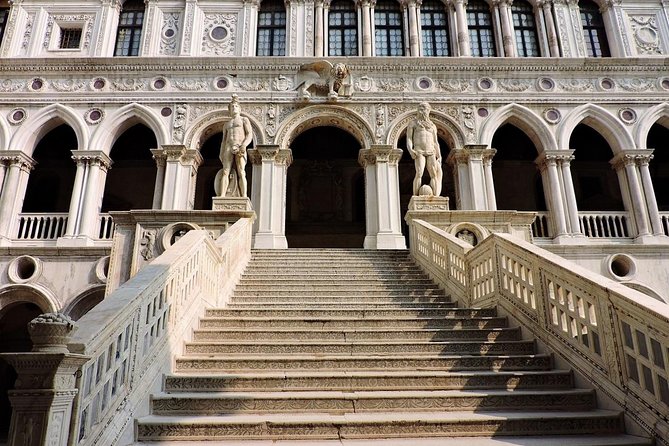
This is the main event and it earns its reputation. The heart of the experience is the Palazzo Ducale, the seat of the Venetian doges. You get a guided visit for about 1 hour, and the timing matters because it is long enough to cover the important rooms and themes without turning into a slog.
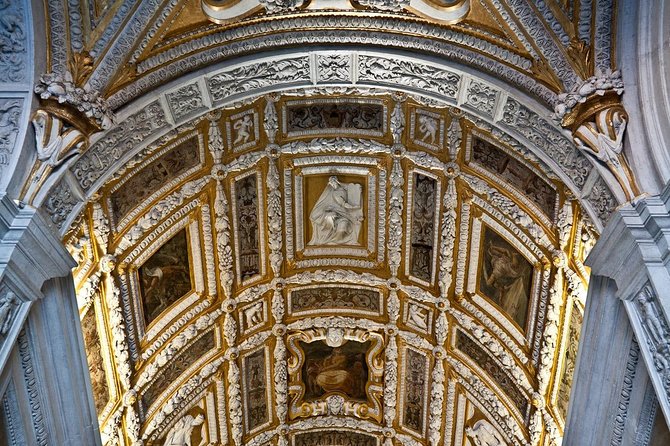
Doge’s Palace can be overwhelming if you go in cold. It is huge, it is decorated, and it is full of political symbolism. A good guide helps you see beyond the dramatic surfaces and understand what you are looking at: this was where Venice’s ruling class sat and governed, where decisions were made, and where the city’s image of itself took physical form.
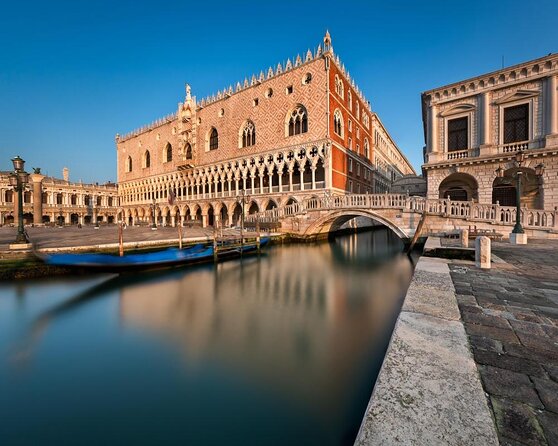
A key highlight here is the Bridge of Sighs crossing. This is one of those places where the name alone makes you curious, but the real value is learning how it fits the palace and the justice system. You do not only take a photo. You understand why the bridge became a symbol in the first place.
In larger sessions, headsets help you hear the guide clearly even when the palace group is bigger. That small detail improves the experience a lot. Venice buildings amplify sound in some areas and swallow it in others, so being able to listen without straining makes the tour feel smoother.
What if you have been to big museums before? You will still find Doge’s Palace different, because it is tied to a living civic identity. You are not just looking at art behind glass. You are walking through the machinery of governance and the staging of authority.
Potential drawback to keep in mind: if you want a super-spoken-by-spoken accounting of every room and artwork, the palace portion may feel like a guided overview rather than an encyclopedia entry. It is designed to fit inside a fixed time window.
Basilica dei Santi Giovanni e Paolo and the Venice “pantheon” effect
After the palace focus, you shift to religious and civic landmarks that round out the morning. One standout stop is Basilica dei Santi Giovanni e Paolo. This church is often treated like a pantheon of Venice, because so many Venetian doges and other important figures were buried there starting in the 13th century.
The basilica itself is impressive in scale and presence, but the deeper reason I like this stop is what it signals. Venice did not separate religion from public life in a clean way. The city’s leaders left their marks here, and it helped reinforce status long after politics moved on.
This basilica is also linked to official recognition: in September 1922, Pope Pius XI elevated it to the dignity of a minor basilica. You do not need to memorize that date to appreciate the point. It helps you see that Venice’s religious architecture carried weight beyond local devotion.
One practical note: the stop time is short (about 10 minutes), and admission is not included. For a quick look, that is fine. If you want to linger, plan to return on your own later, or use the time you have for quick orientation and exterior viewing.
You can also read our reviews of more guided tours in Venice






Santa Maria Formosa: a quieter Venice stop that helps your feet learn the city
Another scheduled stop is Campo Santa Maria Formosa in the Castello district. It is one of the larger squares, and it connects out into multiple streets and bridges, including calli and bridges that lead to palaces and side lanes. The square gets its name from the church of Santa Maria Formosa.
I like this stop because it feels like Venice at human scale. You are not stuck only in postcard territory around St. Mark’s. Instead, you get practice moving through a neighborhood-like setting, where you can look at building fronts and doorway rhythms, not just grand facades.
Admission here is free, and the stop is short (about 10 minutes). That short duration is intentional. It keeps the overall pace moving and preserves time for the palace experience. Still, even with limited time, a stop like this makes your next walks easier, because you learn one more “hub” where paths split and rejoin.
Price and value: what $118 buys you, and when it is worth it
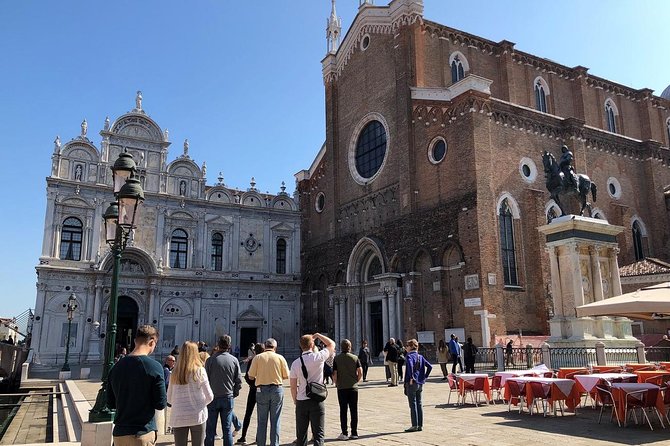
At $118 per person, you are paying for more than a ticket. You are buying:
- a guided morning walk (so you are not piecing together a self-guided route),
- Doge’s Palace admission (so you are not doing a second purchase or trying to line up on your own),
- and a guided narrative that links Venice’s landmarks into one chain of meaning.
The value is strongest if you fall into one of these groups:
- You have limited time and want a reliable first-day plan.
- You prefer a guide to help you avoid walking into “big buildings with no context.”
- You like history, but you do not want to spend your vacation researching before you go.
It is less of a bargain if you are the type who already knows Venice well and can assemble your own route quickly. In that case, you might feel you can do parts independently. But even then, Doge’s Palace can be a challenge to navigate without guidance, and that is where the tour usually pays off.
Also note that this is a popular experience, often booked around 22 days in advance on average. That is a good sign. It usually means schedules fill, so waiting too long can squeeze your options.
Finally, keep in mind Venice’s day-visitor rule. On certain dates, people staying outside Venice planning a day trip may need to pay a €5 access fee. You should check the city’s official notice for which days and any exemptions.
Group size, pace, and comfort: the real-world feel
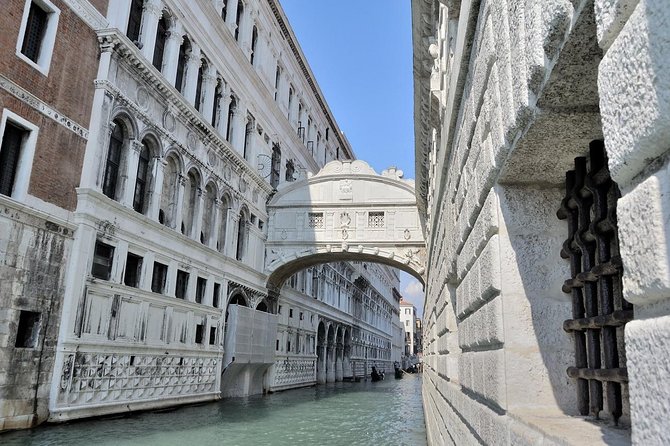
This is a collective tour, and the maximum group size is set high. That does not automatically mean it will feel chaotic, but it does mean you should expect a “move as one” pace at times, especially in tight palace corridors or near major photo points.
The good news is that the tour uses tools to keep you connected to the guide. In larger palace sections, headsets help you hear clearly. That changes the experience. Without audio help, you can end up staring at details you do not understand. With it, you get the story and the visuals at the same time.
Pace-wise, you should expect frequent short stops, with the walk taking you across Venice’s small bridges and narrow streets. If you know you need frequent breaks, bring a small water bottle and plan to slow down at your own comfort level whenever you can.
For a rainy day, the tour can still work. Venice is wet, but the covered transitions and guided schedule can keep you from losing time searching for the next spot.
Who should book this morning Venice tour
This experience is a strong fit if you want:
- a first-day overview that connects Piazza San Marco area sights to the city’s political center,
- a guided visit inside Doge’s Palace without hassle,
- and a morning route that includes campos and big landmarks in one flow.
It is also a good choice if you dislike “museum homework.” You will be guided through what matters, and you can turn your time afterward into wandering and snacks instead of planning.
If you are traveling with limited mobility, you might find the walking on bridges and the tight street layout challenging. The tour states that most travelers can participate, but it still implies a standard walking day.
And if you are the kind of traveler who gets annoyed by group logistics, consider whether you enjoy hearing stories in a shared setting. The upside is you get energy and structure. The downside is you are not in complete control of pace.
Should you book this tour?
Yes, I would book it if you want a smart, structured morning in Venice that ends with a guided look at the city’s most famous power symbol. The included Doge’s Palace admission is the big reason, and adding the Bridge of Sighs crossing plus short city stops helps you connect the dots fast.
Book it especially early in your trip. You will walk away with a mental map and a set of stories that make later wandering feel more meaningful. If you prefer total freedom and do not care much about guided context, you might be able to build a similar route on your own. But for most people, $118 buys convenience plus context, and that combo is hard to beat in Venice.
FAQ
How long is the Morning Venice Walking Tour plus Doge’s Palace Guided Visit?
It lasts about 3 hours 15 minutes.
What does the $118 ticket include?
The ticket includes a guided tour and admission to Doge’s Palace.
Where do I meet the guide, and what time does the tour start?
You meet at Calle larga de l’Ascension, 30124 Venezia VE, Italy, and the start time is 9:00am. The tour ends back at the meeting point.
What language is the tour offered in?
The tour is offered in English. During winter (from November 1st to March 31st), explanations are provided in two languages if the audience provenience is mixed.
Is a mobile ticket used?
Yes, the experience provides a mobile ticket.
Is there an additional Venice access fee I should know about?
On certain dates, day-trippers staying outside Venice may need to pay a €5 access fee. Check the official Venice Access fee information for applicable days and exemptions.
More Walking Tours in Venice


More Tours in Venice




More Tour Reviews in Venice



Not for you? Here's more nearby things to do in Venice we have reviewed










Walking Tours, compared.
 ★ 3.5Venice Walking Tour and Gondola RideFrom $723,630 reviews
 ★ 4.2Rialto Bridge & Offbeat Unusual Venice Walking TourFrom $283,538 reviews
 ★ 4.0Private 3 hrs Venice Tour: St Mark’s, Walking tour & Boat tourFrom $4803,372 reviews
 ★ 4.2City Center Historical Guided Walking TourFrom $141,873 reviews
 ★ 4.7Walking Guided Tour of the City Must-See SitesFrom $441,095 reviews
 ★ 4.0Private Best of Venice Walking Tour with St Mark’s BasilicaFrom $2421,063 reviews
 ★ 4.5Venice Sightseeing Small Group Walking Tour with a Local GuideFrom $48887 reviews
 ★ 4.5Walking tour, Doge Palace, & St. Mark’s BasilicaFrom $142884 reviews
Browse the lists this tour appears in