Venice is best on foot. This guided day trip strings together quieter backstreets near the Jewish Ghetto, the famous sweep of San Marco, and a Grand Canal viewpoint you do not get from the usual tourist routes. I like the fact that you also get real daily Venice habits, like an espresso stop and a bacaro-style lunch with cicchetti, not just photo stops.
Two big wins for me are the pace, and the variety of neighborhoods packed into one day, from Cannaregio to San Polo to the Rialto area and finally San Marco. One thing to consider: you are walking for hours in narrow calli, so it helps if you have moderate comfort with uneven surfaces and crowds.
Key things to know before you go
- Small group (max 10): easier conversations and less waiting.
- Local streets first: Cannaregio and the Ancient Jewish Ghetto come early while Venice is still calm.
- Two signature Venice tastes: espresso at a longtime coffee spot, then cicchetti at an old bacaro.
- Rialto crossing included: you will cross the Rialto Bridge and make it to the Rialto Market area.
- A Grand Canal viewpoint: you get access to a “hidden place” angle with an exclusive-feeling view.
- Train plus ferry plan: rail into Venice, ferry back to the station, then back to Padua.
Padua to Venice by train, then a real walking day
The smart part of this trip is that Venice does not start with a fight for a taxi or a stressful bus connection. You leave Padua by train in a round trip arrangement, and the day is built around a guided walk once you arrive in Venice.
The tour runs about 7 hours 30 minutes with a start time of 9:45 am (approximate). That timing matters. Morning is when the streets feel less chaotic, especially in the Cannaregio and Ghetto side of town where the route begins.
It is also a mobile ticket tour, so you do not need to chase paper confirmations at the last second. Simple, but it cuts down on friction when you are already dealing with platforms, ticket machines, and Venice water traffic.
You can also read our reviews of more tours and experiences in Venice.


Jewish Ghetto mornings: quiet lanes and context you can feel
You start in the Ghetto Ebraico, the Jewish Ghetto area of Venice. The walk is short at the first stop, around 10 minutes, but it sets the tone for the day. This is not the Venice of just monuments, it is a neighborhood with texture.
After that, the route moves into Cannaregio. This is where Venice begins to feel lived-in, with narrow, quieter streets that connect major areas without the same showiness you get around San Marco. You will also pass antiques shop windows and traditional Jewish shops, which helps you shift from sightseeing to noticing everyday commerce and craftsmanship.
A useful detail here is what the area is like for movement. Cannaregio is not a dead-end district. It connects toward the Venice Santa Lucia station side, then continues toward the Rialto area through Strada Nova, so the walk naturally threads through neighborhoods instead of zig-zagging awkwardly.
Cannaregio to Strada Nova: espresso, shopping streets, and local pace
Once you are in Cannaregio, you will have time to see the main shopping arteries, especially Strada Nova and Lista di Spagna. These are not just tourist streets. They also serve as hangout zones for younger crowds and bar life, particularly around the northern edges of the sestiere.
One of my favorite parts of this day is the built-in comfort break: you can stop in a small coffee shop where the espresso recipe has been used for almost a century. That detail matters more than it sounds. A place with a long-running recipe tends to keep doing the same kind of simple, dependable coffee that locals can rely on during busy shopping and strolling hours.
This segment is also a good time to reset your expectations. Venice looks like a maze from the outside, but on a route like this you will start to understand how one calli connects to another and how neighborhoods relate. After a while, you stop thinking in turns and start thinking in districts.
San Polo: bacari atmosphere and the people’s square feeling
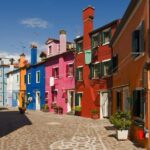
Next is San Polo, a district that many people miss because it is smaller and less instantly famous than San Marco. That is exactly why it works on a guided route. The streets here feel relaxed, and the area has a mix of homes, shops, and the kind of taverns locals call bacari.
San Polo centers on Campo San Polo, described as the largest square after San Marco’s area, and it sits around stately palaces. Even if you are not into architecture lectures, you will feel the contrast. It is a square with daily life energy, not just a stage for big sights.
This is a smart mid-day neighborhood choice because it balances charm with function. You are not only there for views. You are walking through the parts of Venice where people live, work, and snack between errands.
Rialto Bridge and the market area: classic Venice with a guide’s route
Then you hit Ponte di Rialto, one of the main landmarks on the Grand Canal. This bridge is famous for its architecture and for its economic role in older Venice. You will also learn the practical timeline: the current bridge was built between 1588 and 1591, designed by Antonio da Ponte to replace an earlier wooden structure that collapsed and burned more than once.
Crossing Rialto is worth it, even if you have seen photos. The bridge is narrow and busy, and the feel of it is part of the experience. Plus, you are not crossing alone. A guide route helps you time the walk and get you through the crowd without spending all your energy fighting for position.
The plan also includes the Rialto Market area. That is a valuable addition because the Rialto Bridge is the postcard. The market area is where you get to see Venice as a working city: food, everyday stalls, and the kind of movement that makes the bridge feel alive rather than staged.
A “hidden place” Grand Canal view: how to see Venice differently
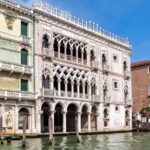
Every Venice day trip has to find at least one moment that is not just standing where everyone stands. Here, you will visit a hidden place where you can appreciate a completely exclusive view of the Grand Canal.
You might not know what that means until you are there, but the idea is simple. Instead of only viewing the canal from the heavy tourist corridors, you get a vantage point that feels quieter and more composed. It is the kind of photo you cannot easily replicate by wandering, because the most scenic angles are often tucked behind ordinary street logic.
This is also a great moment to slow down. By the time you reach this viewpoint, your brain has already been introduced to several districts. Now you get to consolidate that mental map into one clear canal perspective.
San Marco arrive-in-style: square flow, then Bridge of Sighs
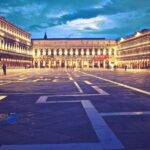
When you reach Piazza San Marco, you get the full dramatic setting: the main buildings, the classic open space, and the sense that you are standing in a symbolic center of Venice. The info you get here is practical too. Piazza San Marco was paved in 1177 about a century after its construction, and it is the lowest area of Venice, so it is often the first flooded during high water.
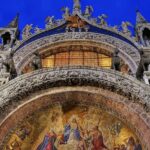
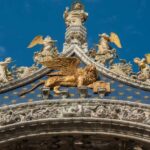
The stops in the square are designed to orient you fast. You will see key landmarks around the piazza, including the Basilica of San Marco, the Doge’s Palace, the Correr Museum, the Campanile, and the Clock Tower.
One important note: visiting the Basilica of San Marco is not included. So you should think of this part as a guided arrival and context moment, not a guaranteed interior basilica visit.
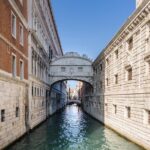
After San Marco, the tour brings you to the Bridge of Sighs area. That is a fantastic move because it gives you a story connection between the open square and the tighter, more enclosed Venice spaces nearby.
Bacaro lunch and cicchetti: where the day turns from sights to taste
One of the strongest reasons to choose a route like this is that it does not treat food as an afterthought. For lunch, you will be guided to a bacaro hidden among Venice’s narrow calli, where you can enjoy traditional Venetian cicchetti.
This timing usually works well psychologically. By the time you are eating, you have already walked through multiple districts and you do not want another hour of intense sightseeing. Bacari lunches also help you understand Venice’s rhythm. It is less about one big sit-down meal and more about smaller plates and casual choices you can actually enjoy while still moving through the day.
A bacaro lunch also tends to keep you realistic on energy. You are still sightseeing right after lunch, including getting to the San Marco area and ending with the return ferry. Eating well here helps you stay comfortable instead of fading into museum fatigue.
Ferry back to the rail station: a smart finish with less chaos
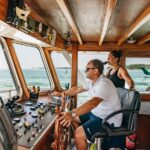
A lot of Venice day trips end in a vague, unhelpful way. This one has a clean wrap-up plan. After the main sights, you take a ferry boat to reach the rail station.
That matters because the ferry is part of how Venice works. It is also a built-in way to avoid backtracking through the same calli maze. You already walked a lot of streets, so finishing with water transit helps your body recover a bit before the train back to Padua.
From the rail station, you return to your meeting point. The tour says it ends back at the start location, so you can plan your evening without guessing how you will get home.
Price and value: what $150.49 buys you, and when it is a good deal
At $150.49 per person, this is not a budget-only tour. But the value is more about the structure than the raw cost.
You are paying for three things that add up fast on your own:
- a guided walking route through several districts
- round trip train transfer from Padua
- a guided lunch stop with cicchetti
Plus, the group is kept small, up to 10 travelers, which usually helps the tour feel smooth instead of like a cattle line.
You should also factor in optional costs. Entrance fees are currently indicated as not required, but that can change. And there is the Venice access fee issue on certain dates for visitors staying outside Venice. On some day-trip dates, you may need to pay €5. If your dates fall under that rule, this fee can slightly reduce the deal value.
If your goal is to do Venice in one day without losing time figuring out connections and routes, the pricing starts to make sense. If you already know Venice well and prefer to freestyle, you might decide the paid guide is optional.
What to wear and bring: the small things that prevent big headaches
This tour involves walking through narrow Venetian streets, and you should plan for uneven surfaces. The experience calls for moderate physical fitness. If you have mobility concerns, you might want to consider a different format or bring an extra buffer.
For church visits, you need covered shoulders and legs. That is not a “bring a scarf just in case” suggestion. In Venice, rules tend to be enforced. If you show up in tank tops and short shorts, you could get stopped or turned around.
Bring a charged phone. You will have a mobile ticket, and you need your eyes and hands ready for navigation, photos, and meeting instructions. The tour also notes you should provide a valid contact for confirmation, such as a phone with WhatsApp or email, in case timing details need to be confirmed closer to the date.
And of course, choose walking shoes you trust. Venice rewards comfortable soles and punishes fashion-first footwear.
Who should book this Venice from Padua day
I think this is a strong fit for you if you want:
- a guided route that connects Jewish Ghetto, Cannaregio, San Polo, Rialto, and San Marco in one day
- real local food stops, including espresso and cicchetti
- a small-group experience (max 10) with a leader who keeps things moving
It may not be the best choice if you:
- want mostly time to wander without guidance
- hate crowds or long walks
- need frequent rest stops every 20 to 30 minutes
The tour is built for people who want structure, context, and tasting moments, not just a list of monuments.
Should you book Live Venice as a local departing from Padua?
If you are planning your first Venice visit and you want to make the day count, I would book it. The route makes logical sense, it includes practical transit between Padua and Venice, and it puts neighborhood walking front and center instead of only chasing famous squares.
My recommendation comes down to one question: do you want help choosing where to walk and what to do next? If yes, this day trip gives you a full sweep with espresso, cicchetti, Rialto crossing, and San Marco context, all in a manageable small-group format. If you prefer total freedom and you do not care about guided context, you can probably build a self-guided day, but you will lose the convenience of the organized flow.
FAQ
How long is the Venice tour?
The experience lasts about 7 hours 30 minutes.
What is included in the price?
It includes a guided walk in Venice, a tour leader, round trip train transfer from Padua station, traditional Italian life with your local tour leader, and insurance plus technical organization by a certified travel agency.
Is Basilica di San Marco included?
No. You arrive at Piazza San Marco and can visit the Basilica of San Marco, but the Basilica entry is stated as not included.
Do I need to pay any entrance fees?
Entrance fees are currently described as not required, but they may be required in the future by local government.
Is there an access fee for Venice?
On certain dates, visitors staying outside of Venice who plan a day visit may need to pay a €5 access fee. The tour provides a link for details and exemptions.
What is the meeting point and time?
The meeting point is Stazione FS di Padova, Piazzale della Stazione, 1, 35131 Padova PD, Italy. The start time is 9:45 am (approximate).
How do you travel between Padua and Venice?
You use round trip transfer by train from Padua station. Later in the day, you take a ferry boat to reach the rail station for the return.
Is this tour limited to a certain number of people?
Yes. The maximum group size is 10 travelers.
What should I wear for churches?
For church visits, you need covered shoulders and legs.
What if there is a public transportation strike?
You should contact the provider for alternative arrangements or cancellations. If there are no alternatives, the tour will be canceled and you will be refunded in advance. Train tickets you already purchased are not guaranteed to be refunded.
Can I cancel and get a full refund?
Yes. You can cancel up to 24 hours in advance for a full refund, as long as you cancel at least 24 hours before the experience’s start time.