
Tour review · VENICE PRIVATE TOURS
Immersive Beauty: A Tailored Private Tour of the Doge’s Palace
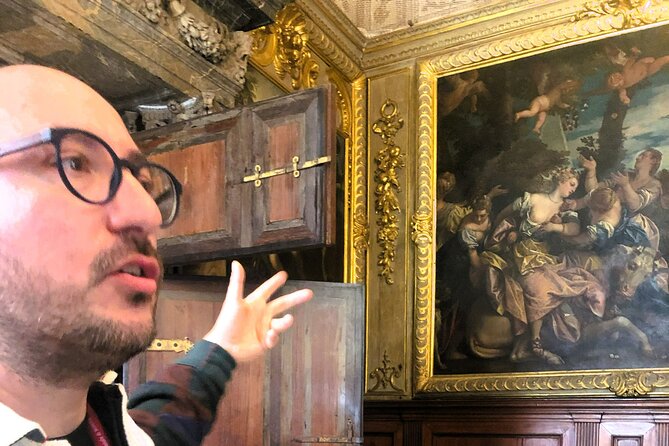
Skip the chaos, then savor the politics. This private Doge’s Palace visit in Venice pairs fast-track entry with a guide, Valerio, who connects the art and architecture to how power actually worked. You also get time in places that feel quieter and more detailed than the usual crowd flow.
Two things I really liked: the tailored itinerary that fits what you care about, and the way the guide turns each room into a story you can picture. One night, your focus might be political mechanics, another day it might be how the palace used art to project authority, and the pace can adjust.
One drawback to plan for: the palace is packed with stairs and rooms, and the tour is about 2 hours. That can feel like a sprint if you want to read every inscription slowly, and palace entrance tickets are not included.
Key highlights that make this Doge’s Palace tour worth it
- Skip-the-line support from the start, so you spend less time waiting outside.
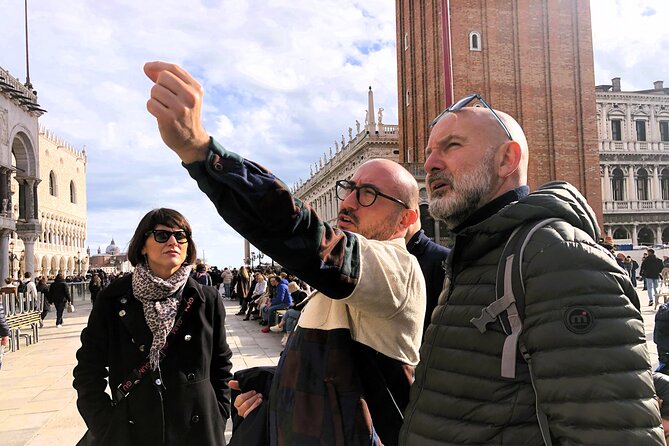
- Valerio’s tailoring, including explanations that can shift for children and adults.
- Secret-feeling routes and quieter corners that typical group patterns miss.
- Iconic set pieces like the Scala dei Giganti, Scala d’Oro, and the Bridge of Sighs.
- Justice and espionage stories in the Compass Room and the New Prisons.
- Art plus politics, with stops connected to major Venetian painters and the palace collections.
Starting at Piazza San Marco, Caffè Florian to the Doge’s Palace
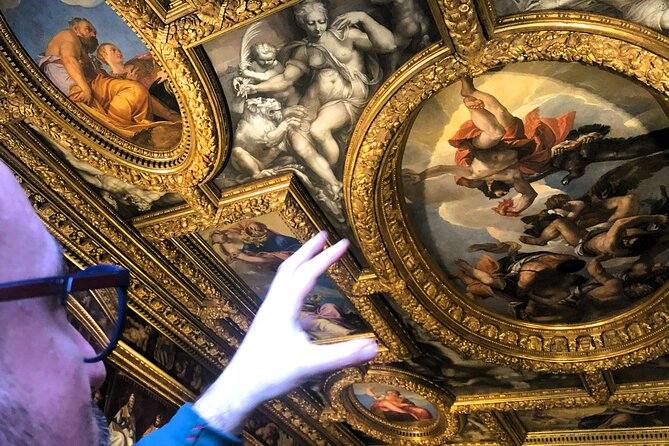
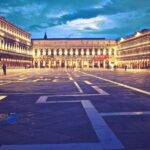
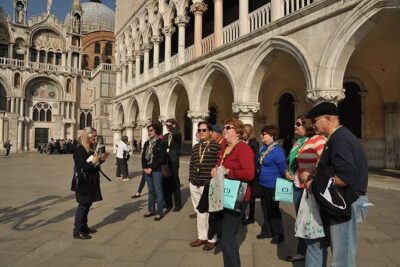
Most people hit the Doge’s Palace as fast as they can. This tour starts in the right place first, Piazza San Marco, at Caffè Florian (P.za San Marco 57). That matters because the palace is not just a museum. It’s the visual and political machine sitting next to St. Mark’s Square, and it all clicks faster when you start in the square’s context.
Before you even enter, you get oriented by your guide on what this area meant as Venice grew. You learn how the square developed, why the architecture is so focused on power and ceremony, and what kinds of public life played out here. Then, when you approach the palace, you’re not just seeing stone. You’re reading a system.
If you like photos, go in with a realistic plan. Piazza San Marco is iconic, but it is also one of the most photographed corners of the city. The fast-track entry helps you move on quickly so you can spend more time inside where the palace magic really lives.
You can also read our reviews of more private tours in Venice


Fast-track entry and a private flow through the Scala dei Giganti
The moment you enter, the tone changes. You get fast-track entry and start your walk through the palace without the usual bottleneck feeling. A private format helps here, because you’re not trapped behind people trying to take selfies in the narrowest spots.
First big visual stop is the Scala dei Giganti, the Giant’s Staircase. This is where the palace flexes its authority. The staircase is framed by sculptural detail and symbols meant to communicate who ruled and how seriously Venice took its leadership. The best part is that your guide doesn’t treat it like set dressing. You get the “why” behind the design, so it becomes a message, not just a decoration.
After that, you transition toward the palace’s public-facing spaces. You’ll see the Loggia area with arches and a view toward St. Mark’s Basilica and the square below. That view is more useful than it sounds. It helps you understand how the palace worked at two levels: inside rooms for decisions, and outside-facing architecture for legitimacy.
Scala d’Oro and the palace spaces that feel made for ceremony
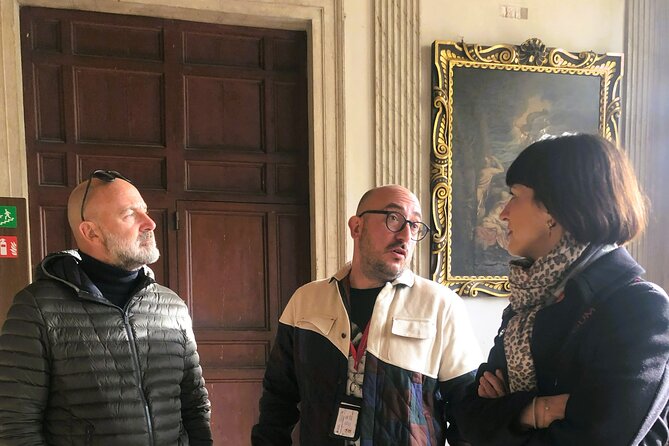
Next comes the Scala d’Oro, the Golden Staircase. This is one of those spots where the palace shows off so hard it’s almost hard to look away. Your guide explains how the opulence ties into the prestige of the Doge and the Republic’s image.
If you care about power signaling, this is a good place to slow down. The staircase is not just pretty. It’s a route people took when ceremonies mattered. Knowing that changes how you look at everything around it.
Then you move through other key rooms and atrium-like spaces, including the square-shaped atrium (Atrio Quadrato). Here, your guide explains what this space was for in day-to-day life inside the Doge’s Palace. That sort of practical explanation matters, because it turns the building from a postcard into a place where real routines happened, even if those routines were political.
Expect to do some standing and turning for viewpoints. The palace is old and built for movement on foot, not for long pauses. If you’re the type who wants to sit every few minutes, this tour style may feel a bit brisk, even though it’s private.
Four doors, council rooms, and how Venetian governance played out
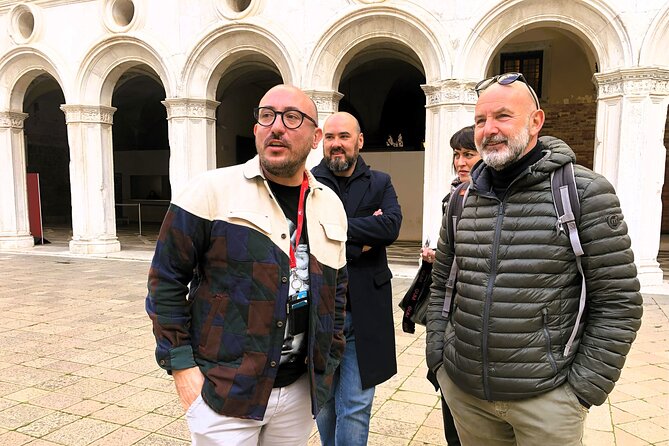
Now the tour shifts from architectural highlights to political mechanics. You’ll visit the Sala delle Quattro Porte, the Hall of the Four Doors. The name is part of the intrigue, and your guide ties what you’re seeing to the political history behind it, including artwork and the decisions made within these walls.
From there, you move into the antechamber to the Hall of the Full Council, the Sala dell’Anticollegio. This is where the palace blends art and governance so smoothly it feels like one language. Your guide points out masterpieces by artists such as Tintoretto and Veronese and connects them to the Republic’s cultural identity. In practical terms, that gives you something to anchor to besides dates and titles.
Then you reach the heart of decision-making spaces. You’ll stand in the Sala del Collegio, the Council Chamber, where your guide describes the political drama and how decisions shaped the city. After that, you visit the Senato, the Senate chamber, where senators convened to discuss matters of state.
The final political-structure stop in this run is the Chamber of the Council of Ten, the Consiglio dei Dieci. This council is presented as a tool for maintaining stability and order. When you get the sequence like this, it becomes easier to see how Venice handled risk, debate, and control without reducing it to one slogan.
A small but smart benefit of the private format shows up here: if a room hits your interest level, you can ask questions right then. If it doesn’t, the guide can adjust pacing so you don’t waste precious time.
The Compass Room and anonymous justice in the palace
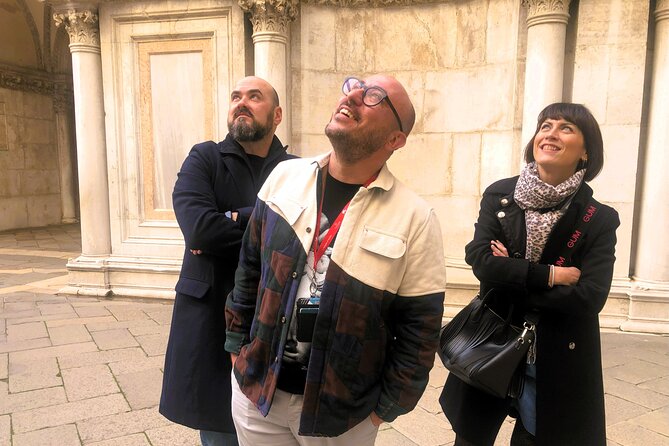
Here’s one reason the Doge’s Palace is more than “pretty ceilings.” You get to the Sala della Bussola, the Compass Room. It’s tied to justice and espionage, and the name comes from a small window used for anonymous accusations.
In this room, your guide walks you through the system of secret denunciations. You learn how citizens could report suspicious activities without putting their name on it, and how that helped the Republic preserve order. It’s a chilling idea when you hear it explained plainly, and it gives the palace a darker, more human side.
From there, the tour continues into the armor-related and legal-support spaces, including the Armeria (armoury), where the military might of the Venetian Republic is shown in a way that fits Venice’s maritime reality. You also visit the Sala della Quarantia Civil Vecchia, linked to civil justice and the legal framework used to maintain order.
If you tend to think of Venice as all canals and romance, these rooms correct that quickly. The palace is a city government building disguised as a work of art.



Art stops: Guariento’s room and the Quadreria picture collection
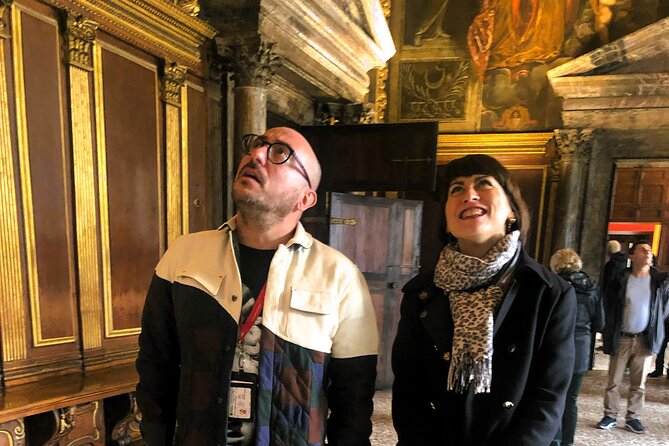
Art lovers have a real advantage on this tour because the guide ties each artwork to what it meant inside the palace. You’ll see the Sala del Guariento, where the artwork adds cultural depth and your guide connects it to Venice’s golden-age achievements.
Later, you visit the Quadreria, the Picture Gallery. Here, you get the palace’s art collection in a structured way instead of wandering through it with no plan. The key value is interpretation: your guide explains the role paintings played in portraying the Republic’s identity and messages.
I like how this keeps art from feeling like homework. When you understand why a work ended up in a political building, it stops being decoration and becomes communication.
If you have family members with short attention spans, this section is also where the guide’s flexibility can matter. In at least one case, the guide adjusted explanations for children and even worked recurring Greek and Roman mythology themes into the storytelling, which helped everyone stay engaged.
Bridge of Sighs and the New Prisons, from romance to reality
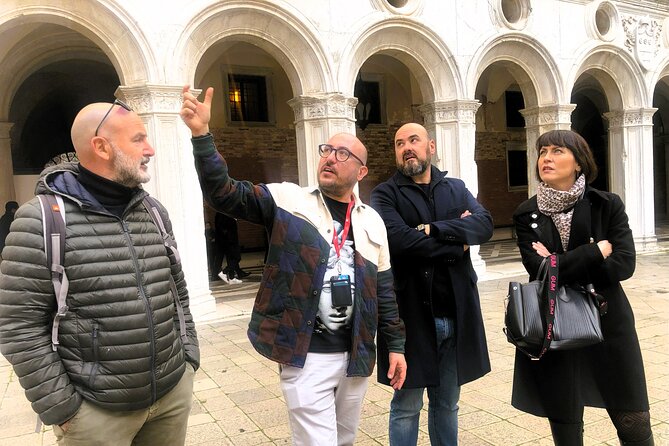
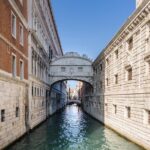
The tour saves one of the most dramatic photo moments for later: the Ponte dei Sospiri, the Bridge of Sighs. Your guide shares stories tied to its past, including the prisoners who crossed it, plus the romantic legends that swirl around it. You get both the “why people tell it that way” angle and the reality angle.
Then you move into the Prigioni Nuove, the New Prisons. This is where the tone gets serious. You explore how the prison system worked and hear about prisoners and judicial processes from the period.
This part of the experience is useful even if you only care about art and architecture. Why? Because it explains what the palace protected and controlled. You see the building’s logic from sentence to cell.
Price and value: what $185.43 buys you, and what you still pay for
At $185.43 per person for about 2 hours, the price is not a budget impulse buy. But it is also not just paying for entry. You’re paying for a licensed local guide, private pacing, and help securing skip-the-line access.
The guide also assists with purchasing skip-the-line tickets at the best possible rate, which can save time when the crowds are at full volume. That matters in Venice, where waiting in the open air can turn a short visit into a long day.
One key cost point: Doge’s Palace entrance tickets are not included. You’ll want to budget that separately, including possible special fares for families, seniors, youth, or students. So the real comparison is total cost, not just the tour price.
Where this feels like great value is when your group wants fewer pauses, better context, and a guide who can tailor the route to what you care about most. It’s also a strong choice if you want to minimize “maze time,” because the palace is huge and it’s easy to miss what matters.
How to make the most of a 2-hour private palace tour
To get the best out of a short tour like this, think like a curator. Pick two themes before you go in: maybe power and politics, or justice and secrets, or art and symbolism. When you do that, the tailoring becomes more than a marketing line, it becomes your personal highlight reel.
Wear practical shoes. You’ll be doing a lot of walking and moving between rooms, plus stairs at several major stops like the Scala dei Giganti and Scala d’Oro. Also plan your energy. This is not a sit-down museum circuit.
If you’re traveling with kids or with someone who gets bored by pure chronology, ask for the “story approach.” Valerio has shown he can shift the explanation between adults and children and connect themes that keep interest steady.
Finally, build in a little flexibility. A private tour is good for questions. If a room sparks curiosity, you’ll want time to follow that thread.
Should you book this tailored Doge’s Palace experience?
Yes, if you want a private Doge’s Palace tour with fast-track entry help and a guide who can shape the pacing around your interests. It’s a smart pick for first-timers who want context without getting lost, and for repeat visitors who want the building’s political and justice side explained with real clarity.
You might skip it if you want to wander completely on your own, or if you hate stairs and standing. Also, factor in that entrance tickets are not included, so check your total budget before you book.
If you’re heading to Venice and you want one experience that really connects the city’s art to its government, this is one of the most direct ways to do it.
FAQ
How long is the Doge’s Palace private tour?
It’s listed as about 2 hours.
Is this tour private?
Yes. It’s a private tour, so only your group participates.
Are entrance tickets to the Doge’s Palace included in the price?
No. Entrance tickets are not included, and special fares may apply for families, seniors, youth, and students.
Where do we meet, and where does the tour end?
You meet at Caffè Florian, P.za San Marco 57, 30124 Venezia VE, Italy. The tour ends back at the meeting point.
What language is the tour offered in?
The tour is offered in English.
Does the tour include skip-the-line entry?
It includes assistance in purchasing skip-the-line tickets at the best possible rate, and the tour highlights fast-track entry.
What is the cancellation policy?
Free cancellation is available. You can cancel up to 24 hours in advance for a full refund. If you cancel less than 24 hours before the start time, the amount paid is not refunded.
More Private Tours in Venice

More Tours in Venice

More Tour Reviews in Venice


Not for you? Here's more nearby things to do in Venice we have reviewed





Venice Private Tours, compared.
 ★ 4.7From Venice: Murano & Burano Guided Tour by Private BoatFrom $614,170 reviews
 ★ 4.0Private 3 hrs Venice Tour: St Mark’s, Walking tour & Boat tourFrom $4803,372 reviews
 ★ 3.7Private Gondola Cruise for up to 5 PassengersFrom $1573,106 reviews
 ★ 3.9Private Gondola Ride along Grand CanalFrom $1682,475 reviews
 ★ 4.0Private Best of Venice Walking Tour with St Mark’s BasilicaFrom $2421,063 reviews
 ★ 5.0Private tour on Murano Island: discover the art of Artisanal GlassblowingFrom $108965 reviews
 ★ 3.6Private Gondola RideFrom $85757 reviews
 ★ 4.6Private Tour with a Local GuideFrom $62718 reviews
Browse the lists this tour appears in