Tour review · VENICE
Gay Life in Venice from the Middle Ages to Present Days
Venice has a hidden LGBTQ timeline. This two-hour walk follows that story in real street-level places, from medieval cat masks to later literary lives and even pop-culture sightings, with a small group cap that keeps the pacing human. Led by Valerio Coppo and supported by a tour leader plus an interpretive guide, it also leans into the harsh side of history, including how authorities tried to police same-sex life.
I love the way the route links names, institutions, and specific corners of the city so you can picture what daily life felt like then. It’s especially good if you want clear storytelling in English and not just vague “history talk.” One drawback to consider is that some stops cover grim punishments and surveillance, so if you prefer lighter, purely celebratory content, this may feel heavy in parts.
Key things I’d focus on before you go
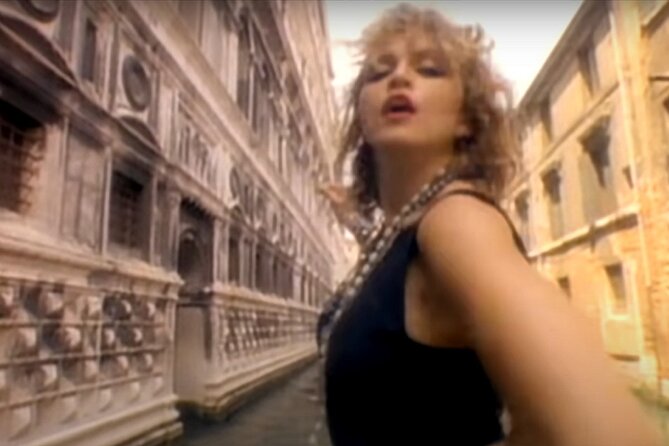
- Small group size: capped at eight travelers, with a stated maximum of ten.
- English guide experience: built around an English-led format.
- Free entry points: each listed stop is marked as admission ticket free.
- Venice’s LGBTQ story across eras: from medieval street cruising controls to later art and media references.
- Walk ends near Rialto: perfect for rolling into the market area after.
- Small details with strong place clues: bridges, church arcades, campi, and palazzi each get a specific story.
A Venice walk where the city’s rules are part of the story
What makes this tour different is that it treats Venice like a living set. You are not just looking at landmarks, you’re seeing how spaces were used, watched, and restricted. That matters in Venice, because the city is built around tiny streets, arcades, and waterways where public and private life constantly overlap.
I also like the honest mix of chapters. You move from cat-masked signals and cruising corners to institutional control and then forward into artists, writers, and modern references. The result is a timeline you can actually remember, because it is anchored to places you pass with your own eyes.
You can also read our reviews of more tours and experiences in Venice.

Where you start, how it moves, and how long it takes
You’ll begin at Campo San Giacomo dell’Orio and the tour finishes at Ponte di Rialto. Plan for about two hours on foot, with short stops where the guide explains what happened in that exact spot.
The route is designed as a sequence of quick, focused encounters, with many stops around 10 to 15 minutes. That pacing is helpful if you like your history in bite-sized chunks. It also means you will likely cover a lot of Venice ground without feeling dragged through one long lecture.
Tip: since the ending is near Rialto, wear shoes you’re comfortable walking in on uneven stone. When you’re done, you’ll be in a great position to keep exploring without needing another transit plan.
Campo San Giacomo dell’Orio, where poetry meets personal tragedy
The tour opens by passing the area tied to an Italian poet who came out in the early 1970s and later died by suicide. The guide uses this starting point to show that LGBTQ life in Venice is not only medieval street lore. It can be modern, literary, and painfully personal.
Even though you’re not going inside anywhere here, the power is in the location. In a city like Venice, you can feel how identity and art lived right alongside everyday routines.
Fondamenta del Megio and the strange line between praise and power
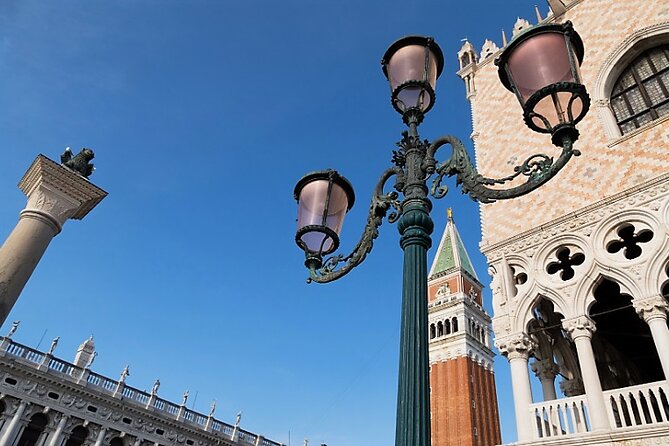
Next you move to Fondamenta del Megio, tied to a Venetian historian active in the 15th and 16th centuries. His major work, the Diarii, is described as an ambitious chronicle meant to cover Venice’s history. The guide also shares why the comments about him being exceptionally kind were not exactly a compliment.
This stop is a useful reminder: documentation always has motives. Venice’s LGBTQ story is not only about what people did, it’s about how writers, officials, and chroniclers framed the city and its inhabitants.
Santa Maria Mater Domini and the surveillance of church arcades
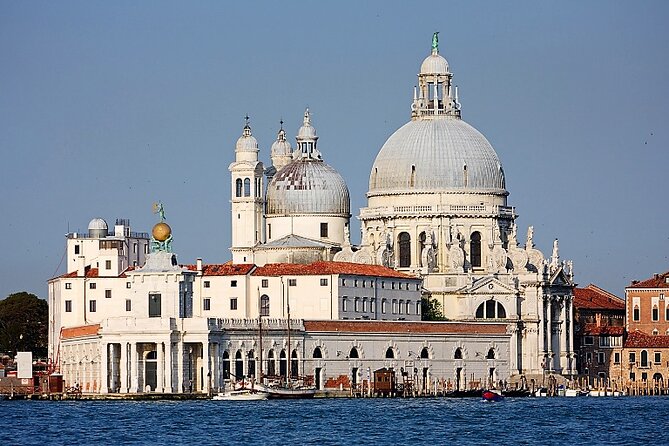
At Chiesa Santa Maria Mater Domini, you hear about church arcades placed under public surveillance to prevent cruising and meetings. The date given is 1488, and the point is sharp: even sacred spaces were treated as part of the city’s enforcement map.
It’s a stark shift from poetry and records to physical control of where bodies could linger. If you’ve only thought of LGBTQ history as stories of culture, this stop shows how loudly the state and authorities could speak.


Ponte delle Tette, cat masks, and Venice’s red-light geometry
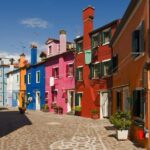
Then comes Ponte delle Tette, described as the red-light district in the 15th century. Authorities even encouraged prostitutes to display their wares in that area, framed as a way to prevent sodomy in town. It’s one of those uncomfortable historical contradictions where you see how control systems can operate through cynical “choices” forced onto the public.
Right around the bridge neighborhood, you also hear about the gnaghe, men dressed as women who covered their faces with cat masks and used cat-like calls to make explicit proposals. The guide’s emphasis here is on performance, signaling, and how a city can build a whole code out of costumes.
If you’re the type who likes your history specific and visual, this is a highlight.
Chiesa di San Cassiano and Rolandina Roncaglia
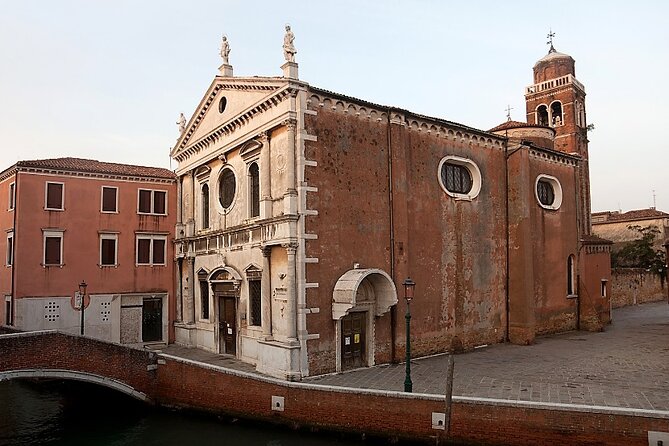
At Chiesa di San Cassiano, the tour centers on Rolandina Roncaglia, described as the first trans person we know of in Italy. Born Rolandino, she lived as a woman for seven years in a nearby house, sold eggs by the local market, and later became a prostitute. In 1355, she was discovered and met a terrible death.
This stop is heavy, but it is also precise. It turns a huge and often abstract topic into one person, one time, and one Venice neighborhood you can picture. I found this part difficult in the way real history can be difficult, but also clearer than generic talking points.
Campo San Cassiano, opera’s earliest public stage, and undercover encounters
Next is Campo San Cassiano, where a theatre once stood and is described as the first public opera house in the world. The guide also connects the area to homosexual encounters, including mention of Giacomo Casanova when he worked as a spy for state inquisitors in the 18th century.
The value here is the link between culture and surveillance. Venice could host public art and still run secret policing in the same orbit. This stop helps you understand why LGBTQ history in Venice can’t be separated from the city’s power structure.
Calle dell Ogio along Canal Grande, where a British movement meets a young porter
At Calle dell Ogio, the tour points to a famous writer and pioneer of the British gay movement who met a beautiful 19-year-old porter. It’s a brief story, but it gives you something modern to hold onto: relationships, not just laws.
This is where the tour starts to feel more like Venice’s long romantic thread. You’re still in the city’s public spaces, but now the emphasis is on human connection.
Campo San Giacomo di Rialto and proclamations with death penalties
The walk then reaches Campo San Giacomo di Rialto, where proclamations were made from a statue used as a podium. The guide explains that bans relating to sodomy were announced there, with an officer reading the names of people sentenced to death standing on the block at the end of the staircase.
Being near the Rialto market matters. The guide frames why the location worked: it was close to a high-traffic public hub, so the message of punishment could spread fast through ordinary daily life.
Ruga dei Oresi and the terror of being too close
At Ruga dei Oresi, you learn about a suspicious pharmacy used by sodomites for meetings. The tour stresses that even approaching could be grounds for condemnation to death.
This stop is not about romance or art. It’s about the fear involved in the search for connection under threat. In Venice, where corners are close and crowds are constant, the city’s architecture could become part of the danger.
Palazzo Ca’ Zenobio, baroque interiors, and a Madonna reference from the 1980s
Next is Palazzo Ca’ Zenobio, highlighted as a significant late Baroque example. Throughout the 18th century, it became a venue for intense intellectual life. Since 1993, after restoration, it serves as a research centre for Armenian studies.
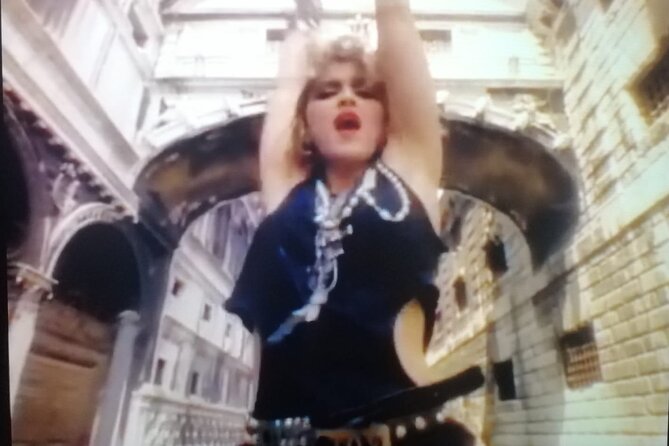
The guide also points out a pop-culture detail: it was described as the main indoor location for Madonna’s Like a Virgin video in the 1980s. Even if you don’t care about music videos, this adds a modern layer to the route. It shows how Venice reuses its glamorous interiors again and again across decades.
San Sebastiano and the art patron linked to the LGBT community
At Chiesa di San Sebastiano, you get one of Venice’s art-focused scenes. The church is known for paintings by Paolo Veronese, who is buried here. The tour then connects San Sebastiano to the idea of being the patron saint of the LGBT community worldwide.
This is one of the more uplifting stops in the middle of darker material. It gives you a way to see religious art as part of identity meaning, not just control.
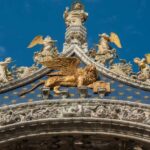
Campanile di San Marco and the cheba cage
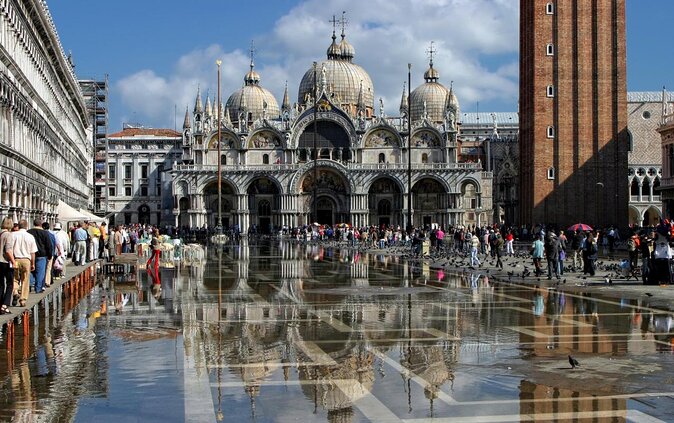
Outside the Campanile di San Marco, the tour mentions an iron cage called the cheba. The dates given are the 15th and 16th centuries, and it was used to expose sodomite priests to bad weather and taunts from the crowd below.
This stop is memorable because it ties the symbolism of public shame to an object you can picture in space. You are not just told “people were punished,” you’re shown a physical tool and a public setting.
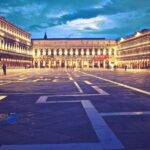
Piazzetta San Marco and executions in the open
At Piazzetta San Marco, the tour places executions between the two columns up to the middle of the 17th century. Casanova is mentioned as confirming this, tying a widely known name to a grim reality.
Even if you come to San Marco for its beauty, this part shifts the mood. It makes you see the square not just as a postcard, but as a stage where the city enforced its rules.
Harry’s Bar and the idea of LGBTQ travel culture into the 1970s
Then you reach Harry’s Bar, described as a famous meeting point for gay travelers up to the 1970s. The guide notes that the founder claimed it was just rumors, but the story is part of the bar’s legend.
This stop works well if you’re interested in how LGBTQ life also forms in ordinary social spaces. Bars, after all, are where people choose to gather, not only where authorities choose to watch.
Riva degli Schiavoni, love stories staged as theatre in real places
At Riva degli Schiavoni, you visit a palace where a love story was staged between a Venetian rower and a famous German writer. The names are not provided in the tour info you have, but the structure of the story is clear: love, performance, and literature overlap on Venice’s grand facades.
It is a softer stop after the sharper enforcement details. The theme here is how Venice turns relationships into art, even when those relationships were never meant to be simple.
Calle del Dose da Ponte, a hotel, and a lesbian US painter’s complicated life
At Calle del Dose da Ponte, you hear about a hotel where a famous lesbian US painter lived. The guide describes her as collecting love affairs with men and women.
This is another reminder that LGBTQ history in Venice is not only about persecution. It’s also about artists working through messy, multi-directional emotions and identities, in the same city that tried to regulate them.
Palazzo Ca’ Dario and palaces marked by misfortune
At Palazzo Ca’ Dario, the tour shares that some owners experienced an unrelated series of unfortunate events, and many of those owners are described as gay. The connection is not spelled out with names here, so treat it as a theme stop: a way of pointing out that certain elite residences carry personal stories that the city never quite loses.
Even when details are limited, the guide’s job is to keep you oriented, so you still leave knowing where the story belongs geographically.
Palazzo Mocenigo, a British poet, and bisexual life in a layered city
At Palazzo Mocenigo, the tour names a famous British poet and highlights an acknowledged bisexual component in a complex sentimental and sexual life. Again, the exact biographical specifics are not provided in the tour info, but the takeaway is concrete: Venice attracted writers and thinkers, and those identities were part of their private world.
This is one of the more “literature-driven” stops, and it helps bring the timeline into the realm of modern identity.
San Martino di Castello and the last clue in the 1450 list
The tour ends at Chiesa Parrocchiale di San Martino di Castello, where a porch area is described as appearing in a law of 1450 as one of the places of the night where sodomites cruised. The porch is no longer existing, but the historical mention pins the story to that zone of the city.
Ending here feels appropriate because it closes the loop on surveillance and public enforcement. You’re left with the sense that even the ruins and missing structures are still evidence.
Price and value for a two-hour LGBTQ Venice history walk
The price is $92.63 per person for about two hours. For a specialized, English-led walk through dozens of specific places, that can be good value, especially because the listed stops are admission ticket free. You’re also getting a capped small group experience, with a guide who focuses on stories tied to exact addresses and architecture.
One thing to keep an eye on: if you’re staying outside Venice and visiting for the day, there may be a €5 access fee on certain dates. That’s separate from the tour price, so check the city access rules before you commit your schedule.
Also, plan to book in advance. The tour is listed as being booked on average 25 days ahead, which usually means it can sell out closer to travel dates.
Who should book this tour
Book this if you want Venice in layers. You like LGBTQ history that is grounded in places you can point to, not just general context. You also appreciate a guide who connects the city’s art, architecture, and literature to identity and love, even when the story gets ugly.
You might pass if you strongly prefer a celebratory tone only. This tour does cover horrific punishments and surveillance tactics, and it does so through the lens of real sites and dates.
Should you book Gay Life in Venice from the Middle Ages to Present Days?
My take: yes, if you want a Venice tour that treats history like it happened in real streets, not in a lecture hall. The small group size, the English storytelling, and the attention to specific locations make it worth your time. The content is sometimes dark, so if that would spoil your day, you may want a different kind of Venice tour.
If you do book, I’d suggest pairing it with a relaxed afternoon near Rialto. You will finish there, and it’s a natural place to keep the thread going as you wander.
FAQ
How long is the tour?
The tour lasts about two hours.
What language is the tour offered in?
It is offered in English.
How many people are on the tour?
Numbers are capped at eight travelers, and the maximum is listed as 10 travelers.
Where does the tour start and where does it end?
It starts at Campo San Giacomo dell’Orio and ends at Ponte di Rialto.
Is admission included for the stops?
For the listed stops, admission ticket is marked as free.
Do I get a mobile ticket?
Yes, the tour offers a mobile ticket.
Is there any additional city access fee?
On certain dates, people staying outside of Venice who are visiting for the day may need to pay a €5 access fee. You can check applicable dates and exemptions here: https://cda.ve.it
Can I cancel and get a full refund?
Yes. You can cancel up to 24 hours in advance for a full refund, using the tour’s local time for the cutoff. If you cancel less than 24 hours before the start time, the amount paid is not refunded.