Tour review · VENICE
DA Venezia : Experience Padua like a local
Padua can feel like a big city, without the big-city mess. This 3-hour, small-group walk is a practical way to see the historic center while you’re also tasting real local flavors at Caffè Pedrocchi. What makes it work is the focus on daily life, not just photo stops.
Two things I really like about this experience are how it threads together Padua’s market squares with the major civic landmarks, and how the route ends at the places that shape the city’s identity, including the Basilica of St. Anthony. One possible drawback to keep in mind is that some of the most famous interior spaces along the way (like the big hall in Palazzo della Ragione and parts of Palazzo Bo) are not included, so you may want to budget a bit extra if you want to go inside.
The tour runs about 3 hours and is limited to a maximum of 8 travelers, which keeps the pace friendly and question-friendly. And from the guides highlighted in past bookings, like Camilla and Chiara, the common theme is energy and clear explanations in English.
Key highlights to look for on the walk
- Market squares first, so you get Padua’s “how people live” context early
- Caffè Pedrocchi tasting of the mint coffee made with Arabica espresso, cream emulsion, mint syrup, and cocoa
- Palazzo della Ragione outdoors and inside-adjacent, with the option to pay for the big frescoed hall
- Sotto il Salone covered market, where specialty shops sell Paduan staples like oil, cheese, meat, and more
- A real segment of Jewish history, with the Quartiere dell’Antico Ghetto Ebraico on a walkable route
- Big-city sights without long bus rides, because most highlights sit close together in the center
Starting in Padua, then walking straight into the city’s daily rhythm
This tour is built for people who want more than landmarks. You start at Stazione FS di Padova, and then you head out on foot with a local guide who focuses on how Padua functions as a working city. The pace is set for a 3-hour stroll that keeps stops short, with time to look closely and ask questions.
The group size is capped at 8 travelers, and that matters. With a smaller group, you get more of the guide’s attention, and it’s easier to shift from “see the square” to “understand why the square matters.” The experience is offered in English, and you get a mobile ticket, plus roundtrip transportation to the departure point as part of what you book.
A small heads-up for planning: the provider notes a €5 access fee on certain dates for many travelers staying outside Venice who plan a day visit, with exemptions. Since this tour is in Padua, treat that note as something to double-check in your booking details, just to avoid surprises.
You can also read our reviews of more tours and experiences in Padua.
Piazza della Frutta and Piazza delle Erbe, where the market story is written in stone
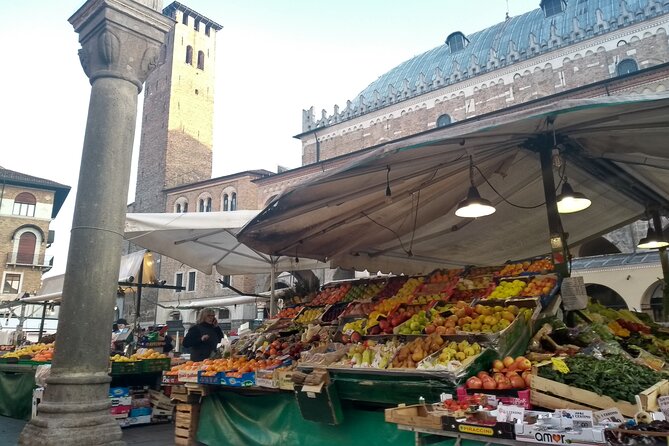
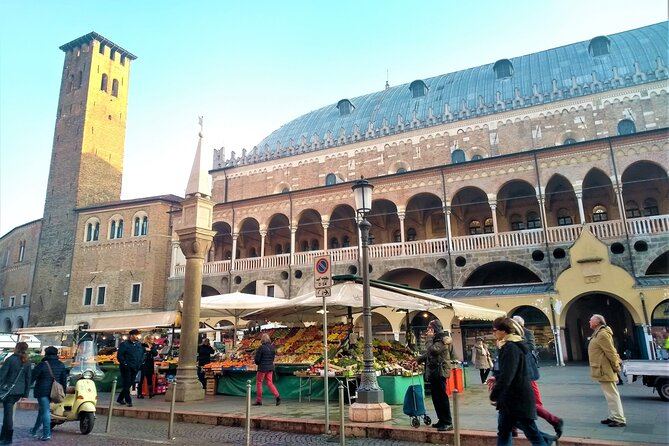
Most guided walks start with a monument. This one starts with the engine room of the city: the squares where trade happened for centuries. You’ll begin at Piazza della Frutta, once known as Piazza del Peronio. Think of it as one of Padua’s many “living rooms” turned into a huge market space. The square sits under the weight of the Palazzo della Ragione, a big communal centerpiece that links civic space to everyday shopping.
From there, you move to Piazza delle Erbe, historically also called piazza delle Biade (grain) or piazza del Vino (wine). This is another commercial hub paired with Piazza della Frutta, and the important detail is how both squares work as a pair. The guide typically helps you spot how the city organized commerce, celebration, and power in different nearby spaces.
What I like about kicking things off here is that you immediately learn how to “read” the center. You stop seeing the squares as scenery and start seeing them as infrastructure. When you’re walking later to more iconic landmarks, you’ll understand why they are positioned where they are.
Potential drawback: if you strongly prefer museum interiors over outdoor city spaces, the early part may feel more about atmosphere than architecture. But if you’re after the real flavor of Padua, this is exactly the right start.
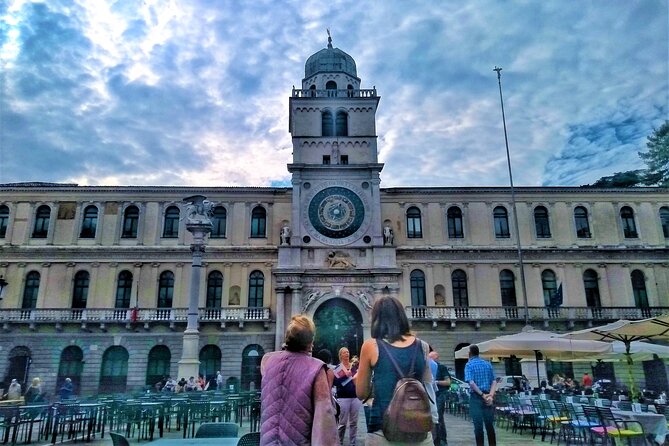
Piazza dei Signori and the Clock Tower, the civic stage next to the trade zone
After the market squares, the walk shifts to Piazza dei Signori, a different kind of public space. This square is more associated with civic celebrations, tournaments, and public gatherings. In other words, it’s the contrast to the trade-focused squares you just saw.
The standout here is the Clock Tower, which dominates the space. Even if you don’t go inside any building, the tower gives you a visual anchor so you can orient yourself as you move. The guide’s explanations help connect these squares to how Padua organized public life, not just how it looked.
In practical terms, this stop is also a breather. You’re in a contained square, with less “where do we go next” pressure, so you can slow down, take photos, and soak in the setting.
Caffè Pedrocchi, mint coffee and the café that never really closed
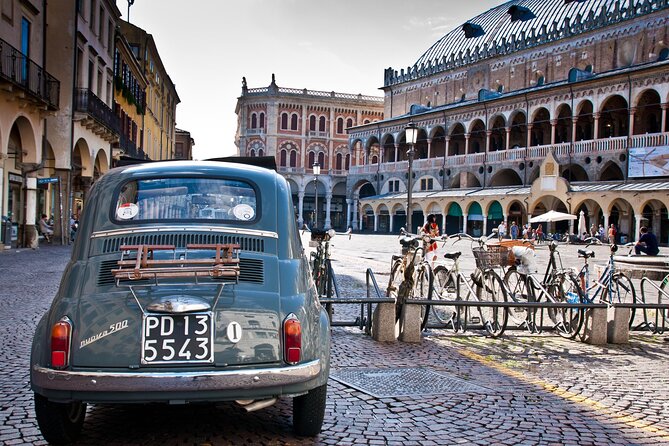
Then you hit one of Padua’s most famous breaks: Pedrocchi Café. The nickname says a lot: the café without doors. It stayed open day and night after its inauguration in 1831 until 1916. That’s a strong clue about its role in city life, not just its role as a treat stop.
This tour includes a tasting of Caffè Pedrocchi, specifically the mint coffee built from:
- 100% Arabica espresso
- emulsion of fresh cream
- mint in syrup
- a sprinkle of bitter cocoa
If you’ve had mint-flavored drinks before, this is a different angle because it’s rooted in espresso and cream, not candy sweetness. It’s also a great mid-walk reset. When your feet are starting to feel the pace, you can sit for a bit and let the guide keep the story going around you.
Best part for value: the tasting is included, and it’s not a random cookie. It’s a Padua-specific signature that connects the city’s identity to something you can actually taste.
Palazzo della Ragione and Sotto il Salone, medieval hall, then food shops under the roof
You’ll learn about Palazzo della Ragione, built in 1218. The key interior highlight is the upper floor hall called Il Salone, a large medieval frescoed space described as one of the biggest medieval halls in the world. This is the kind of place that can be worth extra time, but note the pricing detail: admission for Palazzo della Ragione is not included.
Even if you don’t pay to go in, the palace is powerful from the outside because it separates the market squares. The building is basically the hinge between Piazza delle Erbe and Piazza delle Frutti, so it reinforces the lesson from the earlier stops: commerce and civic life were not separate in Padua.
Next comes one of the most useful stops for food lovers: Sotto il Salone, the covered market area inside the Palazzo della Ragione. This is where you get a feel for the daily supply chain. You’ll find shops like butchers, fishmongers, greengrocers, plus sellers of oil, meat, cheeses, and other local staples.
The tour also includes a typical Paduan tasting, which can happen at Caffè Pedrocchi or at the historical market area. That flexibility is smart, because it lets your guide match timing to the day’s flow.
If you’re deciding whether this is for you, this market stop is a tell. If you like food culture, it’s one of the best places to connect what you saw in the squares to what’s on sale today.
Quartiere dell’Antico Ghetto Ebraico, walking the streets of a tough chapter
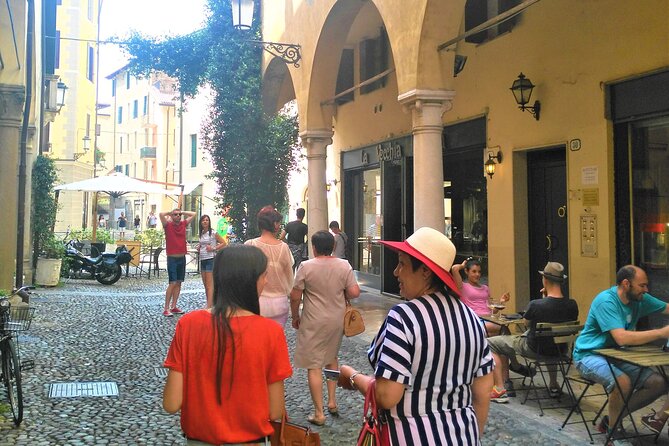
Next, you move into the Quartiere dell’Antico Ghetto Ebraico, a maze of narrow streets just south of Piazza delle Erbe. The timing matters here: the Jewish ghetto operated since 1603 and was abolished in 1797, when French Revolution pressure helped lead to Jews being declared free and equal.
Even without major signage overload, the street layout itself helps you understand what a “ghetto” meant in practice: constrained space, walkable corridors, and a neighborhood that’s still shaped by its past. The guide’s job is to keep this from becoming a quick history lecture, and instead help you connect what you see on the street to what changed over time.
A practical note: narrow streets mean you’ll move a bit slower. Wear shoes you’re comfortable with, and don’t expect this segment to be like a straight corridor. It’s meant to feel like a real neighborhood.
Palazzo Bo and the University of Padua, law and an anatomical theater in one place
Then you reach Palazzo Bo, seat of the University of Padua. The University was founded in 1222, and the building still houses the Rectorate and the School of Law. It’s also home to the oldest Anatomical Theater in the world.
This stop is especially good if you like seeing how education and science shaped a city. Padua isn’t only about pilgrimages and market squares. It’s also about study and scholarship, and Palazzo Bo is where that identity becomes physical.
Just be aware: admission is not included for this stop. So, depending on what the tour day offers, you may only get exterior views or limited access. If getting into the anatomical theater matters to you, plan for extra entry costs and time.
Prato della Valle and Basilica of St. Anthony, open space, then pilgrimage power
The walk ends with two big anchors that feel very different from the compact market center.
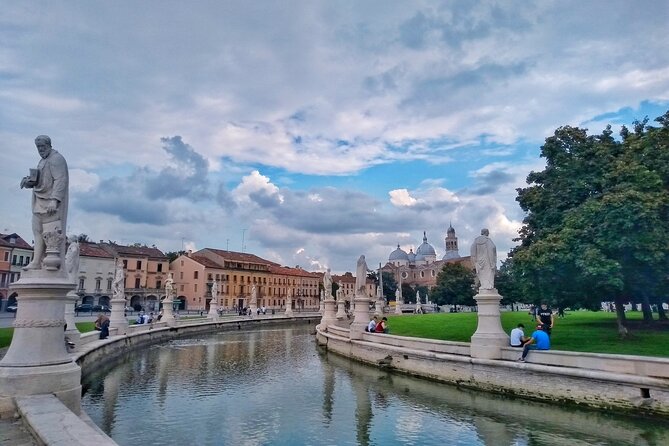
First is Prato della Valle, the largest square in Padua and one of the largest in Europe. It’s famous for its 78 statues, which create a kind of outdoor visual catalog of major figures from Padua. If you like architecture-as-idea, this is where Padua feels like it’s thinking in grand public statements, not just street corners.
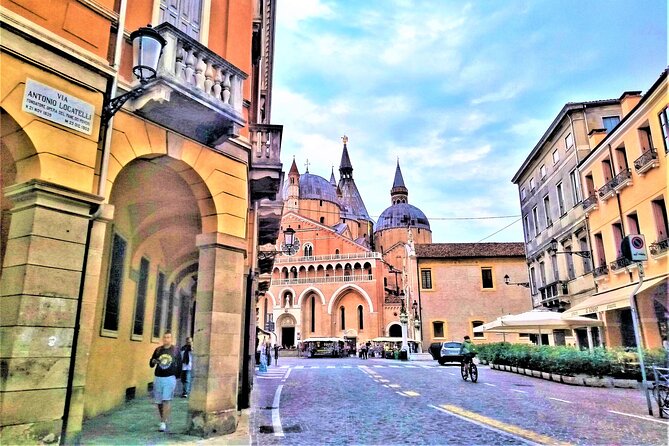
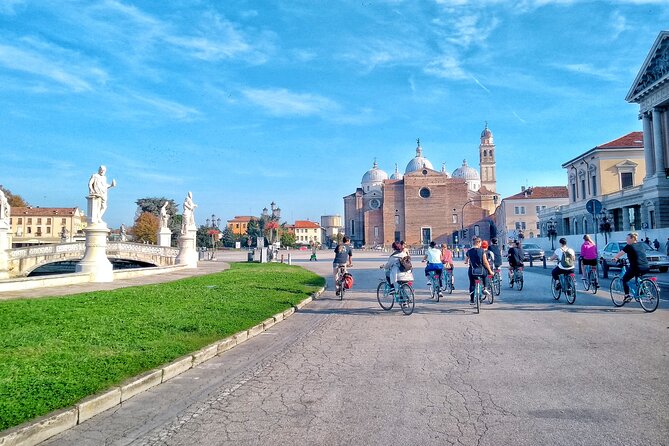
Then you finish at the Basilica of St. Anthony, known locally as Il Santo. This church draws millions of pilgrims each year, and it’s described as a mix of styles and cultures from all over the world. It’s the kind of place where even if your focus is photography or architecture, you’ll feel the human energy around you.
Value-friendly detail: these stops don’t require extra entry tickets based on the information provided, so you can enjoy them without surprise costs.
Price and value: what $130 covers, and where extra costs might appear
At about $130.18 per person for roughly 3 hours, you’re paying for more than a route. Your included value includes:
- Accompaniment by a local tour leader
- A walking tour across the historic center
- Roundtrip transportation to the place of departure
- A guided focus on traditional Italian life
- A typical Paduan tasting (at Caffè Pedrocchi or at the historical market)
- Insurance and technical organization
Most of the stops along the route are marked as free admission in the provided info. That helps you keep the tour feeling like good value rather than a series of paid-entry add-ons.
Where the math can change is at Palazzo della Ragione (Il Salone) and Palazzo Bo. The information explicitly says those are not included, so if you want the interiors, you should expect an additional expense.
For me, the best value signal is the tasting plus the fact that the tour mixes market life, civic landmarks, and university and religious identity. You’re not just getting a “greatest hits” list. You’re getting context, and context is what makes a city stick.
Who should book this Padua walking tour, and who might skip it
This tour is a strong fit if you:
- like guided structure that helps you connect different neighborhoods
- want a small group experience with a local leader
- enjoy food culture, especially a real Padua-specific tasting
- are curious about how market squares, education, and pilgrimage all shaped one city
It’s also a good option if you’re speaking English and want explanations paced for real walking, not rushing from one big sight to another.
You might consider another approach if you:
- mostly want museum-style interiors and long indoor time, since some key interiors are not included
- are very sensitive to weather, because the experience requires good weather
Practical tips to make the most of your 3-hour route
A few simple things will make this walk more comfortable and more rewarding:
- Plan on good walking shoes, since you’re moving through squares and narrow streets, including the ghetto neighborhood.
- Carry a small bottle of water if you run hot. The tour lasts around 3 hours, and you’ll be out in open space for portions of it.
- When you reach the market-focused stops, ask your guide what to look for, like how the squares function as trade zones. That’s where the stories start making sense.
- If interiors matter to you, decide early whether you want to add paid entry for Il Salone in Palazzo della Ragione and/or the parts of Palazzo Bo tied to the university spaces.
Also, based on guide names that have shown up in strong feedback, like Camilla and Chiara, you’ll likely get clear explanations in English and a sense of genuine pride in the city. That makes it easier to ask questions and not feel like you’re dragging information out of someone.
Should you book DA Venezia Experience Padua like a local?
Yes, I’d book it if your goal is to understand Padua in a way that feels like daily life, not a checklist. The included Caffè Pedrocchi tasting, the market squares under Palazzo della Ragione, and the walk through the historic Jewish ghetto give you variety without requiring lots of extra ticketing.
If you’re the type who loves interiors, check how important it is for you to enter Il Salone and Palazzo Bo, since those admissions are not included. For everyone else, this is a smart, efficient way to get your bearings in Padua while still tasting something genuinely local.
FAQ
How long is the Padua walking experience?
It lasts about 3 hours.
What language is the tour offered in?
The tour is offered in English.
What is included with the tour tasting?
You get a typical Paduan tasting, which takes place at Caffè Pedrocchi or at the Historical Market.
Are tickets for Palazzo della Ragione and Palazzo Bo included?
No. Admission is marked as not included for Palazzo della Ragione (Il Salone) and for Palazzo Bo.
Where does the tour start and end?
The meeting point is Stazione FS di Padova, Piazzale della Stazione, 1, 35131 Padova PD, Italy, and the activity ends back at the meeting point.
What happens if the tour is canceled due to weather?
The experience requires good weather. If it is canceled due to poor weather, you will be offered a different date or a full refund.