
Tour review · WORKSHOPS
Creative Venice: Artisan Excellence and Craftsmen Workshops
Venice gets personal in artisan workshops. This 3-hour creative route links you to makers and their methods, led by Valerio Coppo in English through Venice’s real craft world. You’ll move from Rialto’s food life to paper, shoes, hats, glass, and looms, with a pace that can be flexible for your group.
Two things I love about this tour are the behind-the-scenes shop access and the way Valerio shares stories that make the objects feel practical, not precious. The other standout is the relaxed rhythm, so you get time to look closely without feeling rushed.
One thing to consider: visits are short, about 15 minutes each, so this is best for people who want an efficient overview of Venice craft, not a long hands-on class.
Key Highlights to Know Before You Go

- Valerio Coppo’s craft approach: you’re not just sightseeing, you’re watching how objects get made.
- Free entry at each stop: the tour focuses on meeting makers and seeing their work, not buying tickets.
- A route built around working shops: paper, textile looms, shoe production, hats, and Murano-glass jewelry.
- A pace that stays comfortable: your group can slow down or speed up as you walk.
- No-pressure buying vibe: the tour’s emphasis is learning and meeting people, not sales tactics.
A Craft-Focused Venice Walk That Feels Like a Local Circuit
If you’ve ever felt that Venice can turn into a postcard loop, this tour gives you a different angle. You still see famous areas, but the focus stays on the people who make things by hand, and on why those techniques matter today. It’s a smart way to spend a short visit if you want authenticity without a jam-packed schedule.
I like that it’s designed around working spaces. Instead of a lecture, you get a sequence of shop moments where you can actually watch details come together. Think materials, tools, and old methods still in use.
Also, the tour is private, meaning it’s your group and your timing. That matters because craft watching is visual. Being able to pause for a closer look, ask one more question, or linger for a photo is a big part of the value.
A few more Venice tours and experiences worth a look



Starting at Campo San Giacomo di Rialto, Then Straight Into Real Venice
The meeting point is Campo San Giacomo di Rialto, in front of a church traditionally considered to be the oldest in Venice. You’ll meet your guide near the fountain in the middle of the square, close enough to anchor you fast before the walking starts.
This first segment works well for orientation. You’re in the center, but the tour doesn’t waste time with vague “here’s the history” talk. It pushes you outward quickly into everyday Venice: market noise, materials, and the kind of local browsing you only catch when you’re near the action.
Rialto’s Pescheria: A Noisy Start That Makes Everything Else Make Sense
One of the most vivid early stops is the fish market at Mercato del Pesce al Minuto in the Rialto area. This is the kind of place where raw reality hits first. Fishmongers call out today’s catch, seagulls patrol the aisles, and you’ll see fish arranged over deep crushed ice in busy halls.
Why this stop matters: it sets the theme for the whole tour. Craft in Venice is not just glass and jewelry. It’s also about the daily systems that feed a city and the people who maintain them generation after generation. Even if you don’t buy anything, you get a sense of how Venice life connects to hands-on work.
The stop is brief, around 15 minutes. So treat it like a taste. Let your senses take it in, then move on while the feeling is still strong.
Campo San Polo Ceramics: Table Traditions, Not Just Decorative Stuff
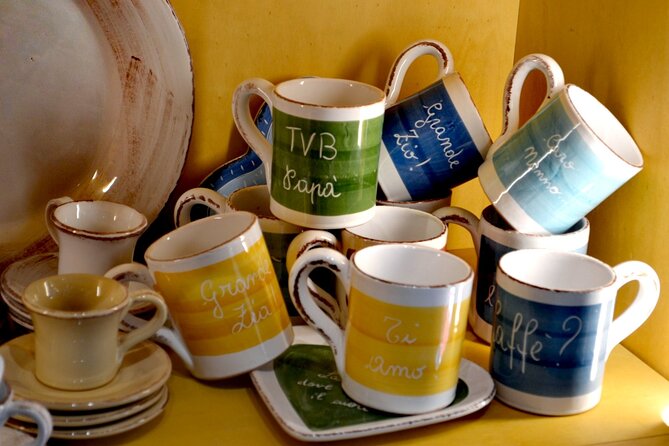
Next up is San Polo, where you’ll visit a local artisan making traditional rural products. The emphasis here is on typical materials and manufacturing methods that are easy to lose under industrial production.
In practical terms, you’ll see a range of bright colors, lively patterns, and rustic forms tied to home life: sharing meals, gatherings, and the objects that make those moments feel warm. This is a craft story you can relate to even if you have zero interest in collecting ceramics.
The “tradeoff” is time. Fifteen minutes means you’ll get an introduction and a good look, not a full explanation of every technique. Still, it’s enough to understand the maker’s intent and to spot what makes the work different from mass-produced versions.
Ponte di Rialto Shoe Shop: How Recycling Becomes Craft
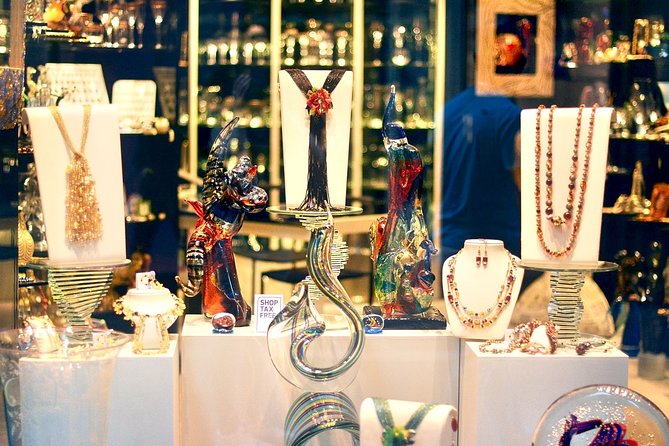
At the Ponte di Rialto area, the tour shifts to footwear in a way that feels very Venice, very practical. You’ll visit a traditional shoe shop built on a philosophy of using what’s available and making it last.
Here’s what stands out in the details: old bicycle tyres were repurposed into waterproof, hardwearing soles. Jute sacks from transport of seeds and grains were turned into linings. Even fabrics and rags from old clothes became uppers. That’s not just recycling as a buzzword. It’s old-school survival turned into design and durability.
You may also see the Veneziane style, inspired by eighteenth-century Serenissima-era elegance, sometimes finished with velvet or bright oriental silks. The key point is that these are hand-sewn, so the craftsmanship shows in the finish.
If you care about sustainability without performative marketing, this stop hits. Just keep your expectations realistic: you’re watching, learning, and looking, not sitting through a boot-making masterclass.






Campo Manin and Giuliana’s Hats: Venice Style With Real Supply Lines
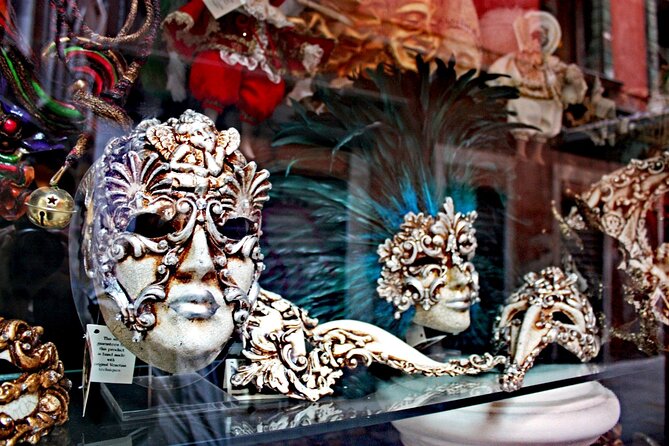
At Campo Manin, you’ll meet Giuliana’s tiny hat shop, filled with options ranging from Panama hats to gondolier-style hats, Carnevale hats, waterproof styles, wool hats, and even wedding hats. It’s a small store, but it has range, and the variety makes it easy to compare styles.
A specific detail I really like: since 1980, Giuliana has imported Panama hats directly from Ecuador. That gives the shop more credibility than “we sell hats” ever could. You’re seeing a supply chain and a long-running specialty, not just seasonal inventory.
This shop is officially recognized as a historic place of the Veneto Region. That means you’re not only shopping in a cute corner. You’re visiting a place with official cultural recognition, which helps explain why it keeps its identity.
Again, the time is around 15 minutes. If you want to try on several hats, arrive with extra patience. Otherwise, treat it as a look and a learn stop, then keep moving.
Campo Santo Stefano’s Paper Master: Marmorizzazione That Looks Like Color in Motion
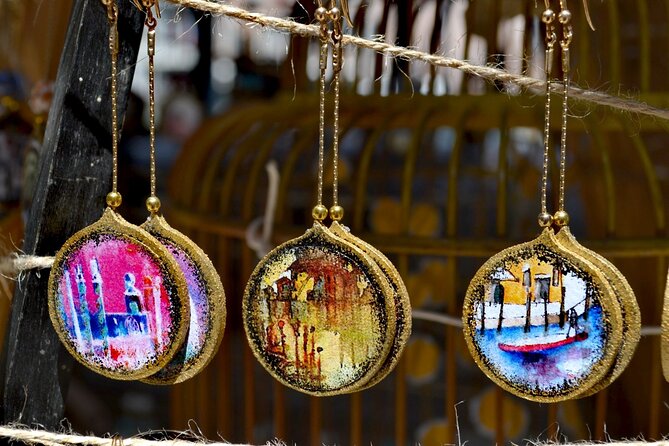
In Campo Santo Stefano, you’ll meet a maestro marmorizzatore, a master paper artisan focused on ancient paper techniques that are still alive in Venice. The word maestro here matters in a Venetian way, used as a respectful greeting for an elderly person.
What you’ll see is color and pattern achieved through technique. The lagoon’s shifting light inspired the shop’s work, and the result is paper that can show shades only this method seems able to reproduce.
Two themes get special attention: floral sheets featuring tulips, roses, and trees, and a series of fish that smile. Those fish are captured in the liquid element and then petrified on paper, described as if fossilized, embedded like they came from primordial seas.
This stop is short, but it’s the most “wow factor” in the lineup. It’s also the most transferable lesson: you learn how an old process can create modern emotional impact. A patterned sheet of paper is still a product, but it’s also an artifact of technique.
San Salvador Atelier: Sculptural Jewelry and Glass Flowers in a Cozy Studio
At Chiesa di San Salvador, between Rialto Bridge and St. Marco square, the tour moves to a precious atelier run by a couple of artists since 2007. This is where the tour starts to feel quieter and more contemplative.
The work you’ll see here includes rare collections of original sculptures and jewelry. You might also spot glass flowers, dreamlike shapes of cut iron, wood-based pieces described like reborn trees, nomadic landscapes, and darker pieces inspired by the abyss.
The value of this stop is the relationship between object and viewer. You’re not being asked to admire from far away. Instead, you’re in a studio setting where the scale and texture of art become easier to understand.
Time is still about 15 minutes. So if you’re the type who loves reading labels and learning every material, be ready to pick what fascinates you most and focus your questions.
Murano Glass Jewelry at Rialto: Handmade Beads and Traditional Techniques
At Ponte di Rialto again, you’ll visit a shop producing jewelry in Murano glass. The key point here is that the work is entirely by hand, using refined techniques from the Venetian tradition.
The beads and components you’ll see are made by small local workshops with experience in Murano glass making, including glass blowing and lamp-working techniques. Even if you can’t identify every method, you can usually tell by how consistent and precise the results look.
This stop pairs well with the earlier paper and ceramics. You start to see a theme: Venice craft relies on patient methods, not shortcuts. Materials are never just materials. They’re part of a system of skills that gets passed along.
Keep expectations practical. This is a viewing stop, so you’ll get a sense of how pieces are made, not a full production walkthrough.
Cannaregio Textile Company and Soprarizzo Velvet on Antique Looms
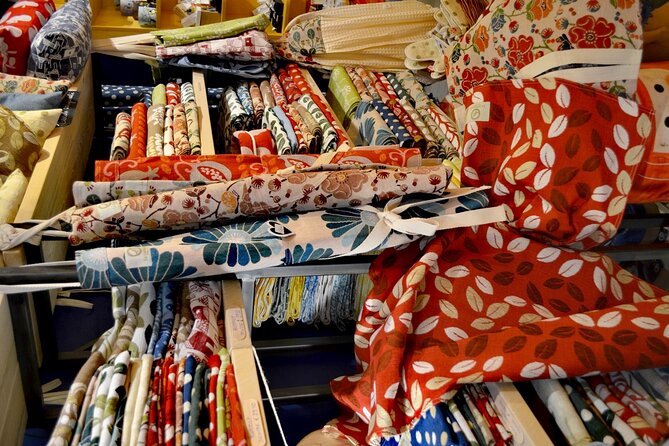
The tour ends in Cannaregio, at a textile company producing fine fabrics for furnishing and high fashion. You’ll encounter velvets, damasks, lampases, brocatelles, and the special fabric called soprarizzo velvet, still made by hand.
This is where the tour becomes extra specific, in a good way. Soprarizzo production is described as still being carried out on 18th-century looms, originally belonging to the silk guild of the Republic of Venice.
Why you’ll enjoy this stop: you get to see that fabric craft isn’t just about choosing a pretty color. It’s about structure, timing, and technique. A loom is basically a mechanical teacher. It forces discipline, and it shapes the final feel of the cloth.
The stop is brief, about 15 minutes, so focus on what you can absorb quickly: texture, weight, and the way different fabric types catch light. If you love textiles, this is likely your favorite moment.
Price and Value: What $182.17 Buys You in Venice
At $182.17 per person for about 3 hours, the price looks high if you’re comparing it to a free walk. But it’s also not a museum ticket. You’re paying for access, guidance, and time spent with artisans in their working spaces.
What you get for the money:
- A licensed tour guide in English
- A private tour format with your group
- A mobile ticket
- Admission-free shop stops (the listed entry for each stop is free)
And the bigger value is what those line items represent: you’re seeing craft processes you’d likely struggle to find on your own, and you’re doing it with a guide who can connect what you’re seeing to why it exists.
Is it worth it? If you like crafts, materials, and the human scale of making, yes. If you want only major landmarks and zero shop time, you might find this schedule too maker-focused.
Who This Tour Suits Best, and Who Might Skip It
This tour fits best if you:
- Love Venice beyond the classic monuments
- Want to see objects made with traditional techniques
- Like meeting people who actually produce things, not just sell souvenirs
- Prefer a relaxed pace over a sprint
It might not be the right choice if you:
- Want long workshop sessions with deep hands-on instruction
- Plan to do heavy museum time the same day and need a quieter itinerary
- Strongly dislike walking from stop to stop in a compact city center
Should You Book Creative Venice: Artisan Excellence and Craftsmen Workshops?
Book it if your idea of a great Venice day is watching craft in motion, hearing the why behind the process, and getting a guided route that keeps you off the generic track. The tour’s strongest promise is practical one: you get a focused look at real artisan shops, and you do it at a comfortable pace with a guide who brings stories to life.
Skip it if you’re chasing only headline sights, or if 3 hours must be packed with broad, landmark-style coverage. This is a craft tour first, and Venice’s major landmarks are present mostly as geographic anchors.
If you want Venice that feels human, this is a smart bet.
FAQ
How long is the Creative Venice tour?
The tour lasts about 3 hours.
Where does the tour start and end?
It starts at Campo San Giacomo di Rialto, in front of the church near the fountain in the middle of the square. It ends in the Zattere area (30133 Venice).
Is pickup included?
Pickup is not automatically included for every booking. Personalized pick-up is possible only if you book a private group. If you booked a private tour, you can let the provider know if you want pick-up at a location in the historical center of Venice.
What is included in the price?
A licensed tour guide is included, and the tour uses a mobile ticket.
Are there admission fees at the stops?
The stops listed for the tour are marked as free for admission.
Is the tour offered in English, and is it open to most travelers?
The tour is offered in English. Service animals are allowed, and most travelers can participate. It is also near public transportation.
More Workshops & Classes in Venice

More Tour Reviews in Venice



Not for you? Here's more nearby things to do in Venice we have reviewed










Workshops, compared.
 ★ 4.5Carnival Mask WorkshopFrom $911,925 reviews
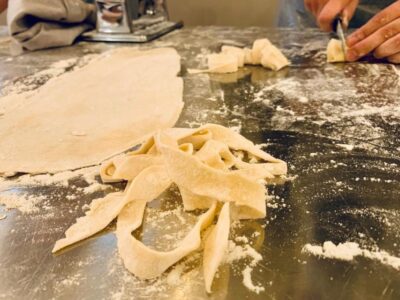 ★ 4.9Pasta and Tiramisu Cooking Class with WineFrom $781,010 reviews
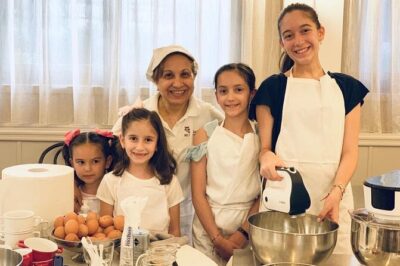 ★ 5.0Pasta and Tiramisu Cooking Class with Wine in VeniceFrom $76945 reviews
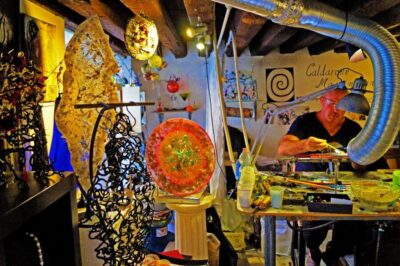 ★ 5.0Create Your Glass Artwork: Private Lesson With Local ArtisanFrom $93556 reviews
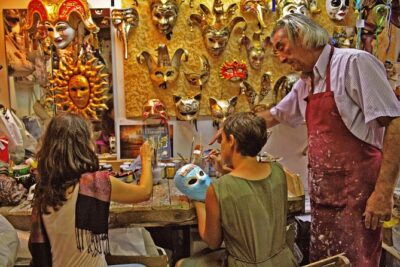 ★ 4.5Venetian Carnival Mask Making Class in Venice, ItalyFrom $83525 reviews
 ★ 4.0Murano Glass Factory Experience: A Workshop in VeniceFrom $84437 reviews
 ★ 3.9Murano Glass-Blowing Demo and WorkshopFrom $82413 reviews
 ★ 4.9Venetian Masks WorkshopFrom $71411 reviews
Browse the lists this tour appears in