
Tour review · VENICE GONDOLA RIDES
Afternoon in Venice : Basilica + Doge’s Palace + Gondola
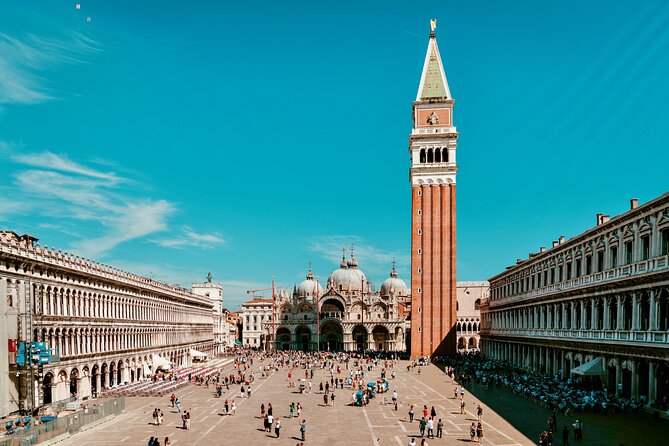
St. Mark’s Square, then a gondola. That combo is the fastest way to feel like Venice goes from politics to pure romance in one afternoon, with headsets so you actually catch every detail. I like how this tour strings together the big-ticket icons in a logical path, starting at Piazza San Marco and working through the Basilica and Doge’s Palace before you hop into a gondola. One thing to keep in mind: the gondola time is brief, and it can feel a little rushed depending on queues and timing.
Two things I genuinely like: first, you get guided context for both St. Mark’s Basilica and the Doge’s Palace, so it is not just pretty rooms. Second, the route mixes cathedral, palace, and classic Venice sights on foot, with stops like Scala del Bovolo and the area around Teatro la Fenice along the walk. The possible drawback is also clear up front: the gondola ride is not guided, so you get the views, not narration, and the post-walk pacing can leave you waiting in the sun.
Key things to know before you go
- Small group size (up to 20) makes it easier to hear the guide and keep the pace under control.
- Headsets are included, which matters inside loud crowds and long indoor stretches.
- St. Mark’s Basilica + Doge’s Palace are both guided, so you understand what you’re looking at.
- Gondola is short (about 30 minutes), with time mostly on the Grand Canal and nearby canals.
- Gondola is not guided, so go in ready to enjoy the scenery and photo moments.
A smooth Venice loop, from square to palace to canals
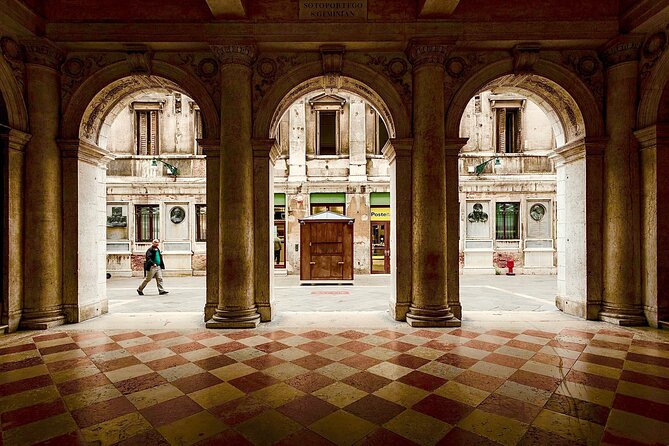
This is a classic Venice “greatest hits” afternoon, but it is built to be manageable. You start in the central historic core, between Piazza San Marco and the Rialto area, and you use a guided walking segment to get your bearings fast. Then you transition into St. Mark’s Basilica and the Doge’s Palace, which are both dense with art, symbolism, and Venetian political power. Finally, you end with a gondola glide that gives your eyes a break from marble floors and museum lighting.
The practical value here is timing. You are not spending hours figuring out where things are or trying to thread your way through the crowds with no plan. The pace is tour-paced, not “wander until you find a miracle.” If you like structure, you will appreciate that.
You also get headsets, which sounds like a small detail until you are in a room packed with people and you suddenly realize your hearing has become the bottleneck. With a live guide, headsets are the difference between catching the story and catching only fragments.
You can also read our reviews of more tours and experiences in Venice.


Meeting point and timing that actually affect your day
Meet your guide about 15 minutes early at the TU.RI.VE. meeting point, Calle larga de l’Ascension, near the wooden kiosk by the post office. You are looking for the Turive assistant. The end point lines up with the gondola departure area in Campo San Moisè.
Timing changes by season, so check your exact schedule before you leave your hotel. In April to October, the Basilica portion runs around 14:45 to 15:45 and the gondola starts around 17:15 to 17:45. In November to March, the Doge’s Palace time is earlier, then the Basilica, then the gondola runs around 15:00 to 15:30. Either way, the plan is “morning and afternoon split” during cooler months, and “late afternoon to evening” during peak season.
One more Venice reality: the tour works in most weather conditions, but you should still dress for rain or heat. You will be outside during walking and during any gondola line-up time.
Walking stops that set up what you will see later
You do not go straight from the meeting point into marble rooms. You get a walking tour through the central area, which helps you understand how Venice’s layout shapes everything. This is where the tour scores points for people who do not already know Venice.
The walk includes stops such as Scala del Bovolo and the area around Teatro la Fenice. You might not go inside every place, but you get the context for why these buildings matter and how the streets connect to the canals. That matters, because once you reach St. Mark’s Square and the palace, you are better at imagining the city as a system, not just a collection of landmarks.
This segment is also where you notice the “tour problem” you do not want: getting stuck in a tight crowd with no clear route. In this tour, the group movement is organized enough that you can keep moving without constant stop-start confusion. Still, you should expect narrow lanes, crowding near major landmarks, and the occasional need to keep close to your guide.
St. Mark’s Square: the why behind the wow
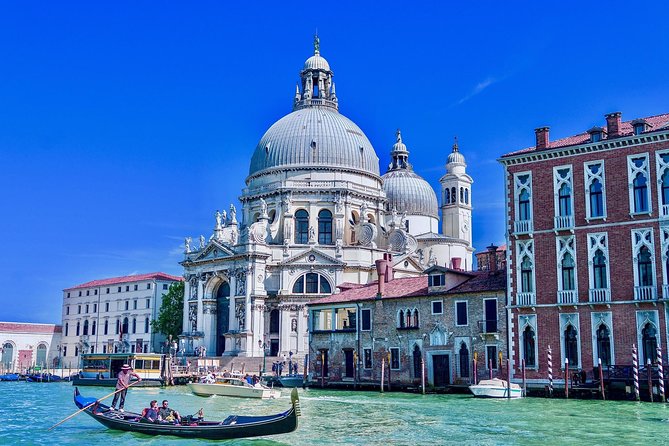
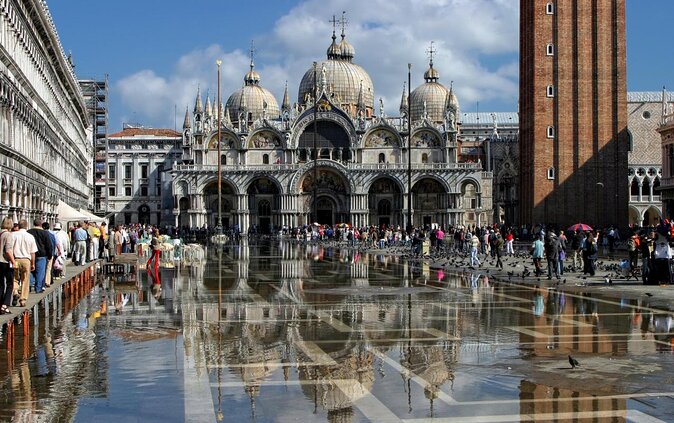
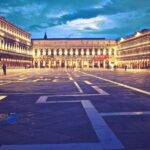
St. Mark’s Square is the stage. The tour gives you the background so you can read the space like a Venetian would. You start with an explanation of the square itself, including the story tied to Saint Mark’s Square and the Basilica. Then you head into the Golden Basilica experience.
Here’s what makes the square stop valuable: it turns “I see a huge church” into “I understand why this place is central to Venetian identity.” Venice built a strong myth around St. Mark, and the Basilica is part of how that myth became public, physical, and political.
The time you spend here is short, about 20 minutes, so it is not a long prelude. It is a fast orientation. If you are the type who hates being herded, this is one moment where you might feel impatient because people gather quickly. But if you want a story you can hold onto while you look around, you will likely find this setup useful.
Inside St. Mark’s Basilica: mosaics, marble, and biblical storytelling
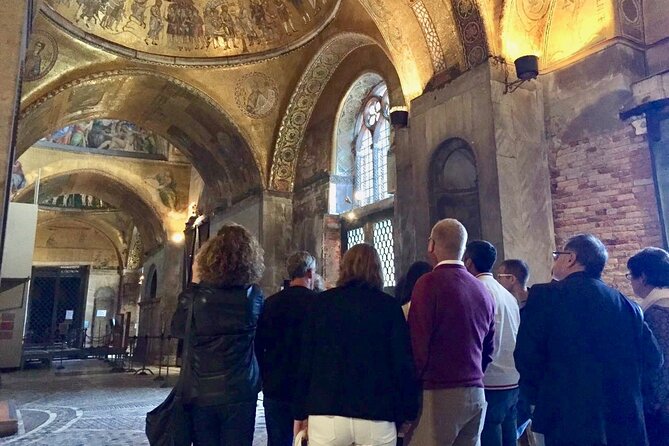
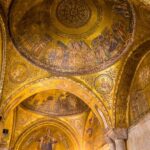
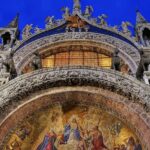
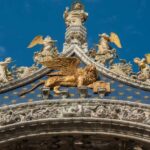
The Basilica di San Marco portion is guided for about 40 minutes, and the entrance is included. This is not just a look-and-go. Your guide talks about the biblical scenes across the building and connects the artwork to the Basilica’s history and specific features.
What you should notice first is the scale and density. St. Mark’s is famous for the gold mosaics and the marble inlay flooring. The tour’s job is to help you understand what you are actually seeing, so you can choose where to focus instead of getting lost in visual overload.
A practical note: the Basilica can be visually overwhelming. Headsets help, but you still need a strategy. I recommend you pick one or two areas your guide points out, then spend a moment looking without listening so you can actually register the details. If you try to do everything at once, you will remember less.
Also, be ready for basic indoor crowd conditions. You will be close to other visitors. That is normal at this level of landmark. If you feel uncomfortable in tight spaces, go slow with your breathing and give yourself a half-step of space when you can.



Doge’s Palace: power rooms, art, and the Bridge of Sighs
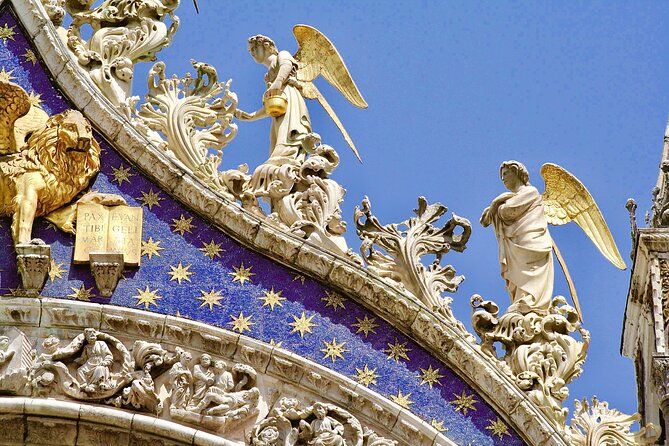
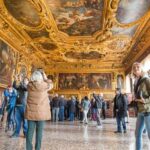
This is where the tour goes from spiritual to political. You enter Palazzo Ducale with a guided visit lasting about 1 hour, and admission is included.
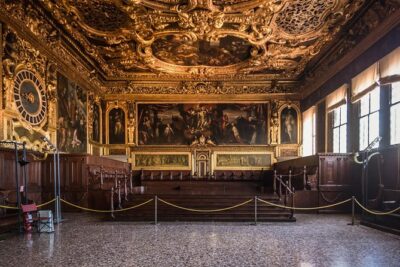
The Doge’s Palace dominates the square area, and the tour focuses on how the Doge and his Council controlled the fate of the Serene Republic. You move through halls where Venetian governance is presented through art and design, not just paperwork. Expect Renaissance masterpieces, including mention of works by major Italian artists, and a highlight tied to Tintoretto’s large oil painting.
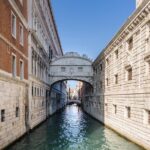
Then comes the dramatic beat: the Bridge of Sighs. Your guide explains why it got its name, with the clue linked to Lord Byron and the idea of a last glimpse before imprisonment. You continue through to the newer prisons.
This part is especially worth it if you care about “why Venice worked the way it did.” The palace is not only architecture. It is propaganda, law, and fear all wrapped together.
The main drawback here is that you still have to move with the flow. You may not linger as long as you personally want on each piece of art. If you are a slow museum person, you may have to choose: either you listen closely and keep the pace, or you speed up and then take private time after the tour to revisit your favorite zone.
Scala del Bovolo and Teatro la Fenice area, seen with context
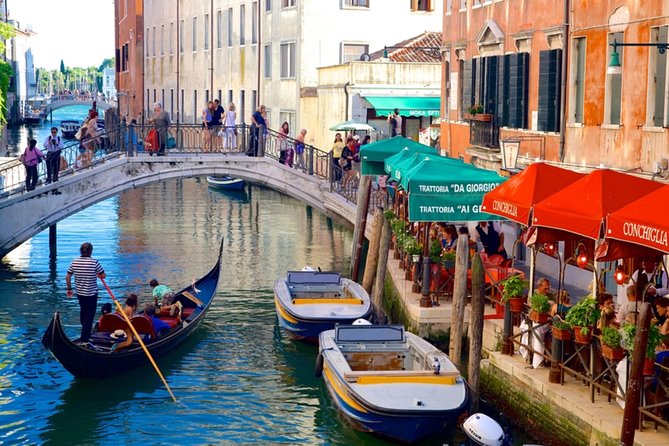
Between the big indoor stops, you pass key Venice landmarks that a first-time visitor might otherwise treat as background.
Scala del Bovolo is a standout stair structure, and even if you do not go in as part of the tour plan, the stop is helpful. It gives you an anchor so you can place it when you see it later while wandering on your own.
Teatro la Fenice is another moment where Venice feels alive. The tour does not turn it into a long lecture, but you get the sense of how performance culture fits into the city’s social world.
If you enjoy walking as a way to absorb atmosphere, these stops make the tour feel more like Venice, not just Venice as a photo album.
The gondola ride: 30 minutes of Venice, views first
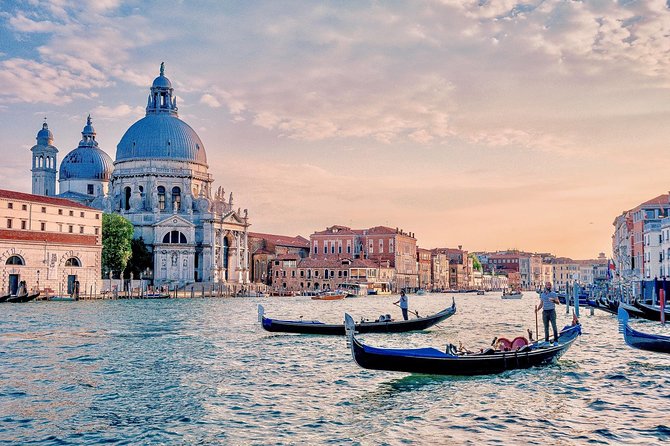
After the walking and museum portions, you head back to the gondola departure zone and show your voucher. The gondola ride itself is not guided. That is actually a meaningful distinction. You will get the ride and the visuals, and you will not get a second layer of narration from the gondolier.
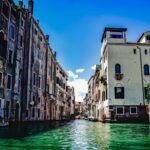
The typical ride time is 30 minutes, with a focus on the Grand Canal (Salute area) and some of the minor canals in the Fenice area. You are also likely to glide under bridges and pass close to elegant palaces and side entrances, because that is simply what gondola routes do well.
Two things to plan for. First, the ride can feel short, because you are done right when you start to settle in. Second, there can be waiting and queue pressure, especially during peak season. Bring water, and if it is hot, consider shade tools. Even a light parasol or a hat can make the difference between enjoying the build-up and getting irritated.
If you want more story during the gondola, you might consider pairing this with something else later, because this one is built for sightlines, not commentary.
How much value you get for $166.80 per person
At $166.80, you are paying for three things bundled together: guided walkthroughs at St. Mark’s Basilica and the Doge’s Palace, plus a gondola ride that is hard to schedule on your own without extra hassle.
Is it cheap? No. But is it expensive compared to doing everything separately with the same level of guided interpretation? Often, this kind of package makes sense because you are not only buying access, you are buying time and a route that is already solved.
Here’s where the value depends on you:
- If you want the art and symbolism explained, the Basilca and palace narration justify the cost.
- If you hate crowds, you might prefer fewer stops and a quieter plan, because St. Mark’s is always busy.
- If you only care about the gondola, this might feel like paying for a lot of guided walking you do not personally need.
One more cost gotcha: entrance add-ons are not included. The Pala d’Oro costs €5 per person, and there is mention of the Museum and Loggia dei Cavalli on the first floor costing €14 per person. If you care about those specifically, factor that into your budget.
And if you are visiting on a day when an outside-the-city visitor access fee applies, there may be a €5 access fee on certain dates for day visitors. Always check the Venice city rules for your exact day.
Group size, headsets, and the sound of your day
This tour caps at 20 travelers, and the gondola holds a small set of people. Those details matter. Smaller groups usually mean fewer bottlenecks near doorways and less chaos when you switch locations.
Headsets are included and are a real quality-of-life boost. Indoors, you often end up close to other groups, and without headsets the guide becomes background noise. With them, you can focus on what matters: the story, the way the art is arranged, and the historical thread connecting Basilica and palace.
Still, audio can be hit or miss anywhere crowds are thick. If you notice your headset volume is off, you should ask your guide or assistant right away so you can adjust quickly.
Who this tour fits best, and who should think twice
I think this works best for first-timers who want the top sights and also want help understanding them. If you like structure, and you want a guided path that links St. Mark’s Square to the Basilica and the Doge’s Palace, this is a strong choice.
It also suits families and groups where people have different interests, because the day includes both visual drama (Basilica and palace) and a classic Venice “ride moment” (the gondola).
Who might hesitate:
- If you only care about the gondola, this will feel like a pay-for-guidance day.
- If you want a super slow pace, you may feel nudged by the schedule, especially around the transition to the gondola line.
- If you dislike indoor crowding, St. Mark’s and the palace may test your patience. They are worth it, but they are not serene.
My verdict: book it if you want the story, skip if you want pure freedom
So should you book this Basilica plus Doge’s Palace plus gondola combo? I would say yes, if your goal is to leave Venice feeling you understand what you saw. The guided portions give you the “why” behind the art and power, and the gondola gives you the “how it looks from the water” moment right after.
I would hesitate if you are chasing a long gondola experience with guided narration. This ride is built for views and photos, not explanations. Also, plan for the possibility of waiting and standing in lines.
If you are visiting in peak season, show up on time, and make the most of the headsets, because that is the easiest way to get value out of a packed day.
FAQ
Where do I meet the guide for this tour?
You meet at the TU.RI.VE. meeting point at Calle larga de l’Ascension, 30124 Venezia VE, Italy. The guide is near a wooden kiosk by the post office, and you should look for the Turive assistant. Arrive about 15 minutes early.
How long is the tour?
The full experience is about 2 hours 30 minutes (approximately), combining the walking tour, Basilica and Doge’s Palace time, and the gondola ride.
Are entrance tickets to St. Mark’s Basilica and the Doge’s Palace included?
Yes. St. Mark’s Basilica and the Doge’s Palace admission tickets are included in the tour.
Is the gondola ride guided?
No. The gondola ride is not guided. You ride with your group and enjoy the canals, but there is no guide narration on the gondola.
How much time is spent on the gondola?
The gondola ride is listed as 30 minutes.
Is there an extra Venice access fee on top of the tour price?
On certain dates, day visitors staying outside of Venice may need to pay a €5 city access fee. You can check the current rules for exemptions and applicable days at https://cda.ve.it.
More Tour Reviews in Venice
Not for you? Here's more nearby things to do in Venice we have reviewed


Venice Gondola Rides, compared.
 ★ 4.1Grand Canal Gondola Ride with App CommentaryFrom $3918,908 reviews
 ★ 4.1Grand Canal by Gondola with Live CommentaryFrom $4413,681 reviews
 ★ 3.9Shared Gondola Ride Across the Grand CanalFrom $466,645 reviews
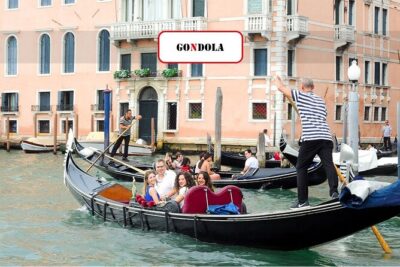 ★ 4.0Grand Canal Gondola Experience with Live Commentary™From $494,223 reviews
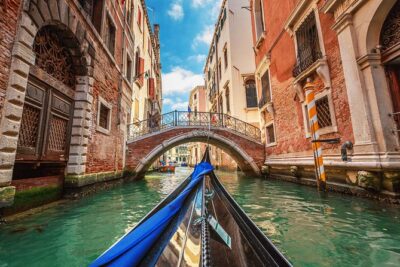 ★ 3.5Venice Walking Tour and Gondola RideFrom $723,630 reviews
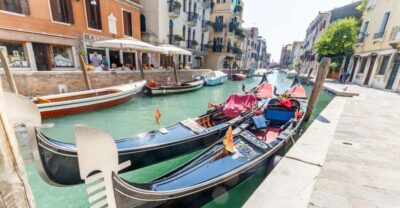 ★ 4.0Traditional Shared Gondola RideFrom $423,263 reviews
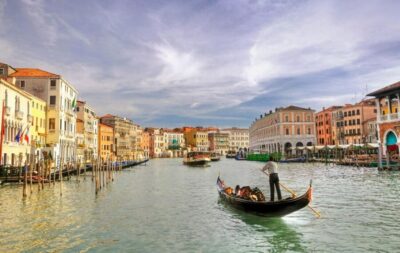 ★ 3.7Private Gondola Cruise for up to 5 PassengersFrom $1573,106 reviews
 ★ 4.5Venice’s Best: Basilica, Doge’s Palace, Gondola & History GalleryFrom $1292,478 reviews
Browse the lists this tour appears in