
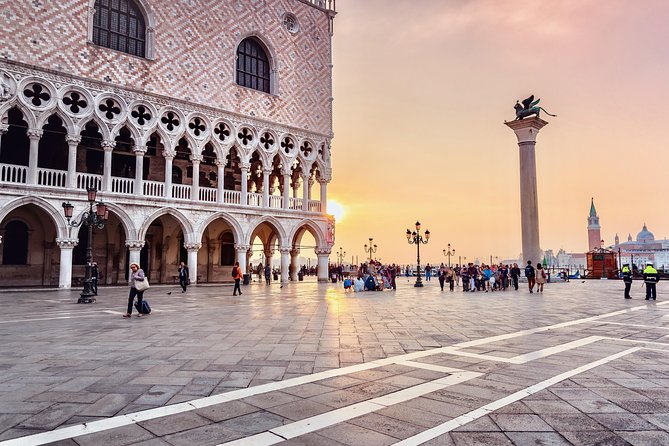
Tour review · WALKING TOURS
4-Hour Venice guided walking tour with Doge’s Palace & St Mark’s Basilica
Venice is pretty, but it can also feel like a puzzle. This 4-hour tour turns the big sights into a clear story, with skip-the-line entry to both Doge’s Palace and St. Mark’s Basilica, plus a guided walk through the city’s campi and calli so you know where you are. I especially like that you do the walking piece first, then the entrances feel earned, not rushed. The main drawback is simple: you will cover a fair amount of ground, and a few past guests noted occasional trouble hearing the guide over the headset system.
You meet at TU.RI.VE Meeting Point (Calle larga de l’Ascension, 30124). Start time is 9:00 am, and check-in is 15 minutes early. Bring your basilica outfit rules with you too, meaning knees and shoulders covered, and leave large bags at your hotel since they are not allowed on the tour.
Key highlights you can count on
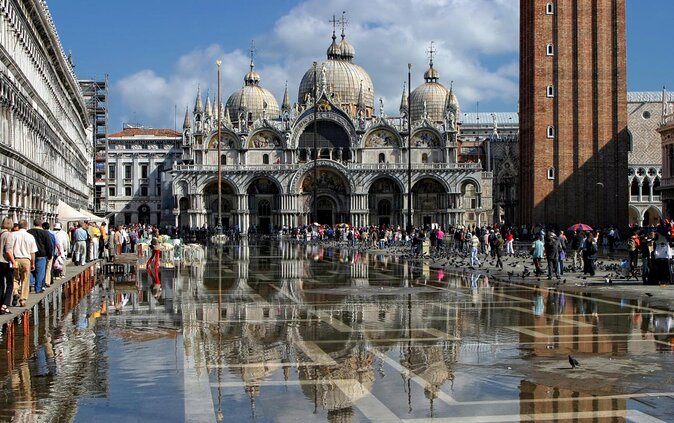
- Skip-the-line access for both Doge’s Palace and St. Mark’s Basilica
- Doge’s Palace guided route built around the Golden Staircase and the Bridge of Sighs
- St. Mark’s Basilica guided time seated inside, including mosaics and the story of Pala d’Oro
- Small-group vibe (max 20), with an audio headset so you are not stuck listening from the back
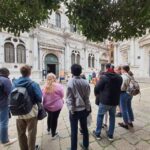
- Practical Venice orientation through Castello campi, calli, and canals after you start in St. Mark’s Square
How a 4-hour plan saves you time (and nerves) in St. Mark’s area
If you only have half a day, the trick is not seeing everything. The trick is seeing the right things in the right order. This tour is built exactly for that, starting in St. Mark’s Square, then walking through nearby neighborhoods, and finishing with the two heavyweight interiors you actually came to Venice for.
I like that the schedule includes skip-the-line entrance to both sites. St. Mark’s Basilica and Doge’s Palace can mean long waits when you go on your own, and waiting in Venice crowds is not a fun use of limited time. Here, the payoff is that you spend your energy on the art, symbols, and politics, not on standing in a queue.
One more practical win is the personal audio system and headset. In a city full of echoes and overlapping groups, it helps. Still, a couple reviews mention radio interference or difficulty understanding one specific guide. If you think you struggle with accents or audio in noisy rooms, aim to be closer to the guide during explanations, and don’t be shy about letting the group leader know if you cannot hear.
You can also read our reviews of more walking tours in Venice

From TU.RI.VE meeting point to Piazza San Marco, the tour’s “why it matters” setup
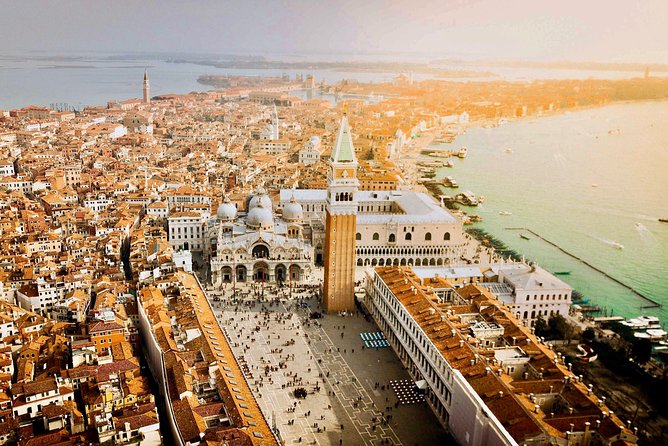
The tour meets at TU.RI.VE Meeting Point, Calle larga de l’Ascension 30124, right in the St. Mark’s orbit. You start at 9:00 am, and the first part is designed to get your bearings fast. Before any palace doors open, your guide sets context for the symbols, traditions, architecture, and everyday Venice life.
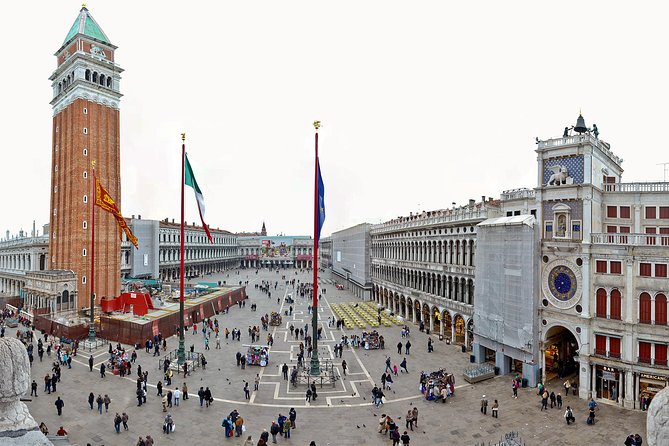
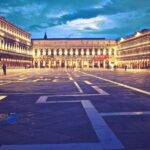
Piazza San Marco is where you begin, with time to take in the square’s grand monuments and the way the buildings frame the space. This matters because St. Mark’s Square is not just pretty. It is Venice’s stage, and once you understand that, the nearby monuments make more sense.
From there, you head away from the busiest streets and into the quieter pockets of the Castello area. You will move through maze-like alleyways and open squares, including bridges over canals and the campi that locals still use. This is where a walking tour earns its keep: you stop treating Venice as a postcard and start understanding it as a real city with real routes.
Castello campi and calli: what to notice at Santa Maria Formosa and Santi Giovanni e Paolo
A big part of the value here is how the walk connects you to Venice beyond the top-of-mind landmarks. Two campi are key during the walking portion.
At Campo Santa Maria Formosa, you learn how this large square fits into local life, with the church named after the Visitation of the Holy Virgin. Even if you only get a short time here, your guide’s job is to help you read the place: why the square feels important, what the church represents, and how the neighborhood built around it.
Next comes Campo Santi Giovanni e Paolo, which many visitors pass by without realizing what they are standing on. This stop is tied to power and memory. The church is the resting place of several Doges, and the equestrian monument of Bartolomeo Colleoni adds another layer, since Colleoni connects military leadership to Venice’s story.
These pauses between big interiors are not random. They set up the Doge’s Palace visit by reminding you that Venice was run by people, symbols, and politics, not just by architecture.
Quick stops: Marco Polo’s former residence and the Malibran theatre (exterior)
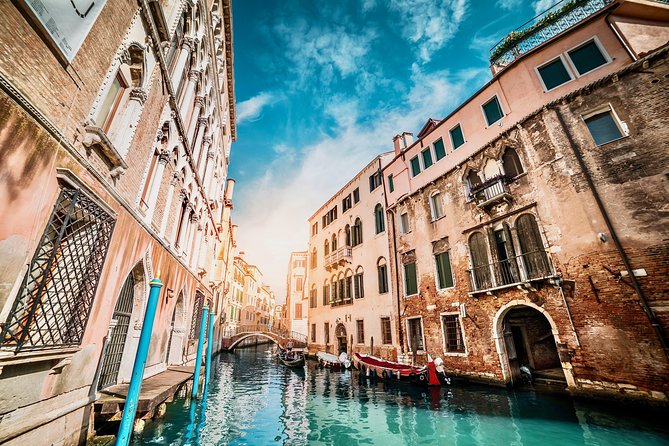
Not every stop needs a long time. Two quick hits help fill in Venice’s broader identity.
One is Casa di Marco Polo, described as Marco Polo’s former residence in Corte Seconda del Milion. Your time is brief here, and the point is awareness, not a deep museum visit.
Another is Teatro Malibran, where you only see the exterior. The tour context includes that it was connected to earlier work at Teatro San Giovanni Grisostomo, built quickly at the end of 1677, and later renovated. Even from the outside, it gives you a sense that Venice’s culture was not only ships and government. It was also performance, fashion, and public life.
You can think of these as “texture stops.” They break up the pace so your brain does not only run on palace mode.
Inside Doge’s Palace: Golden Staircase, council power, and Bridge of Sighs
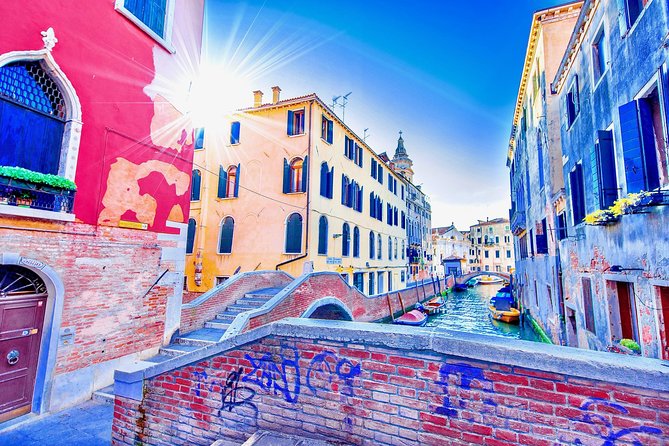
Now for the part most people come for: Palazzo Ducale, the Doge’s Palace. It dominates St. Mark’s Square and is famous because different styles collide in one building, described as Byzantine, European, and Oriental influences.
You enter through the great courtyard and move toward the Golden Staircase. This is one of those spots where a guide really changes the experience. Instead of you just looking at gold color and decorations, you learn how the space signals authority, wealth, and rank.
Inside the palace, your visit focuses on how the Doge and the Council controlled the fate of the Serene Republic. The tour framing matters because Venice’s power system was not simple. It was layered, symbolic, and often guarded by architecture as much as by law.
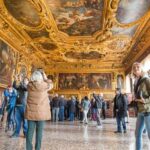
You will also see major Renaissance artwork. The tour highlights include paintings by artists such as Titian, Tintoretto, and Veronese, plus a standout detail: Tintoretto’s world’s largest oil painting. Whether you are an art fan or not, learning what you are looking at helps you spot meaning fast.
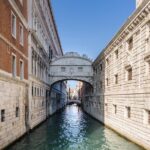
Then comes one of the most dramatic moments: the Bridge of Sighs. The name is tied to Lord Byron, referencing the last view prisoners had of the lagoon and Venice before imprisonment. You cross into the new prisons area, and the palace’s beauty suddenly feels sharper, darker, and more political.
If you are sensitive to crowded interiors, plan to take slow breaths during transitions. This part is busy, and the building itself funnels groups into tight areas.
You can also read our reviews of more guided tours in Venice





St. Mark’s Basilica: mosaics, marble inlay, Treasury peeks, and Pala d’Oro
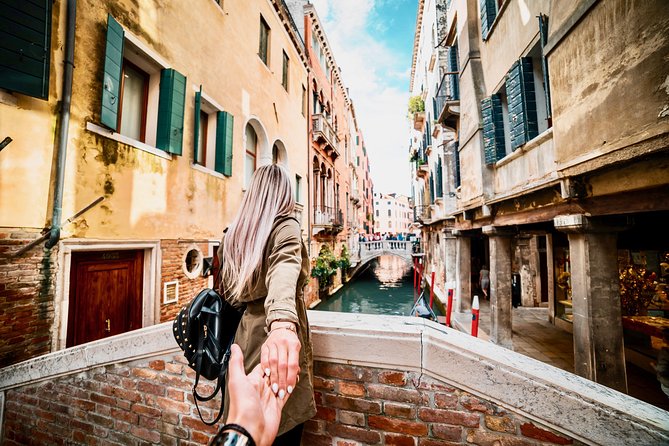
St. Mark’s Basilica is next, and this is the moment when Venice turns from government to religion, and from political drama to spiritual spectacle.
The tour time in the basilica is about 45 minutes, with skip-the-line access. The big idea here is that the basilica was once the private chapel of the Doges, which explains why it is both public and intensely ceremonial.
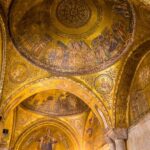
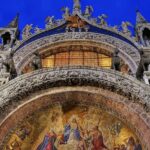
Expect guided attention on the golden mosaics and the impressive marble inlay flooring. The tour also includes a chance to sit inside while your guide explains the biblical scenes represented throughout the building. If you remember only one thing from this section, make it that: your guide gives you a reason to look upward, not just around.
You will also be pointed toward the Pala d’Oro, described as an altarpiece made of gold and silver, and a major example of Byzantine art. Note the practical catch: an extra entrance fee for Pala d’Oro is listed as €5. So even though the tour is designed to include it, plan for that small add-on cost.
There’s also mention of a peek into the Treasury. Time is limited in the basilica, so think of it as a focused highlight, not an all-day museum.
Finally, be aware of real-life Venice weather. On very few occasions, the basilica may close due to high water. The tour will not be canceled, and the basilica explanation will shift to outside viewing. That matters because it protects your schedule.
Keeping your ticket for Museo Correr and Marciana rooms
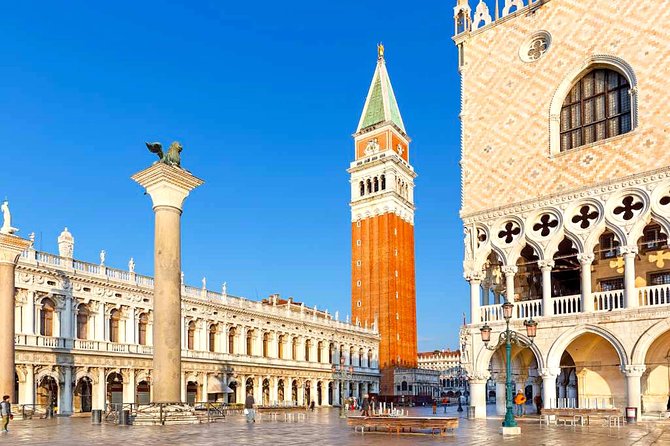
The tour does not end with the basilica and a shrug. You keep your Doge’s Palace ticket to use on your own for nearby sights in St. Mark’s Square.
The listed extras are Museo Correr, Museo Archeologico Nazionale, and the Monumental Rooms of the Biblioteca Nazionale Marciana, across from the basilica. This is a smart add because it extends the value of what you already paid for.
You also want to be aware of one more listed add-on: the museum and Loggia dei Cavalli on the 1st floor is €14 per person. That means your ticket likely opens key areas, but some upper-level rooms may cost extra.
This “after the tour” freedom is handy if you like to slow down once the guided explanation has given you names and context.
Price, value, and who this tour is best for
At $163.85 per person for about 4 hours, you are paying for three things: guided interpretation, skip-the-line entrances, and audio support. If you are the type who gets frustrated standing in lines or reading without guidance, this is where the money goes.
You also get a lot of adult learning compressed into a short window. Doge’s Palace gives you the political spine of Venice. St. Mark’s Basilica gives you the religious and artistic face. The walking portion does the connective work by showing you how the area around St. Mark’s actually functions.
Group size is capped at 20, which helps. Still, one review reported a much larger group during the basilica portion, so it is worth remembering that crowds can happen even on capped tours.
This tour suits you best if:
- You are seeing Venice for the first time and want orientation without wasting time
- You want two major interiors explained clearly
- You like history tied to real places, not only facts in a book
- You can follow the dress code: knees and shoulders covered
It may be less ideal if:
- You hate walking on uneven stones and in crowded calli
- You need highly reliable audio, since a few reports mention interference or difficulty hearing
- You want lots of free time inside museums, because this is a guided highlight format
One small, real-world note: if you are staying outside Venice, on certain dates you may need to pay a €5 access fee for day visitors. The tour data points you to the city website for details and exemptions.
Should you book this Doge’s and St. Mark’s combo?
My take: book it if you want the fastest high-impact route through two top-tier Venice monuments, with a guided story that links the city’s power and art. The skip-the-line element is the biggest “yes” factor, and the walking portion helps you understand the area instead of just sprinting between ticket gates.
I would hesitate only if you are very sensitive to noise or sound quality, since one review described serious headset interference and another described a guide that was hard to understand. If that worries you, plan to position yourself toward the front during key explanations.
Also, pack smart for entry. No large bags. Dress right for the basilica. Arrive early enough to check in. Those habits prevent small frustrations from turning into big ones.
If you want a structured half-day that turns St. Mark’s into something you actually grasp, this is a strong choice.
FAQ
Where does the tour start, and when?
The meeting point is TU.RI.VE Meeting Point, Calle larga de l’Ascension, 30124 Venezia VE, Italy. The start time is 9:00 am, and check-in is 15 minutes before departure.
How long is the tour?
It lasts about 4 hours.
Is skip-the-line entry included?
Yes. The tour includes entrance fees and skip-the-line access for St. Mark’s Basilica and Doge’s Palace.
Are all basilica and museum items included, or are there extra fees?
Most entrances are included, but there are listed extra costs. Pala d’Oro has an additional €5 per person fee, and Museo and Loggia dei Cavalli on the 1st floor has an additional €14 per person fee.
Do I need to follow a dress code?
Yes. Knees and shoulders must be covered for both men and women. If you do not comply, you may be refused entry.
What happens if St. Mark’s Basilica is closed due to high water?
On very few occasions, the basilica may close due to high water. The tour is not canceled, and the basilica explanation will take place from the outside.
Can I cancel for a refund?
Yes. You can cancel up to 3 days in advance for a full refund, and changes made less than 3 full days before the experience start time are not accepted.
More Walking Tours in Venice

More Tours in Venice




More Tour Reviews in Venice


Not for you? Here's more nearby things to do in Venice we have reviewed




Walking Tours, compared.
 ★ 3.5Venice Walking Tour and Gondola RideFrom $723,630 reviews
 ★ 4.2Rialto Bridge & Offbeat Unusual Venice Walking TourFrom $283,538 reviews
 ★ 4.0Private 3 hrs Venice Tour: St Mark’s, Walking tour & Boat tourFrom $4803,372 reviews
 ★ 4.2City Center Historical Guided Walking TourFrom $141,873 reviews
 ★ 4.7Walking Guided Tour of the City Must-See SitesFrom $441,095 reviews
 ★ 4.0Private Best of Venice Walking Tour with St Mark’s BasilicaFrom $2421,063 reviews
 ★ 4.5Venice Sightseeing Small Group Walking Tour with a Local GuideFrom $48887 reviews
 ★ 4.5Walking tour, Doge Palace, & St. Mark’s BasilicaFrom $142884 reviews
Browse the lists this tour appears in